
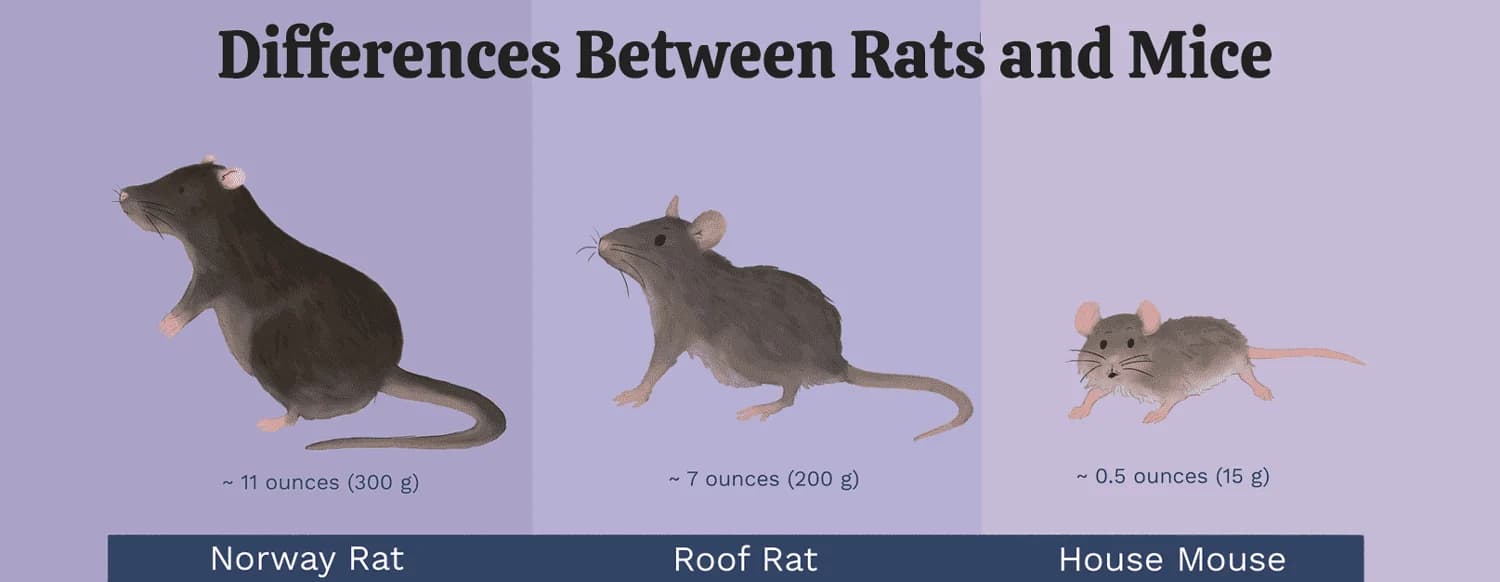

Knowing whether you have rats or mice is important because the two rodents behave differently, cause different types of damage, and require different treatment approaches. Many people assume they have mice when they actually have rats, or vice versa, leading to ineffective control efforts.
This guide provides a clear, side-by-side comparison of rats and mice across every key characteristic — from droppings and size to behaviour and the damage they cause — so you can identify which rodent is in your property and take the right action.
Published:
Size and Appearance
The most obvious difference is size. An adult house mouse is 7 to 10cm long (body only) and weighs 12 to 30 grams. An adult brown rat (the common UK species) is 20 to 27cm long and weighs 200 to 500 grams — roughly 10 to 15 times heavier than a mouse.
Mice have proportionally larger ears, smaller heads, and thinner tails relative to their body. Rats have thicker, heavier bodies, smaller ears relative to their head, blunter snouts, and thick, scaly tails that are shorter than their body length.
Young rats are sometimes mistaken for adult mice. The key distinction is the head shape: young rats have disproportionately large heads and feet relative to their body, while adult mice have proportionally balanced features. Young rats also have thicker tails and blunter noses than adult mice.
Droppings Comparison
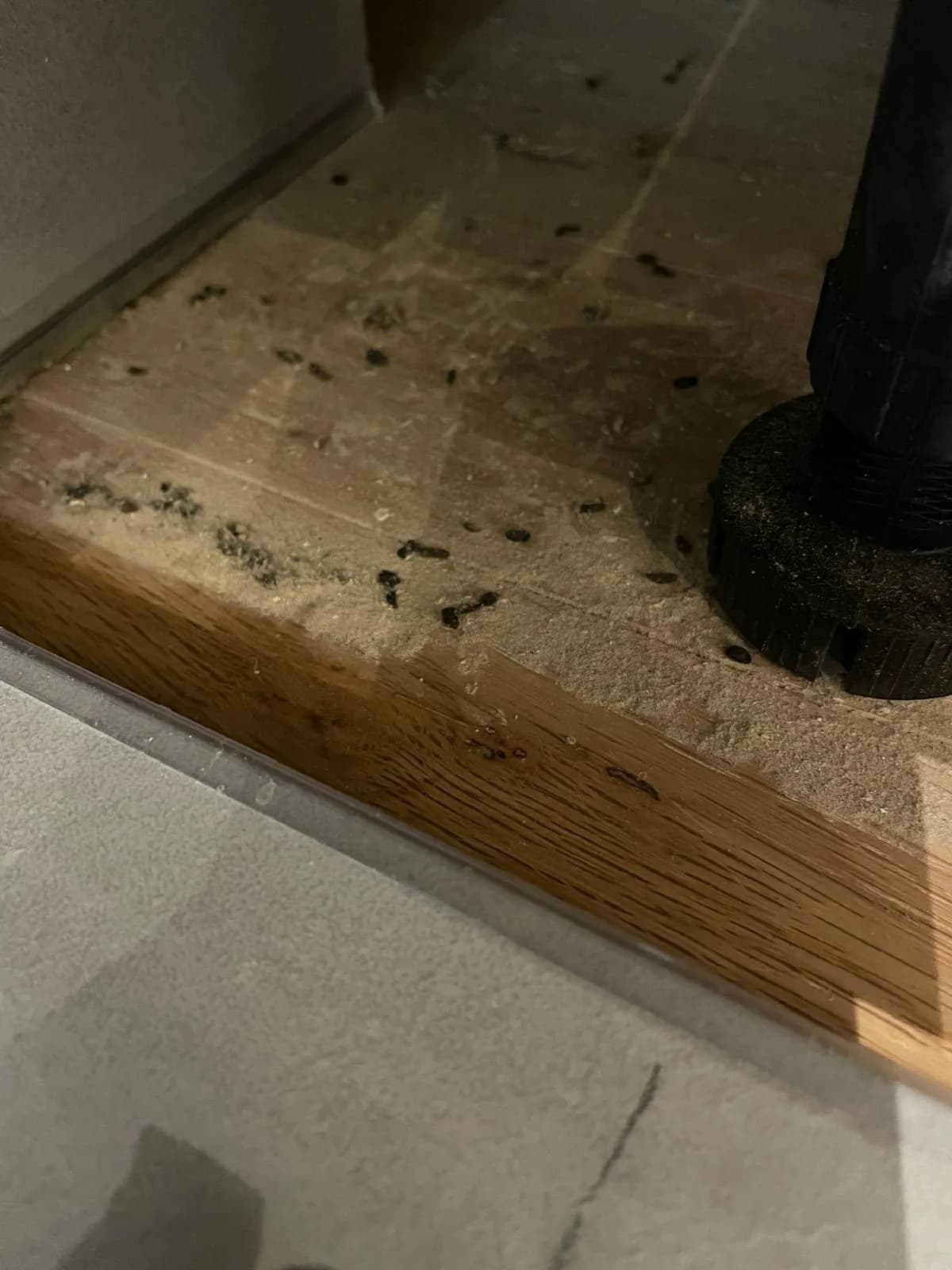
Droppings are usually the first evidence found, and they are one of the most reliable ways to distinguish rats from mice. Mouse droppings are 3 to 8mm long, dark brown or black, and rice-shaped with pointed ends. A single mouse produces 50 to 80 droppings per day, scattered along travel routes.
Brown rat droppings are much larger — 10 to 20mm long — with blunt, rounded ends, resembling a large olive stone or capsule. Rats produce around 40 droppings per day, typically deposited in clusters near harbourage areas rather than scattered widely. For a detailed guide to identifying and safely cleaning mouse droppings, see our mouse droppings article.
If you find droppings smaller than 8mm with pointed ends, you have mice. Droppings larger than 10mm with rounded ends mean rats. Finding both sizes indicates you may have both species, though this is uncommon — rats are aggressive and will often drive mice out of shared spaces.
Behaviour Differences
Mice are curious and exploratory. They investigate new objects in their environment quickly, which is why snap traps often catch mice on the first night. Mice tend to nibble small amounts from many different food sources rather than feeding in one place.
Rats are the opposite — they are cautious and neophobic (fearful of new things). A rat may avoid a newly placed trap for days before approaching it. This wariness is why rat trapping requires patience and why pre-baiting (placing unset, baited traps for several days) is often recommended before setting them live.
Mice are better climbers than rats and can scale rough vertical surfaces, run along cables, and jump up to 30cm. They commonly nest in lofts, wall cavities, and upper floors. Rats are stronger swimmers and burrowers — they are more commonly found at ground level and below, in drains, basements, and behind garden decking.
Damage Comparison
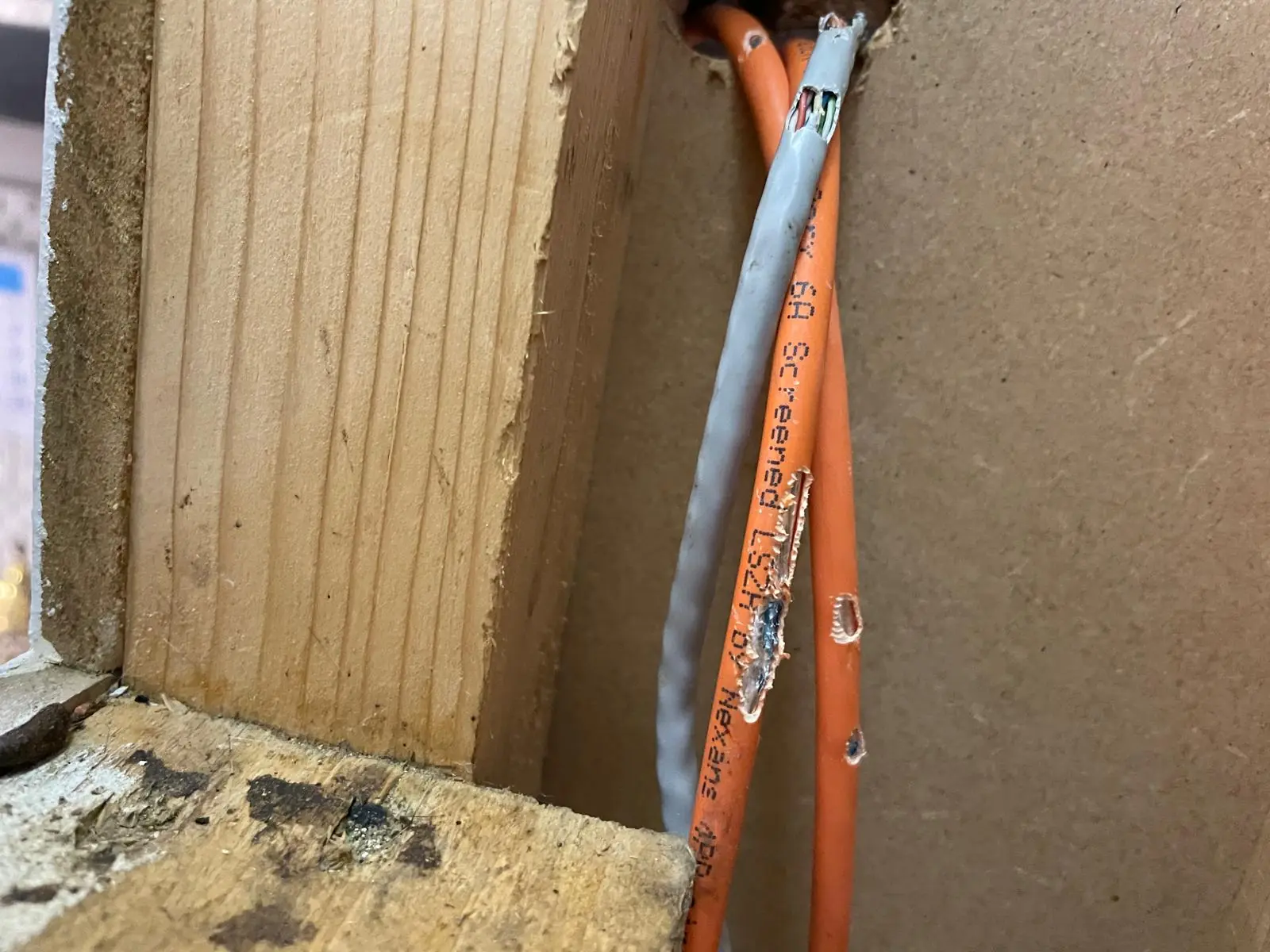
Both rodents gnaw constantly because their incisor teeth grow continuously. However, rats cause significantly more structural damage due to their size and jaw strength. Rats can gnaw through wood, plastic, soft metals (aluminium, lead), and even concrete in some cases. Mouse gnawing is smaller-scale but still dangerous — particularly when they chew through electrical wiring.
Rats are more likely to damage drains and sewers, burrowing alongside underground pipes and sometimes gnawing through plastic drain joints. Mice are more likely to damage stored goods, food packaging, insulation, and internal wiring.
In terms of disease risk, both carry Salmonella and contaminate food through droppings and urine. Rats additionally carry Leptospirosis (Weil's disease), which can be life-threatening. Mice are more significant carriers of allergens that trigger asthma in children.
Need professional help with mice control? BuzzKill Pest Control offers fast, effective treatment with no call-out charge.
Treatment Differences
Mouse treatment typically involves snap traps and rodenticide bait stations placed along internal travel routes, combined with proofing to seal entry points. Because mice are curious, traps often produce results quickly. Treatment typically takes 2 to 3 weeks.
Rat treatment requires more patience. Pre-baiting is often necessary, bait stations need to be larger and more robust, and treatment timelines are typically 3 to 6 weeks. Rats also require attention to outdoor harbourage — burrows, compost heaps, and decking — in addition to internal treatment.
Proofing requirements differ too. Mice require gaps as small as 6mm to be sealed. Rats need gaps of 15mm or larger sealed, but the materials need to be stronger — rats can chew through steel wool if determined, so galvanised mesh and metal kick plates are preferred for rat proofing.
Can You Have Both Rats and Mice?

It is possible but uncommon. Rats are territorial and aggressive towards mice — their presence typically drives mice away from shared spaces. This competitive exclusion is why seeing signs of both species in the same area is rare.
However, in larger properties — particularly commercial premises, farms, and multi-storey buildings — rats and mice can coexist in different zones. Rats may occupy ground-level and below-ground areas while mice live in upper floors and loft spaces.
If you are unsure which rodent you have, a professional pest controller can determine the species from droppings, gnaw marks, and activity patterns during an initial inspection. Our mice treatment and rat control service pages cover the specific approaches for each.
Frequently Asked Questions
Is a mouse just a small rat?
No. Mice and rats are different species with different behaviours, breeding rates, and control requirements. House mice (Mus musculus) and brown rats (Rattus norvegicus) are as different from each other as dogs are from cats.
Which is worse to have — rats or mice?
Both are serious pests, but rats generally cause more structural damage, carry more dangerous diseases (including Leptospirosis), and are harder to eliminate due to their cautious behaviour. Mice breed faster and are more difficult to keep out because of the tiny gaps they can use.
Do rats eat mice?
Yes, rats will kill and eat mice when they encounter them. This behaviour, called muricide, is one reason why rat and mouse infestations rarely coexist in the same area. If you had mice and they suddenly disappeared, rats may have moved in.
Can mouse traps catch rats?
Standard mouse snap traps are too small and weak to effectively catch or kill rats. Rat traps are significantly larger and more powerful. Using the wrong size trap is one of the most common DIY mistakes — always match the trap to the rodent.
How can I tell the difference from sounds alone?
Mouse sounds are light scratching and scurrying, often from lofts and upper walls. Rat sounds are heavier — thumping, grinding, and scraping — typically from ground level, under floors, or in wall cavities. Rats also make louder gnawing sounds than mice.
Professional Mice Control Service
Learn more about our mice control service, pricing, treatment methods, and customer reviews.
View Mice Control Service