
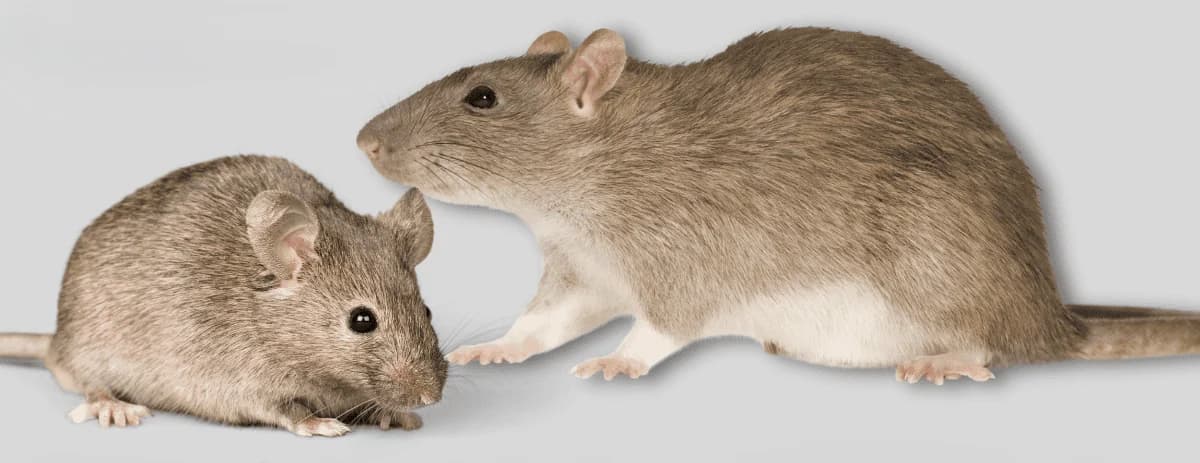

Mouse droppings are usually the first evidence people find when mice have moved into their property. A single mouse produces 50 to 80 droppings every day, so even a small population generates hundreds of droppings per week across your home.
This guide explains exactly what mouse droppings look like, how to distinguish them from rat and other pest droppings, the health risks they pose, and the safest way to clean them up.
Published:
What Do Mouse Droppings Look Like?
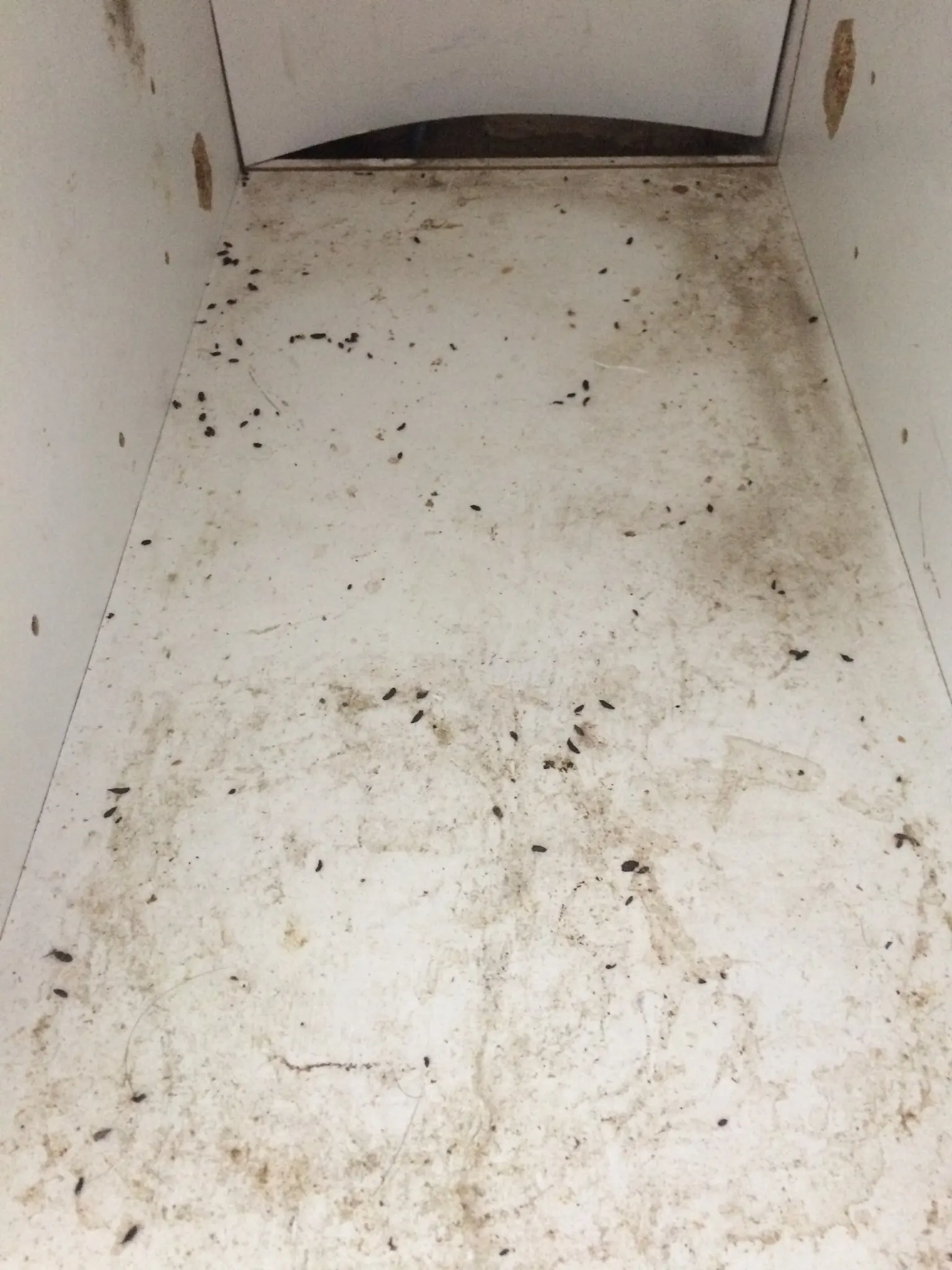
Mouse droppings are small, dark brown or black pellets, typically 3 to 8mm in length — roughly the size and shape of a grain of rice with pointed ends. They are smooth-surfaced when fresh and become lighter, greyer, and crumbly as they dry out over several days.
Fresh droppings are soft, dark, and slightly shiny. If you press a fresh dropping with a stick or pencil, it will compress. Older droppings are hard, dry, and crumble easily. The presence of both fresh and old droppings together indicates an ongoing, active infestation — not a past one.
Mice scatter their droppings as they move, unlike rats which tend to deposit droppings in concentrated latrine areas. You will typically find mouse droppings spread along travel routes — along skirting boards, inside cupboards, behind appliances, and in loft spaces.
Mouse Droppings vs Rat Droppings
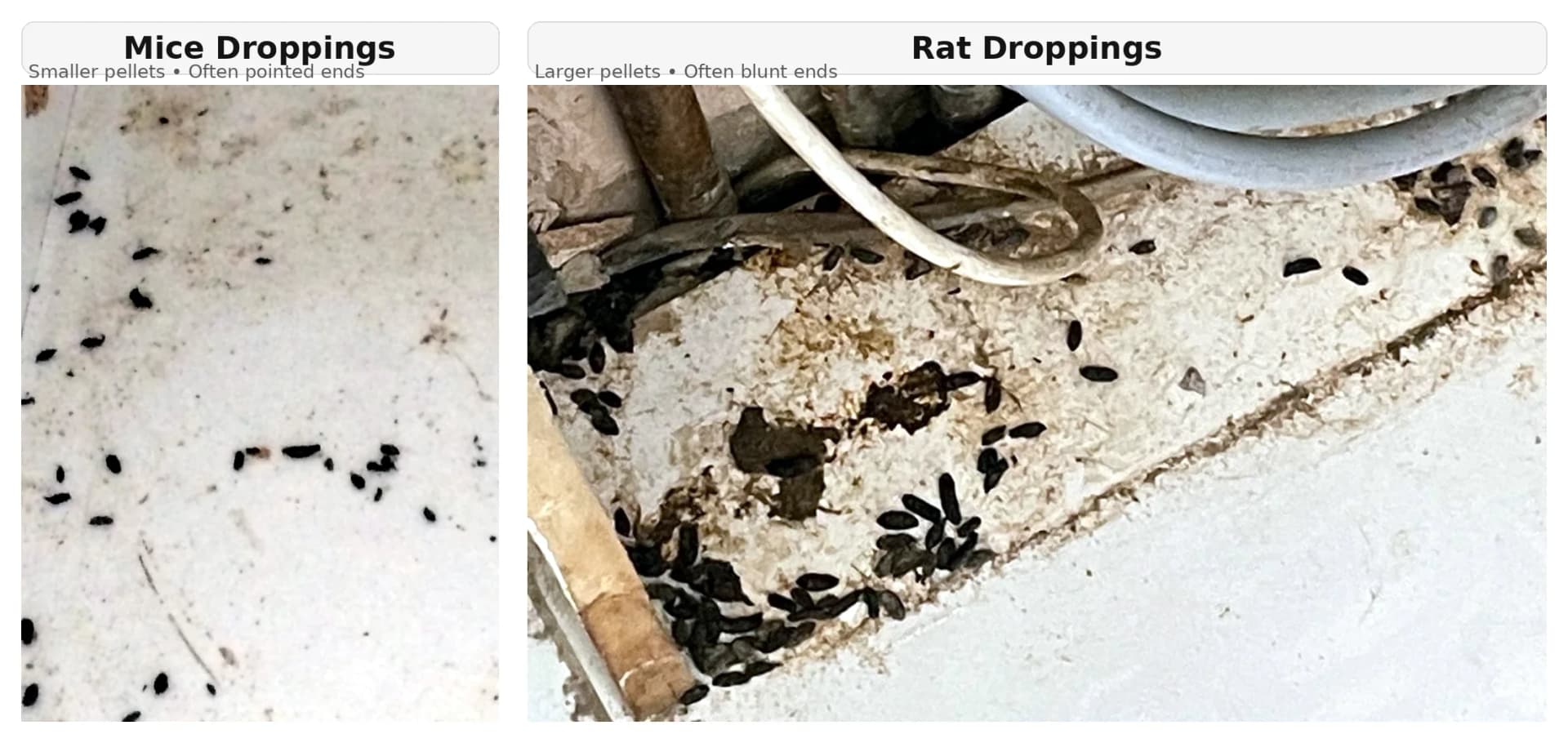
The most common confusion is between mouse and rat droppings. Rat droppings are significantly larger — 10 to 20mm long — with blunt, rounded ends rather than pointed ones. Brown rat droppings are dark brown and capsule-shaped, while black rat droppings are thinner and slightly curved.
If the droppings you have found are smaller than 8mm with pointed ends, you almost certainly have mice. If they are larger than 10mm with rounded ends, you have rats. The distinction matters because treatment approaches and the urgency of response differ between the two. Our rats vs mice guide covers all the differences.
Other pest droppings that are sometimes mistaken for mouse droppings include cockroach frass (even smaller, often smeared rather than pellet-shaped) and bat droppings (similar size but crumble to a fine powder and contain insect fragments).
Where to Find Mouse Droppings
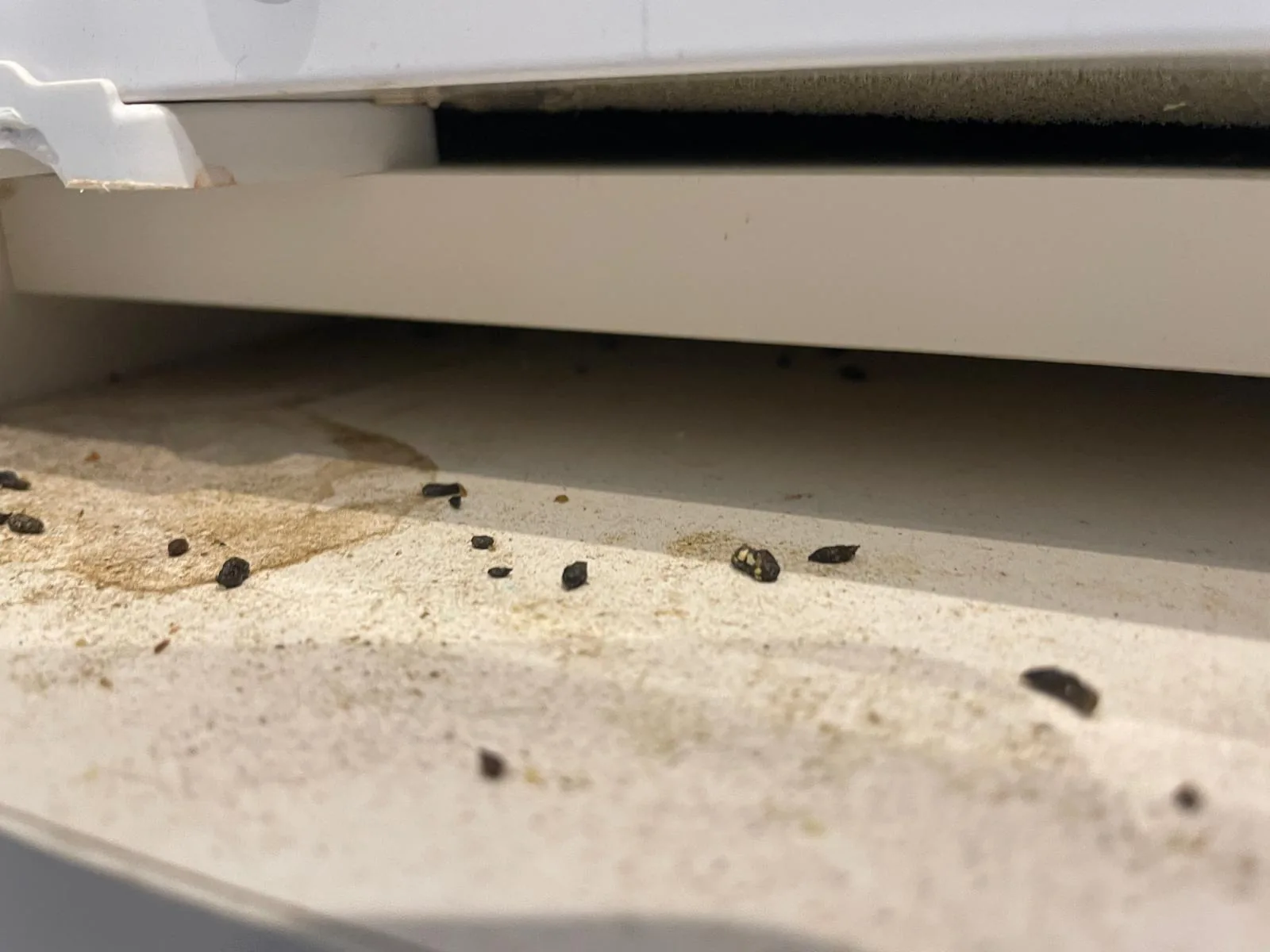
Mice follow the same routes between their nest and food sources, staying close to walls and edges. The heaviest concentrations of droppings are found along these runs and near food sources. Start your inspection in the kitchen — check inside cupboards (especially under the sink), behind the fridge, behind and under the oven, and in the gap between the worktop and the wall.
Next, check the airing cupboard, utility room, and any cupboards containing pipework — mice use pipes as highways through a building. In the loft, look along joist lines and near water tanks where insulation provides warm nesting material.
Garages, sheds, and under-stairs cupboards are also common sites, particularly if they contain stored cardboard boxes, bags of bird seed, or pet food. The number of droppings in a location indicates how frequently mice visit that spot — heavy deposits mean a nest or feeding area is very close by.
Health Risks from Mouse Droppings
Mouse droppings carry a range of harmful bacteria and viruses. Salmonella is the most common risk — mice contaminate kitchen surfaces and food with Salmonella bacteria through their droppings, which can cause food poisoning with symptoms including diarrhoea, vomiting, and fever.
Hantavirus, though rare in the UK, can be transmitted through inhaling dust from dried mouse droppings and urine. This is why disturbing large accumulations of droppings — particularly in lofts and sheds — without proper precautions is dangerous. Leptospirosis (Weil's disease) is another risk, spread through mouse urine rather than droppings.
Mouse droppings and urine also contain potent allergens. Research has shown that mouse allergens are a significant trigger for asthma attacks in children living in infested homes, making cleanup and eradication important even if the mice are not causing visible damage to your property.
Need professional help with mice control? BuzzKill Pest Control offers fast, effective treatment with no call-out charge.
How to Clean Up Mouse Droppings Safely

Never sweep or vacuum mouse droppings dry. Sweeping and vacuuming can aerosolise bacteria and viral particles, making them airborne and easy to inhale. This is particularly dangerous with large accumulations in enclosed spaces like lofts.
Wear rubber or latex gloves and a dust mask (FFP2 or higher). Spray the droppings and surrounding area with a disinfectant spray or a solution of 1 part bleach to 10 parts water. Let it soak for at least 5 minutes before wiping up with disposable paper towels.
Double-bag all waste, seal the bags, and dispose of them in your outdoor bin. Wash your hands thoroughly with soap and hot water after removing gloves. If the contamination is extensive — for example, heavy droppings throughout a loft — consider professional cleaning to ensure safe and thorough decontamination.
Droppings Keep Appearing After Cleaning
If you clean an area and fresh droppings reappear within a day or two, you have an active infestation that cleaning alone will not solve. The mice are still present and still travelling through your home.
Use the reappearing droppings as intelligence — they show you exactly which routes the mice are using and where to focus traps. Place snap traps along the routes where droppings are densest, perpendicular to walls with the trigger end against the skirting board.
If droppings continue appearing despite trapping efforts, professional treatment is needed. A pest controller will identify entry points, apply commercial-grade treatment, and recommend proofing to stop mice returning. Visit our mice treatment service page for details.
Frequently Asked Questions
How many droppings does one mouse produce per day?
A single mouse produces 50 to 80 droppings per day. They are scattered along travel routes rather than deposited in one spot, which is why you often find droppings in multiple locations throughout your home.
How long do mouse droppings remain dangerous?
Mouse droppings can remain infectious for several days after being deposited. Dried droppings are particularly hazardous because they crumble into dust that can be inhaled. Always disinfect droppings before removing them, regardless of how old they appear.
Can I get ill from touching mouse droppings?
Yes. Mouse droppings carry Salmonella and other bacteria. Always wear gloves when handling droppings and wash your hands thoroughly afterwards. Avoid touching your face during cleanup.
Do mouse droppings mean I definitely have mice right now?
Not necessarily. Old, dry, grey droppings may be from a past infestation. However, if you find fresh, dark, soft droppings — especially alongside old ones — mice are currently active in your property.
Should I be worried about mouse droppings in my loft?
Yes. Lofts are one of the most common nesting sites for mice. Droppings in the loft indicate mice are nesting in or travelling through the insulation. They can damage wiring, contaminate stored items, and compress insulation, reducing its effectiveness.
Professional Mice Control Service
Learn more about our mice control service, pricing, treatment methods, and customer reviews.
View Mice Control Service