
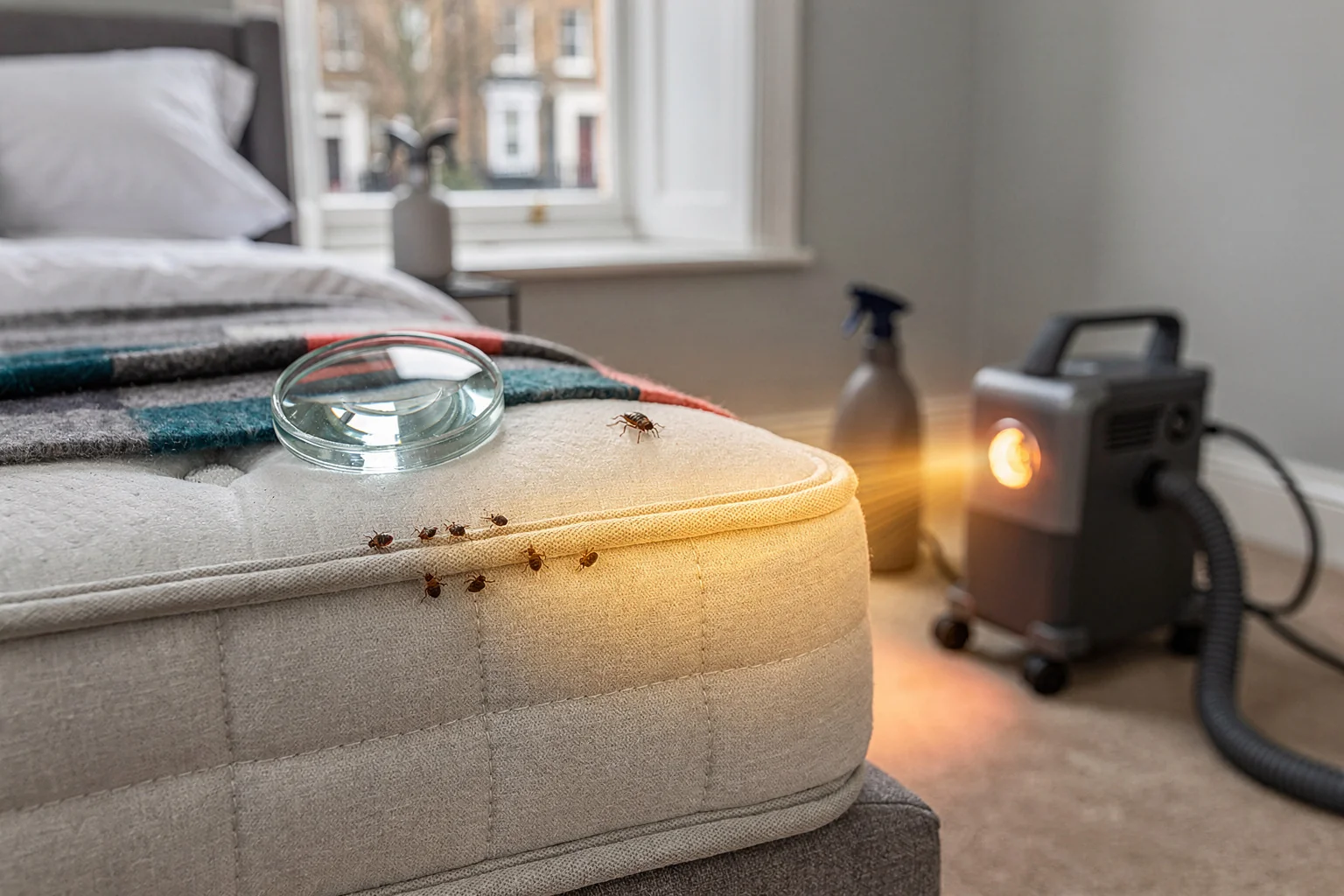
Finding bed bugs in your home stirs a particular kind of dread. You want them gone—fast—and you don't want them coming back. For years, chemical sprays were the go-to answer across London. But if you live in Greenwich, you've probably heard that the landscape has shifted. The same insecticides that once wiped out entire colonies are now bouncing off them, and a different tool has moved to the front of the queue: heat.
Below, I've embedded a short walkthrough that explains how a professional bed bug heat treatment works and why so many Greenwich households are choosing it over chemical sprays in 2026. The video is from a recent treatment—real equipment, real process, nothing staged. It's the single best way to see what happens before you pick up the phone.
Video: BBH Treatment Plans Explained: Fast Relief vs. Total Control.”
Why Chemical Sprays Keep Letting Greenwich Homeowners Down
The story of insecticide resistance in bed bugs is not new, but it got a lot worse since 2023. Across the UK, pest controllers have been documenting treatment failures with pyrethroid-based products—the same chemicals that powered most over-the-counter bed bug sprays and many professional solutions for decades. In July 2026, the International Business Times reported that resistance was "only getting worse" and that pest-control experts now describe it as a leading cause of treatment failures.
Bed bugs produce several generations a year. Every time a chemical kills 95% of them, the 5% that survive pass on their resistance genes to the next generation. Do that across thousands of properties in a dense city, and you end up with what the Mirror called "mutant bed bugs" in a July 2026 piece: insects that have genetically adapted so that the old sprays barely slow them down. This isn't folklore—it's observable biology, and it means a chemical treatment that might have cleared a Greenwich flat in 2020 now frequently demands multiple follow‑up visits, dragging the cost and disruption out for weeks.
The regulatory landscape has also shifted. London pest controllers work under strict product‑use rules designed to protect people, pets, and waterways. Products like Alpine WSG, a newer residual insecticide that still shows some effectiveness, come with Alpine WSG legal regulations London that limit how and where it can be applied—especially in bedrooms and areas where children or pets sleep. Those rules are sensible, but they narrow the chemical toolkit at exactly the moment resistance is climbing.
None of this means chemical treatments never work. But for a family in a Greenwich terrace who want a single‑session fix that doesn't involve repeated spraying, heat has stepped into the gap.
What Heat Treatment Actually Does Inside Your Home
The video above captures the core sequence: a technician places temperature‑resistant hoses into the affected rooms, seals windows and doors, and slowly raises the air temperature to a level that bed bugs cannot survive. The magic number is around 49°C to 56°C at the insect's hiding spot, held long enough to penetrate mattresses, skirting boards, and the tiny voids in wooden bed frames where eggs sit.
Unlike sprays, heat doesn't need to make direct contact. The hot air moves into wall cavities, behind picture frames, and through the weave of a carpet, killing adults and eggs at the same time. That's significant because insecticide sprays often fail to reach eggs, leaving a second generation to hatch two weeks later—which is why chemical treatment plans routinely require at least two visits. A well‑executed heat treatment compresses that entire cycle into a single four‑ to six‑hour window.
There is no chemical residue afterwards. You can sleep in the same bed the same night. For anyone nervous about long‑term product exposure—parents, pet owners, people with respiratory concerns—that's a big practical advantage.
The video also shows the monitoring gear technicians use: thermocouple probes that feed real‑time temperature readings from the hardest‑to‑reach corners. If a wardrobe shelf is still too cool, the team adjusts airflow until it hits the kill threshold. Watching that sensor‑driven dance makes it clearer why professional equipment matters; a domestic steam cleaner or fan heater won't hold safe, even temperatures across a whole room.
Pinpointing the Problem Before You Book
Before committing to a treatment, you need to be sure you're dealing with bed bugs and not something that looks similar. Carpet beetle larvae, booklice, swallow bug strays—all of them turn up in Greenwich homes and can fool a tired homeowner at 2 a.m.
I keep a bed bug identification checklist for customers because the different life stages look nothing like each other. An adult is mahogany, flat, and about the size of an apple seed. A nymph is translucent and nearly invisible when unfed. Eggs are pearly white and smaller than a grain of salt. The cast skins—pale, dry, perfect outlines of the insect—are often the first sign people notice along a mattress seam.
Other clues: clusters of dark fecal spots on bedsheets or skirting (digested blood), a faint sweet‑musty scent in heavy populations, and—of course—bite patterns that appear as lines of two or three on exposed skin. The bites themselves aren't diagnostic; some people show no reaction at all. But if you wake with a fresh row of itchy welts and find even one of those physical signs, it's time to act.
Greeting a technician with a clear description—"I found cast skins along the headboard joint and blood spots on the corner of the sheet"—shortens the inspection to minutes. That matters because every day you wait, a female bed bug can lay three to five eggs.
How Heat Treatment Compares to Chemical Sprays, Side by Side
When someone calls us about bed bug removal Greenwich, the first question is almost always: which method will actually end the problem? A straightforward comparison helps.
| Heat Treatment | Chemical Treatment | |
|---|---|---|
| How it kills | Raises room temperature above 49°C for several hours; penetrates hiding spots uniformly. | Applies residual insecticide to surfaces where bugs walk; relies on direct or near‑direct contact. |
| Eggs | Kills eggs first pass—no second hatch. | Many sprays do not penetrate egg shells, requiring a follow‑up two weeks later. |
| Resistance risk | None. Heat kills regardless of genetic mutation. | High. UK populations are now widely resistant to pyrethroids; newer actives carry tighter regulations. |
| Sessions needed | Usually one session of 4–8 hours. | Standard protocol is two visits (initial spray + follow‑up), sometimes three. |
| Residue | None. Home is immediately reusable. | Dry‑residue films remain on treated surfaces; bedding and upholstery often need washing afterwards. |
| Room prep | Remove heat‑sensitive items (candles, pressurised cans, certain plastics). Everything else stays. | Most soft furnishings must be washed or sealed; mattresses often encased. |
| Ideal for | Flats, terraces, family homes, rooms with lots of furniture, anyone who needs a one‑day solution. | Outbuildings, garages, some commercial settings where heat might not be feasible. |
This table intentionally stays high‑level because every property is different. A Greenwich maisonette with a sealed‑up Victorian fireplace will hold heat differently than a modern studio. A good technician adjusts the heat cycle to the room's thermal profile; the technology is as important as the method.
Preparing Your Greenwich Flat or House for a Heat Visit
Heat treatment works fastest when the technician can move air into every hiding spot without obstruction. The prep list is short, but getting it right before the arrival window means treatment starts immediately rather than after an hour of moving furniture.
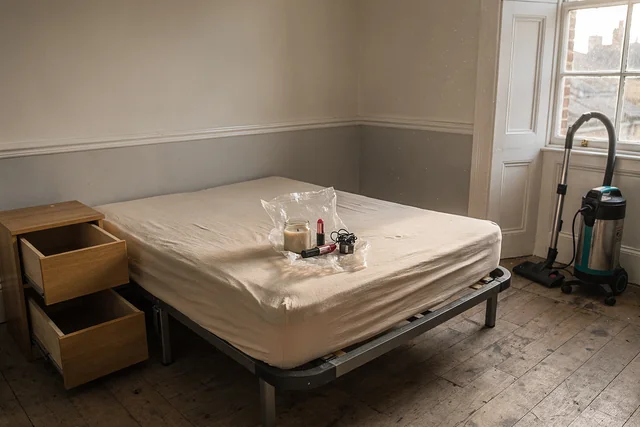
- Clear the perimeter. Pull beds, wardrobes, and sofas 30 cm away from walls. The technician needs to place hoses and check temperatures behind each piece without shifting heavy furniture during the cycle.
- Remove meltables. Candles, lip balm, chocolate, vinyl records, pressurised spray cans, and aerosol products must come out of the treatment zone. The heat won't damage furniture or electronics, but these items will warp or burst.
- Unplug, don't switch off. Small electronics—lamps, chargers, clock radios—can stay in the room if they're unplugged. The hot air isn't electrical current; once power is disconnected, the devices handle the temperature safely.
- Bag linens, don't launder them yet. Strip the bed and seal sheets, duvet covers, and pillowcases in a clear plastic bag. The bag goes into the treatment room so that the heat kills any bugs or eggs on the fabric. Wash them afterwards on a hot cycle as a final clean step, not as the primary killer.
- Open everything. Kitchen cupboards, built‑in wardrobes, under‑bed drawers—leave doors and drawers ajar. The more airflow channels, the faster the kill.
One of the best things you can do before the day is run a vacuum over the mattress seams and around the bed frame, then dispose of the vacuum bag or empty the canister into a sealed outdoor bin immediately. It won't eliminate the problem, but it removes some of the load and gives the heat less target mass to overcome.
2026 Bed Bug Extermination Costs in Greenwich
Pricing always sits at the front of the conversation. In 2026, a professional heat treatment for a standard one‑bedroom flat in Greenwich typically lands between £350 and £550, depending on the room count and how much furniture needs to be worked around. Whole‑house treatments for three‑bedroom properties can run £600–£900. Those figures cover the equipment, the technician's time, and the guarantee period that follows.
I've published a deeper breakdown of 2026 bed bug extermination costs that compares heat, chemical, and combination approaches, so I'll keep it brief here. The key shift in 2026 is that the price of chemical treatments hasn't dropped, but their success rate has—especially when the homeowner has already tried a shop‑bought spray. Spending £200 on a chemical visit that fails and requires a second appointment isn't cheaper than a one‑shot heat session. It's just slower.
Some companies now offer a heat‑and‑monitor plan: a single heat session plus two weeks of passive monitor checks to confirm zero activity. That structure gives you the speed of heat with documented proof that the room is clear.
Why Greenwich Is Seeing More Bed Bug Cases This Year
You might feel like everyone you know has either had bed bugs or knows someone who has. The numbers back that feeling up. According to data cited in Good Housekeeping in July 2026, one London borough alone reported a 40% rise in bed bug callouts compared with the same period in 2025. Greenwich hasn't been immune—its density of Victorian‑era housing, short‑term rentals, and constant movement between London and Europe via the O2 and local transport networks creates the perfect conditions for hitchhikers.
The BBC ran a story in June 2026 about a tenant who moved into a £1,750‑a‑month rental flat in Stepney only to find bed bugs crawling up the pillows. That case points to a reality that affects Greenwich too: a fast‑moving rental market where properties change hands without proper inspections. Combine that with record holiday travel—bed bugs are master hitchhikers, nestling into suitcase seams—and you have a recipe for wider spread.
The warmer summers don't help. Bed bugs breed faster when temperatures sit between 21°C and 32°C. Extended London heatwaves compress the lifecycle, meaning a small introduction in June can become a heavy population by August. Heat treatment becomes a particularly good fit in this seasonal pattern because it doesn't require waiting for a chemical product to take effect over weeks; it flattens the population in an afternoon, right before the family holiday or a tenant move‑out deadline.
Common Questions About Bed Bug Heat Treatment in Richmond and Greenwich
Even after watching the video, most people have a few practical concerns. These are the ones I hear in calls across SE10 and the surrounding postcodes.
Will the heat damage my wallpaper, paint, or furniture?
No, when run correctly. The temperatures used—typically 49°C to 60°C—are below the damage threshold for most household materials. Painted walls, plaster, hard furniture, and books handle it fine. The real risks are the meltables mentioned earlier (wax, certain plastics, chocolate) and delicate glues on some antique veneers, which a technician will identify during the pre‑inspection.
Do I need to leave my flat during treatment?
Yes. You, your family, and any pets must be out for the duration. The process takes four to eight hours depending on the room size, and nobody enters until the technician confirms the temperature has returned to a safe level and the air quality is clear.
Is one session really enough?
For almost all residential cases, yes—provided the treatment is done by a trained operator who monitors core temperatures with wired probes rather than guessing. The key advantage is that heat kills eggs in one go, removing the need for a follow‑up session. If the property is part of a multi‑unit building where the infestation has crossed into a neighboring flat, the whole building may need coordinated treatment; that's a different conversation.
Can I use a DIY steam cleaner instead of booking a service?
You can, and steam (over 100°C) will kill bed bugs and eggs on contact. But steam only treats what you can directly reach—it won't get behind skirting boards, inside wall voids, or deep into a mattress. Professional heat treatment raises the entire room's ambient temperature, which solves the access problem. I mention this not to dismiss DIY tools, but to be clear about what they can and cannot achieve. The Repel Ninja video on natural bed bug elimination methods explains some of these distinctions well.
What about smoke alarms and sprinklers?
The technician will temporarily cover or isolate smoke detectors per the manufacturer's instructions. Residential sprinklers are not triggered by heat alone—they rely on a fusible link that requires direct flame contact or sustained extreme heat above the treatment range. Fire services guidelines confirm this, and any competent pest control team brings documentation.
How soon after treatment can I bring things back in?
Same evening. Once the room has cooled to a comfortable temperature and the technician gives the all‑clear, you can move back in, remake beds, and return any bagged linens. No airing‑out period is needed because there's no chemical fog or residue.
The video you watched at the top of this page is the closest thing to being in the room without actually smelling the warmth off the equipment. Seeing the process tends to replace anxiety with a surprising amount of calm—most people are relieved to know it's a single, controlled event rather than an ongoing chemical campaign.
If you're in Greenwich and you've found those tell‑tale signs, the next move is straightforward: confirm the pest, prep the space, and choose a method that ends the problem in one day rather than stretching it across weeks. Heat treatment won that race for good reason.
Need professional help? BuzzKill offers fast, reliable pest control services across London and Essex.