
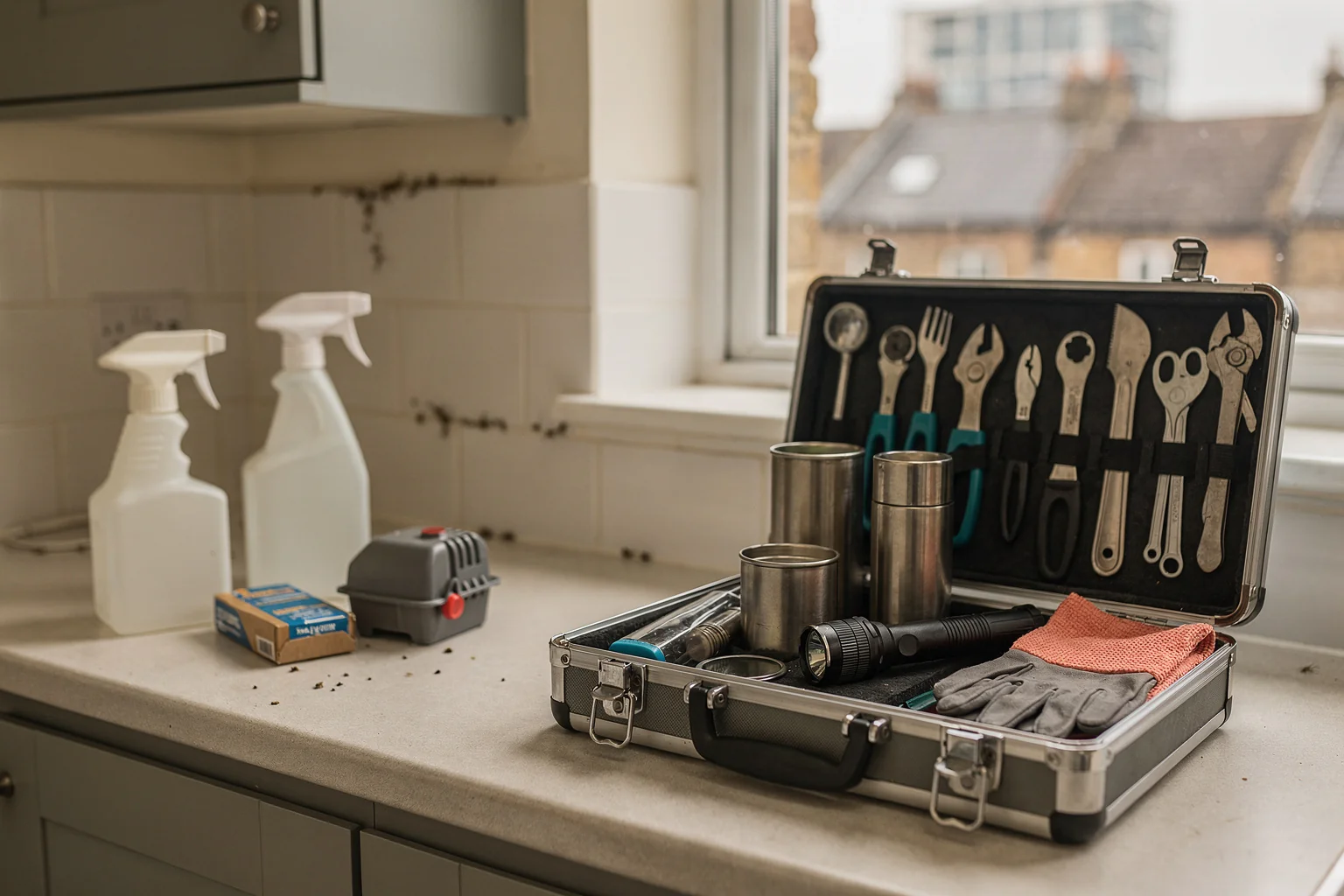
When Priya found mouse droppings behind her fridge in a Stratford flat last November, her first search wasn't for a pest control company. It was for "how much does this cost." She'd just moved from Manchester, where her mum's council still treated rats free of charge. In East London, she discovered, the same service could cost nothing, £60, or £250 depending on who she called and which borough she lived in.
That confusion is normal. Pest control pricing in East London isn't transparent because it shouldn't be uniform. A single wasp nest in a Waltham Forest garden shed and a bed bug treatment across a five-bedroom Victorian in Hackney are barely the same service. This article breaks down what you're actually paying for, where the money goes, and how to judge whether a quote represents value or just a low headline price that balloons later.
The False Choice: Council, National Chain, or Independent
Most East London homeowners assume they face a simple three-way decision: call the council, ring a big national firm, or find a local independent. The reality is more layered.
Council pest services still exist in some boroughs, but their scope has narrowed sharply. A June 2026 report from the British Pest Control Association found roughly half of UK local authorities have eliminated or severely reduced direct pest control provision. In East London, this plays out unevenly. Newham Council still offers rat treatments free to residents, with other pests starting at £60. Barking and Dagenham charges owner-occupiers £86.15 for wasps and £173.35 for mice including two follow-ups, with payment required in full before attendance. Harrow's 2026 pest control policy restricts free treatment to council tenants in social housing for statutory pests only.
National chains bring brand recognition and standardized procedures. Their pricing often sits in the middle-to-upper range, with London premiums of 20–40% above national averages according to TradeMatch UK data. You're paying for the infrastructure: call centres, branded vans, and guaranteed response windows. Whether that translates to better outcomes depends heavily on which technician gets assigned to your postcode.
Independent operators, particularly NPTA-registered and BASIS PROMPT-certified firms, can offer more flexible pricing because they carry lower overheads. The key variable is verification. A legitimate local specialist should carry public liability insurance (BuzzKill operates with £5 million cover), hold RSPH Level 2 qualifications as a minimum, and provide same-day response without call-out charges. The cheapest quote rarely comes from the cheapest total cost once follow-up visits and guarantees are factored.
What Drives the Price Up or Down
Four factors separate a £60 job from a £600 one. Understanding them helps you interpret quotes that initially seem wildly divergent.
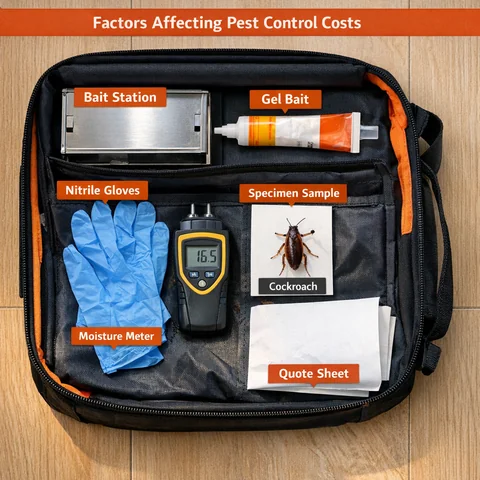
Pest type and biology. Wasps nest in one location, can often be treated in a single visit, and the nest itself is the target. London wasp removal typically ranges from £60–£120. Bed bugs hide in cracks, survive multiple treatment types, and require follow-up inspections. London bed bug removal starts around £150–£200 for a single room but multiplies across bedrooms and visits. Rats and mice fall between these extremes, with baiting programmes usually needing two to three visits over several weeks.
Property size and access. A one-bedroom flat in Canary Wharf with lift access and clear floor space is faster to treat than a four-storey townhouse in Bethnal Green with original floorboards and multiple entry points. Per-room pricing makes sense for bed bugs and fleas; rodent jobs scale with the number of bait stations, entry points to seal, and follow-up complexity.
Urgency and timing. Same-day and weekend callouts carry premiums. A wasp nest discovered Saturday morning before a family barbecue costs more than one reported Tuesday morning with no immediate risk. 24/7 emergency services exist because pests don't follow business hours, but the technician's overtime and travel at unsocial hours are priced in.
Treatment method. Chemical sprays remain standard for many insects. Heat treatment for bed bugs, increasingly common after Fantastic Pest Control's 2026 rollout of faster low-pesticide machines, cuts pesticide use by roughly 40% but requires specialized equipment and often costs £800+ for whole properties. Fumigation, bird-proofing, and proofing work (sealing entry points) each add distinct cost layers.
Realistic Price Ranges by Pest and Property
The table below synthesizes verified 2026 data from council sources, trade platforms, and private operators serving East London. Treat these as orientation points, not guarantees. Your specific quote depends on the factors above.
| Pest / Service | Small property (1–2 beds) | Medium property (3 beds) | Large property (4+ beds) |
|---|---|---|---|
| Wasp nest removal | £60–£100 | £80–£120 | £100–£150 |
| Rat treatment (with follow-ups) | £150–£220 | £180–£280 | £220–£350 |
| Mouse treatment (with follow-ups) | £130–£200 | £160–£250 | £200–£320 |
| Bed bugs – chemical treatment | £150–£250 | £250–£400 | £400–£600 |
| Bed bugs – heat treatment | £600–£800 | £800–£1,200 | £1,200–£1,800 |
| Flea treatment (inc. follow-up) | £150–£220 | £200–£280 | £280–£380 |
| Cockroach treatment | £150–£220 | £180–£280 | £250–£350 |
Council rates sometimes undercut these figures but may exclude VAT, require prepayment, or limit follow-up visits. Barking and Dagenham's published 2026 prices include VAT and two follow-ups for rodents, making them competitive against private quotes for straightforward cases. Newham's bed bug rate of £305 with unlimited visits represents strong value for persistent infestations, though availability and booking windows vary.
Private operators typically build guarantees into their pricing. A £250 mouse treatment that includes three visits over eight weeks and free callbacks if activity resumes may cost less over time than a £120 single-visit treatment that fails and needs restarting.
When Same-Day Service Makes Financial Sense
Not every pest situation justifies urgency pricing. A wasp nest in autumn, when the colony is naturally declining, might wait two days. A kitchen overrun with mice in a restaurant ahead of an environmental health inspection cannot.
Same-day premiums in East London typically add £50–£100 to base rates, with 24/7 emergency callouts at the higher end. These costs reflect technician availability, travel time across congested boroughs, and the operational complexity of after-hours dispatch.
For landlords and business operators, the calculation shifts. A single day of closure or a failed inspection carries costs far exceeding the premium. Residential customers should weigh the actual risk: bed bugs spread room-to-room within days, making delay expensive. A solitary wasp nest in an unused garden corner probably doesn't.
How Location Within East London Affects Your Quote
"East London" covers diverse housing stock, transport links, and pest pressures. A technician based in Enfield will quote differently for a job in Poplar than for one in Waltham Forest, factoring travel time, congestion charges, and parking costs.
Inner East London postcodes — Tower Hamlets, Hackney, Newham — see higher bed bug call-out volumes due to dense rental markets and high tenant turnover. Technicians can achieve economies of scale, but demand pressure also pushes prices up during peak seasons (May–September for insects, autumn for rodents seeking shelter).
Outer East London — Barking and Dagenham, Havering, Redbridge — has more suburban housing with gardens, increasing wildlife and wasp nest variety but reducing per-square-foot treatment density. Barking and Dagenham bed bug removal and Waltham Forest bed bug removal may differ in pricing from Hackney bed bug removal or Tower Hamlets bed bug removal partly because of these structural factors.
Specific micro-locations carry their own patterns. Stratford bed bug removal demand spikes around student accommodation turnover. Canary Wharf bed bug removal involves more high-rise access and discretion requirements. Whitechapel bed bug removal and Bethnal Green bed bug removal face recurring issues in converted Victorian properties with original plaster and voids that complicate treatment.
Who You're Comparing: Six Options for East London Pest Control
Panther Pest Control

Panther Pest Control publishes detailed 2026 London pricing guidance based on their operational data. Their guide places basic residential jobs at £80–£180, standard treatments at £150–£350, and complex multi-visit infestations at £300–£600+. Specialist heat treatments for bed bugs are noted to exceed £800 for larger properties. Rat treatments typically range £200–£350 including multiple visits and bait stations. Their transparency on price ranges helps customers budget, though actual quotes depend on inspection findings.
PestPro Index
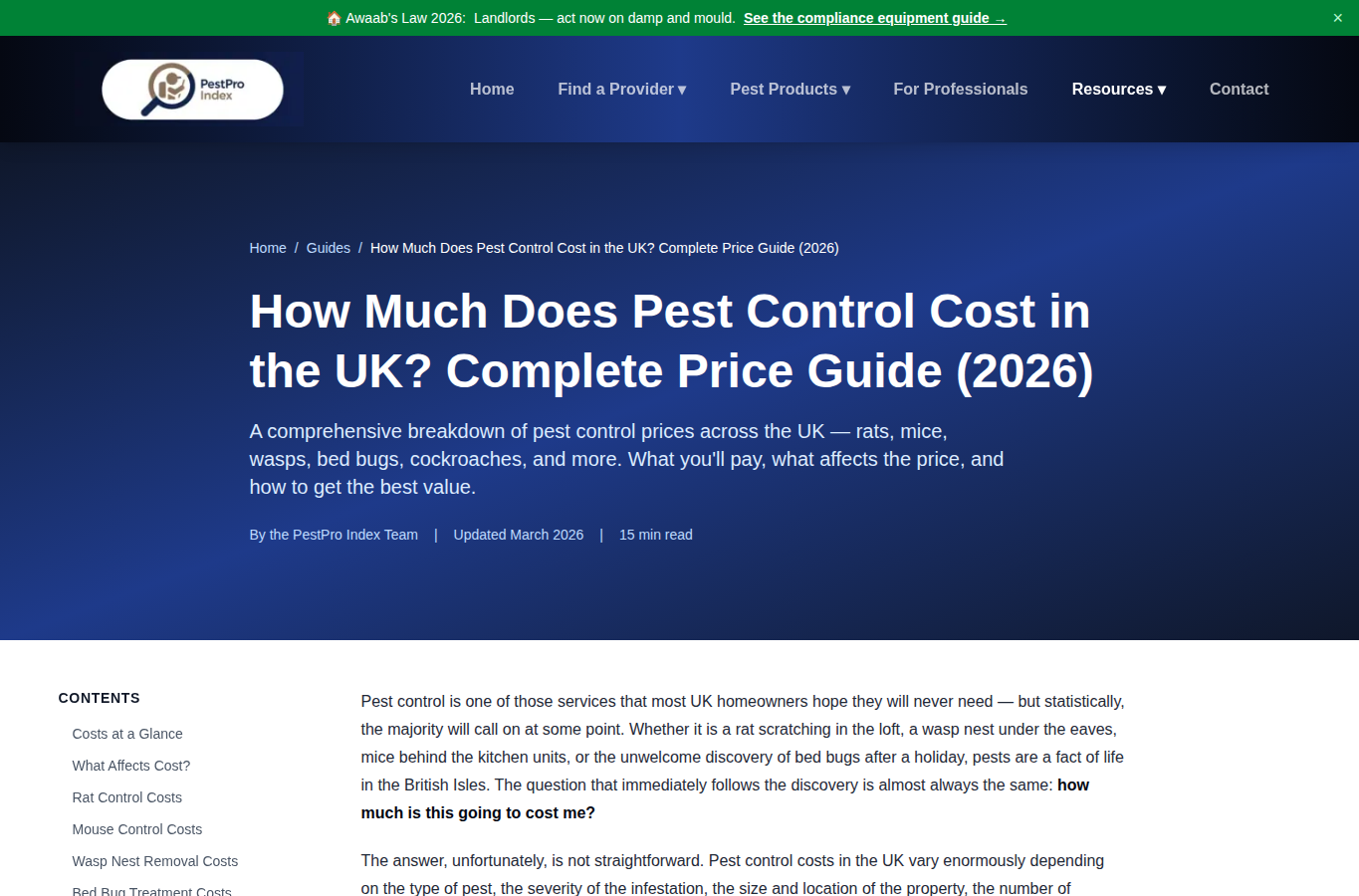
PestPro Index provides a UK-wide price comparison framework rather than direct services. Their 2026 guide notes enormous variation based on infestation severity, property size, location, and visit frequency. A straightforward wasp nest might cost £50, while severe bed bug heat treatment across multiple rooms could reach £1,500. The platform emphasizes judging value on a like-for-like basis rather than headline prices alone, useful for East London customers comparing disparate quotes.
How Much Should It Cost
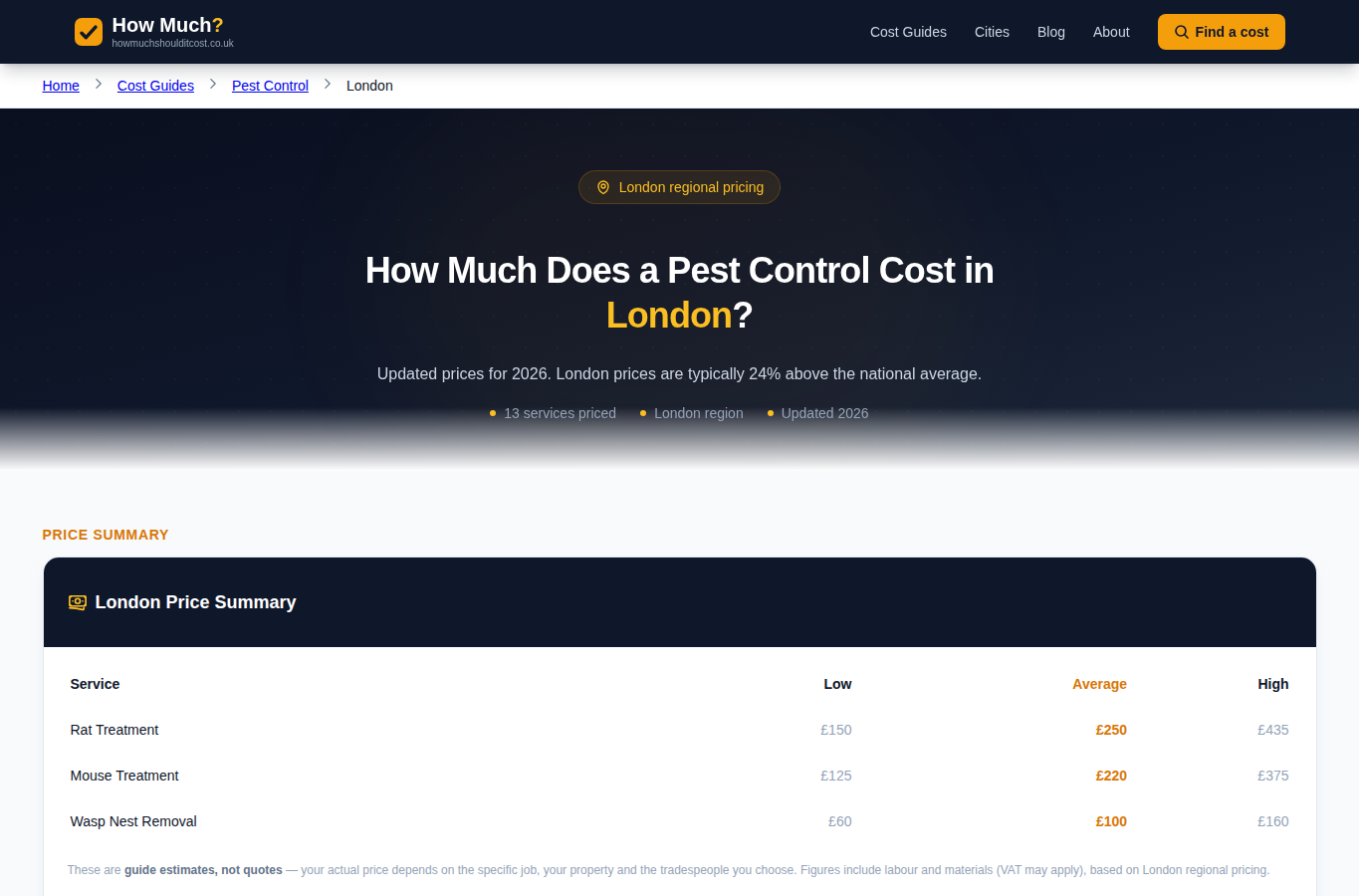
How Much Should It Cost aggregates verified London pricing with regional adjustments. Their 2026 data shows London pest control costs running 24% above national averages, with rat treatment at £150–£435, mouse treatment at £125–£375, and wasp nest removal at £60–£160. Prices include labour and materials with VAT potentially additional. The platform's reliance on Office for National Statistics wage data provides a grounded benchmark for labour cost expectations.
TradeMatch UK
TradeMatch UK tracks real quotes from vetted professionals. Their 2026 UK averages place typical pest control at £100–£300, with London and South East premiums of 20–40%. Emergency callouts range £80–£300, consultations £50–£250, and large complex jobs £1,000–£5,000. Their live-quote model means East London customers can receive fixed-price offers based on specific job details rather than estimate ranges.
MyJobQuote
MyJobQuote gathers data from actual homeowner quotes on their platform. Their 2026 figures show average pest control at £100, with most jobs taking 3–6 hours. Single wasp nests or cockroach treatments start around £50, while comprehensive flea treatments including carpets and furniture rise toward £250. The platform's cost calculator offers instant estimates, though these require validation against specific East London property characteristics.
Reading a Quote: What to Check Before Booking
A low initial price often excludes elements that become mandatory. When comparing quotes for pest control east london prices, request clarity on:
- Whether the price includes VAT
- Number of visits covered and interval between them
- Guarantee period and conditions (does "guaranteed" mean free callbacks or partial refund?)
- Whether proofing work is included or quoted separately
- Out-of-hours surcharge structure
- Cancellation or postponement terms
Ask specifically about follow-up protocols. A bed bug treatment without scheduled revisit is incomplete by any professional standard. Rodent baiting without entry-point inspection leaves the underlying problem unresolved.
Why Bed Bugs Cost More Than Everything Else
The price gap between wasp removal and bed bug treatment isn't arbitrary profiteering. Bed bugs (Cimex lectularius) are cryptic insects that squeeze into cracks 1mm wide, survive months without feeding, and have developed resistance to several common insecticides. Effective treatment requires either multiple precisely-timed chemical applications with mattress and furniture disassembly, or whole-room heat treatment raising temperatures to 49–60°C for sustained periods.
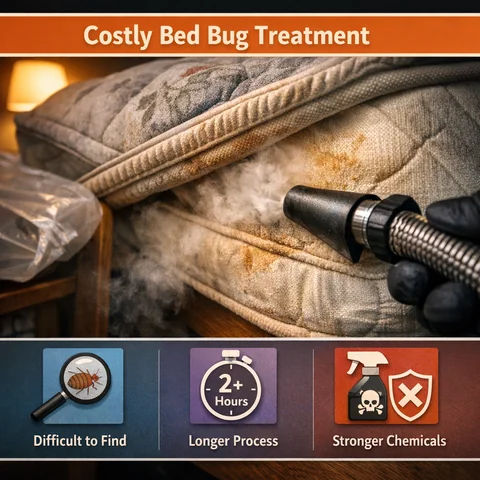
Heat treatment costs more upfront because it requires specialized equipment, often tenting of rooms, and careful monitoring to avoid damage to heat-sensitive items. However, it frequently resolves infestations in a single day, reducing disruption and follow-up costs. Chemical programmes spread cost across visits but demand extensive preparation: washing bedding at 60°C, dismantling bed frames, clearing floor clutter, and vacating treated rooms for hours.
For East London's high-turnover rental market, this preparation burden often falls on tenants with limited time and storage options. Landlords should factor tenant coordination into their cost calculations, not just the technician's fee.
Your Next Move Depends on Evidence and Urgency
If you've found droppings, a nest, or bite marks, photograph them before cleaning. This evidence helps technicians estimate severity remotely and quote more accurately. For rats and mice, note locations, timing (nocturnal activity is typical), and any gnawing damage. For bed bugs, check mattress seams, headboard crevices, and nearby skirting boards for shed skins or rust-coloured spotting.
With clear evidence, you can obtain meaningful phone estimates. Without it, insist on an inspection. Reputable operators will conduct surveys without obligation; those pressuring immediate booking over vague descriptions warrant caution.
The routing decision is straightforward once you know what you're facing. Single, accessible wasp nests in season: compare two or three quotes, check NPTA or BPCA registration, and book. Suspected rodents: prioritize operators offering proofing assessment and multiple visits in their base price. Bed bugs: budget for the higher end of ranges, verify heat treatment capability if you need rapid resolution, and confirm preparation requirements before committing.
For properties in East Ham, Stratford, Newham, or surrounding boroughs, local knowledge matters. A technician familiar with the specific building types, common entry points, and seasonal patterns of your postcode will diagnose faster and treat more precisely than one working from generic protocols. That's the hidden value in local operator selection that headline prices rarely capture.
Need professional help? BuzzKill offers fast, reliable pest control services across London and Essex.