
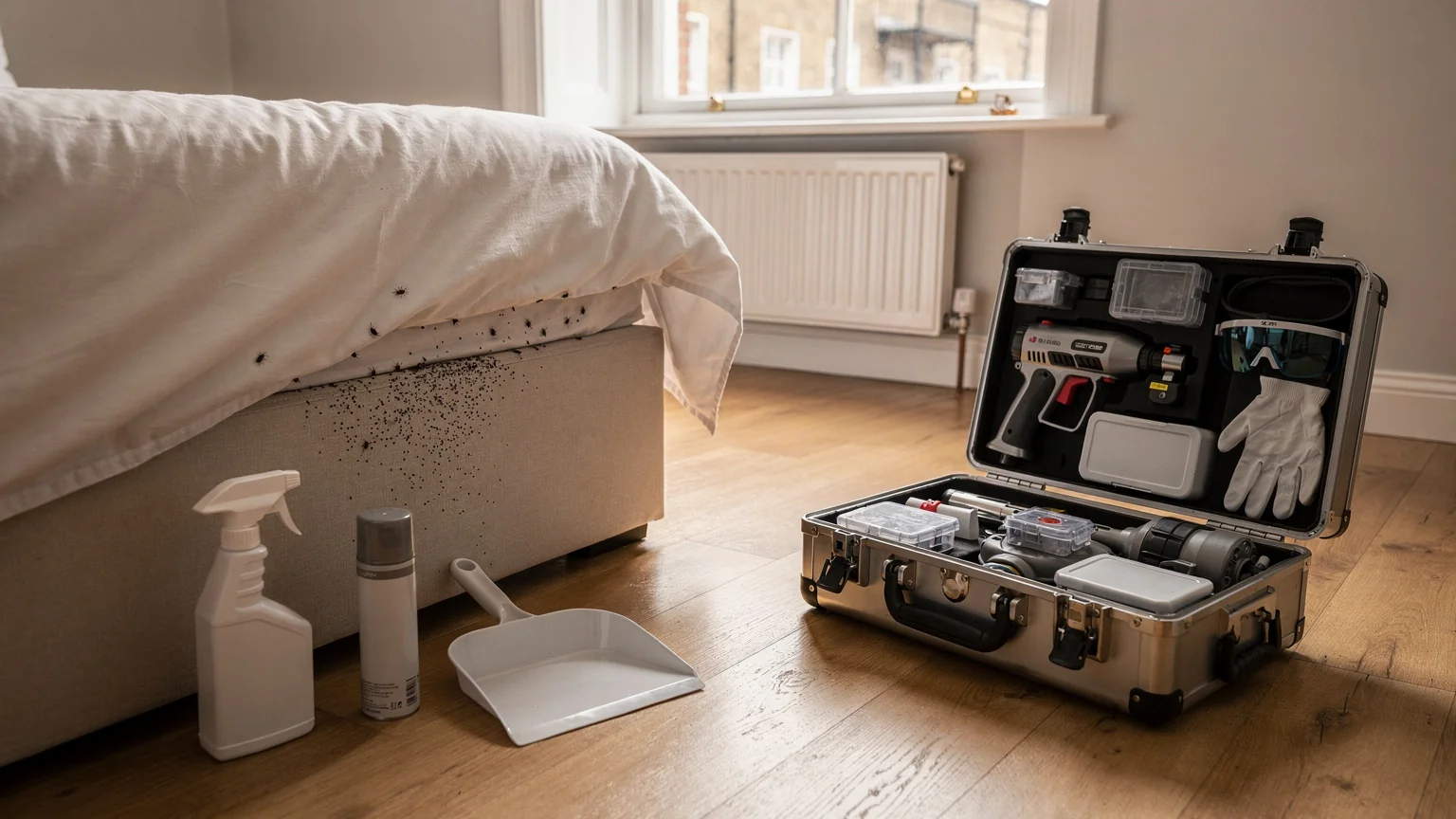
The false choice most homeowners face is not between cheap and expensive. It is between doing something now with an aerosol can or waiting until the bites force a panicked call to the first company that answers. The hidden third option is to match the treatment method to the evidence level, property type, and recurrence risk before spending any money. Getting the extermination services cost right depends on making that match correctly the first time.
What the Evidence Actually Tells You
Bed bug evidence falls into three tiers, and each tier should trigger a different cost expectation. The first tier is isolated signs: one or two live insects, a small cluster of dark faecal spots on a mattress seam, or a single line of bites after travel. The second tier is established harbourage: cast skins in headboard crevices, live insects in multiple rooms, or a sweet musty odour in a heated bedroom. The third tier is widespread dispersal: insects found in electrical outlets, skirting boards, or adjoining flats.
A Tower Hamlets landlord discovered this distinction the hard way in February 2026. After spotting three insects in a tenant's bedroom, he bought four cans of retail spray and treated the room himself. Six weeks later, the adjoining flat reported bites. The original infestation had pushed insects into wall voids under the pressure of incomplete chemical application. His eventual professional bed bug removal required three visits and heat treatment of two flats, not one.
Property type changes the risk calculation. A ground-floor flat in a converted Victorian terrace in Waltham Forest shares pipe runs with six neighbouring units. A detached house in Essex does not. A hotel room in Shoreditch turns over guests weekly. A family home does not. Each scenario changes the probability of reinfestation and the appropriate treatment intensity.
Retail Chemical Sprays: When They Work and When They Fail
DIY chemical sprays cost between £8 and £35 per can in 2026. Most contain pyrethroids, neonicotinoids, or a combination of both. These products can kill exposed insects on contact. They rarely reach insects inside mattress seams, behind wallpaper, or within electrical fittings.
The failure mode is well documented. Bed bugs have developed measurable resistance to common pyrethroids in London populations. A 2024 study from the University of Sheffield found that over 80% of UK bed bug samples showed resistance genes to at least one major pyrethroid compound. Spraying visible insects gives temporary relief while the hidden population continues breeding.
Best-fit situation: isolated tier-one evidence in a single room, no adjacent units, no children or pets present, and the occupant has time to monitor for fourteen days after treatment. Time window: immediate application, but requires repeated inspection. Cost consequence: £30-£100 in products, high risk of escalation to professional treatment if initial application fails.
Safety framing matters. Most retail sprays carry label warnings about application near bedding, food preparation surfaces, and aquariums. The National standards of healthcare cleanliness emphasise that pest control in sensitive environments requires documented risk assessment. Homeowners with asthma, pregnant occupants, or young children should treat chemical residues with equivalent caution.
Professional Chemical Treatment: The Multi-Visit Model
Professional insecticide treatment from a registered technician typically costs £180-£400 for a standard three-bedroom property in London, with prices at the higher end for Essex and the South East. The Pest control treatments and charges published by the Royal Borough of Kensington and Chelsea illustrate how council services structure this: an initial survey, followed by multiple treatment visits spaced at intervals to match insect life cycles.
The effective professional chemical treatment uses residual insecticides in harbourage zones, combined with insect growth regulators that prevent nymphs from reaching reproductive maturity. Technicians apply products to cracks, crevices, and voids rather than surfaces occupants touch. Follow-up visits target eggs that hatch after the initial application.
Best-fit situation: tier-two evidence with defined harbourage points, property with no immediate adjacent-unit risk, and occupants who can vacate treated rooms for the specified period. Failure mode: incomplete preparation by the occupant. Bedding must be laundered at 60°C, furniture pulled from walls, and clutter reduced so insecticide reaches harbourage. Time window: typically two to three visits over four to six weeks. Cost consequence: £180-£400 for standard treatment, plus potential repeat cycle if preparation was inadequate.
A Hackney property manager learned this in March 2026. She booked bed bug treatment options for a two-bedroom rental but did not enforce tenant preparation. The technician treated accessible surfaces while insects remained in a wardrobe the tenant had refused to empty. The second treatment cycle cost an additional £220.
Heat Treatment: The Single-Day Option
Heat treatment raises the temperature of an entire room or property to between 56°C and 60°C and maintains it for a sustained period. This kills all life stages including eggs, which chemical treatments often miss. Equipment includes industrial heaters, fans, and remote temperature monitors. Technicians seal the space and track multiple probe points to ensure no cold zones remain.
Cost ranges from £600 to £1,200 for a standard property in London, with larger homes or multi-flat treatments running higher. The Pest control and welfare charges from London Borough of Hounslow show how council pricing differentiates treatment types, with complex insect treatments commanding premium rates over standard rodent calls.
Best-fit situation: tier-three dispersal, multiple rooms affected, adjacent-unit risk in flats or terraced housing, or situations where rapid resolution is essential. Heat treatment completes in a single day, allowing hotel rooms or rental properties to return to use quickly. Failure mode: heat sinks that technicians fail to identify. Dense books, folded fabrics, or wall voids with insulation can create cool pockets. Time window: one day of treatment, with pre-treatment preparation and post-treatment cooling. Cost consequence: £600-£1,200 upfront, but often lower total cost than repeated chemical cycles for severe infestations.
A Bexley hotel operator chose heat treatment in April 2026 after a guest reported bites in a third-floor room. The property's booking calendar could not absorb a three-week chemical treatment cycle. The single-day heat treatment allowed the room to return to service within forty-eight hours, and thermal monitoring confirmed no cold zones in the built-in wardrobe that had concerned the technician during survey.
The Decision Matrix: Matching Method to Situation
| Evidence Level | Property Type | Best Method | Typical Cost Range | Time to Resolution |
|---|---|---|---|---|
| Isolated signs, 1-2 insects | Single dwelling, no adjacents | DIY spray + monitoring | £30-£100 | 2-4 weeks if successful |
| Established harbourage, limited rooms | Flat or house with low reinfestation risk | Professional chemical, 2-3 visits | £180-£400 | 4-6 weeks |
| Widespread dispersal, multiple rooms | Flats, terraces, commercial | Heat treatment | £600-£1,200 | 1-2 days |
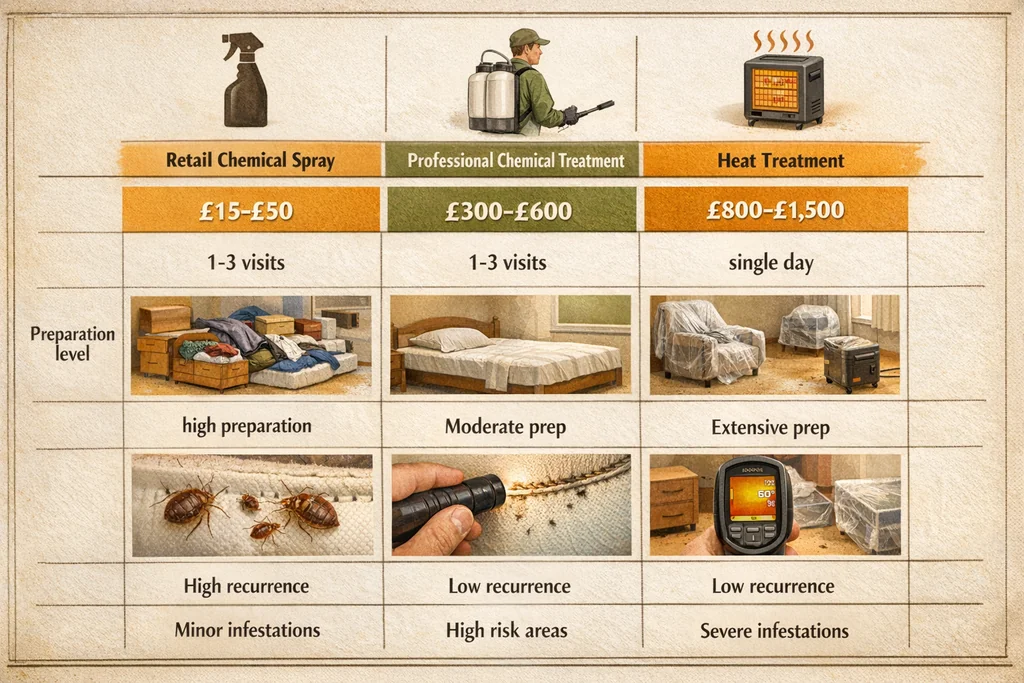
This table is a starting point, not a rule. A single-room infestation in a ground-floor flat with shared pipework may warrant professional chemical treatment despite limited visible evidence, because reinfestation risk from neighbouring units is high. A widespread but recent introduction in a detached house might respond to intensive chemical treatment if the source was a single item of luggage and harbourage points are accessible.
Cost Factors That Shift the Quote in 2026
Several variables affect the final extermination services cost beyond the base treatment type. Property size is direct: more rooms require more chemical product or larger heating equipment. Access difficulty matters. A loft conversion with restricted hatch access, a basement flat with narrow stairs, or a high-rise apartment with service elevator restrictions all add technician time.
Furniture density increases preparation requirements and treatment complexity. A minimally furnished rental property treats faster than a family home with twenty years of accumulated storage. Occupancy constraints matter too. Homes with elderly residents, newborn children, or pets may need modified chemical choices or temporary relocation during heat treatment, adding coordination cost.
Geographic location within London and Essex affects pricing. Central London postcodes with congestion charges and limited parking add travel time. Outer Essex locations may incur mileage charges from technicians based in urban hubs. The Pest control and welfare documentation from Hounslow shows how council services structure location-based pricing, and private operators follow similar logic.
Recurrence Risk and the True Cost of Incomplete Treatment
The hidden cost in any bed bug treatment is recurrence. A failed DIY attempt does not simply waste £50 in spray cans. It allows the population to expand, potentially spreading to adjoining properties and converting a £300 chemical treatment into a £900 heat treatment for multiple units.
Professional guarantees vary. Some operators include a twelve-week guarantee with chemical treatment, returning at no extra charge if live insects appear. Others offer guarantees only with heat treatment, where the single-day resolution reduces uncertainty. When comparing quotes, ask specifically: what does the guarantee cover, what evidence triggers a return visit, and is there a time limit?
A Lewisham homeowner accepted a low quote in January 2026 that excluded follow-up. After three weeks of apparent resolution, bites resumed. The original operator demanded a full new survey fee. The homeowner's total spend exceeded the higher initial quote from a competitor that had included monitoring visits.
When Professional Treatment Becomes Non-Negotiable
Certain situations should not receive DIY treatment attempts. These include: multiple rooms showing evidence; any evidence in properties with shared walls, floors, or services; hotels, hostels, or guest accommodation; properties housing vulnerable individuals; and any situation where the occupant has already attempted one treatment without success.
In these cases, professional assessment serves two purposes. It confirms the species identification (bat bugs and swallow bugs resemble bed bugs but require different approaches) and it maps the full extent of harbourage. A bed bug extermination service begins with this survey, then matches treatment intensity to the actual infestation geography.
The Verdict Rule
Route by evidence level, urgency, and property risk: isolated early signs in a low-risk detached dwelling may justify monitored DIY with a seven-day reassessment deadline; established harbourage or any shared-property situation warrants professional chemical treatment with guaranteed follow-up; widespread dispersal, commercial pressure, or any failed previous attempt demands heat treatment with thermal mapping verification.
Need professional help? BuzzKill offers fast, reliable pest control services across London and Essex.