
Wasps, hornets, and bees all belong to the order Hymenoptera, and they can be confused with each other — particularly when they are flying. Correct identification matters because treatment approaches differ significantly, and bees are protected pollinators that should not be killed unless absolutely necessary.
This guide covers the species you are most likely to encounter in London and Essex, with key identification features, behaviour, and whether treatment is appropriate.
Published:
Common and German Wasps
The two pest wasp species you are most likely to encounter in the UK. Both require professional treatment if nesting on your property.
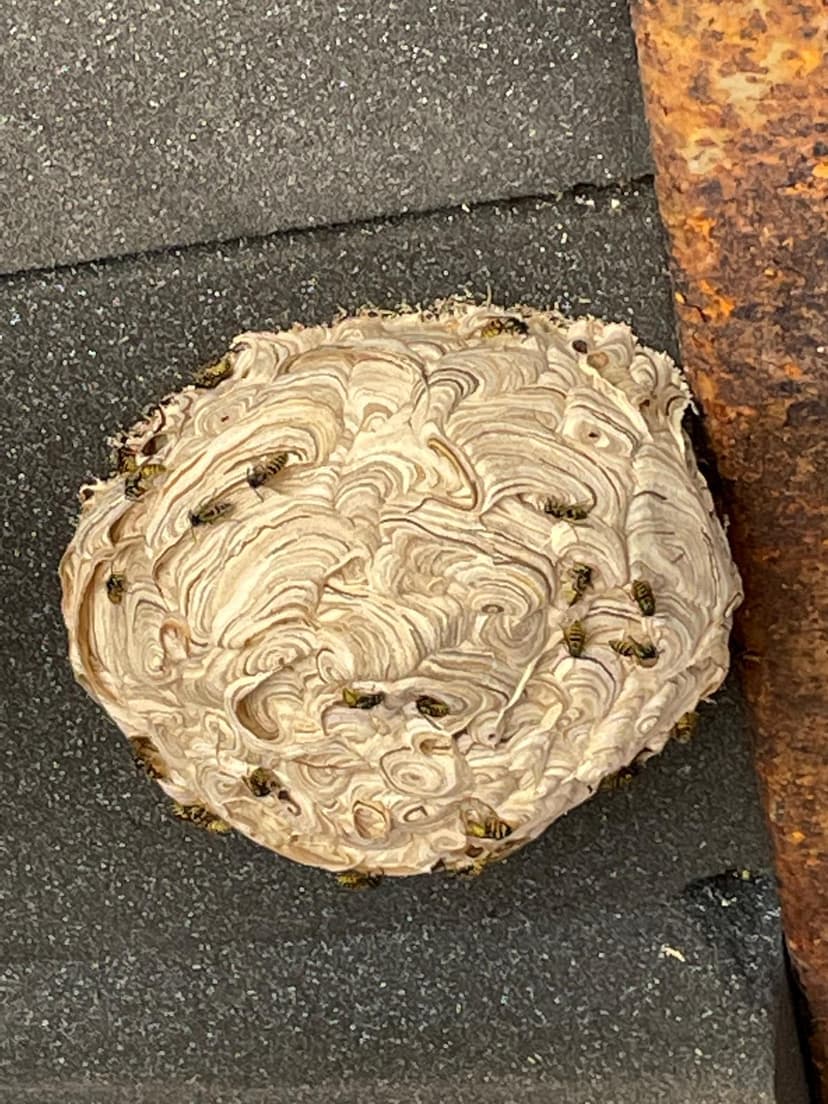
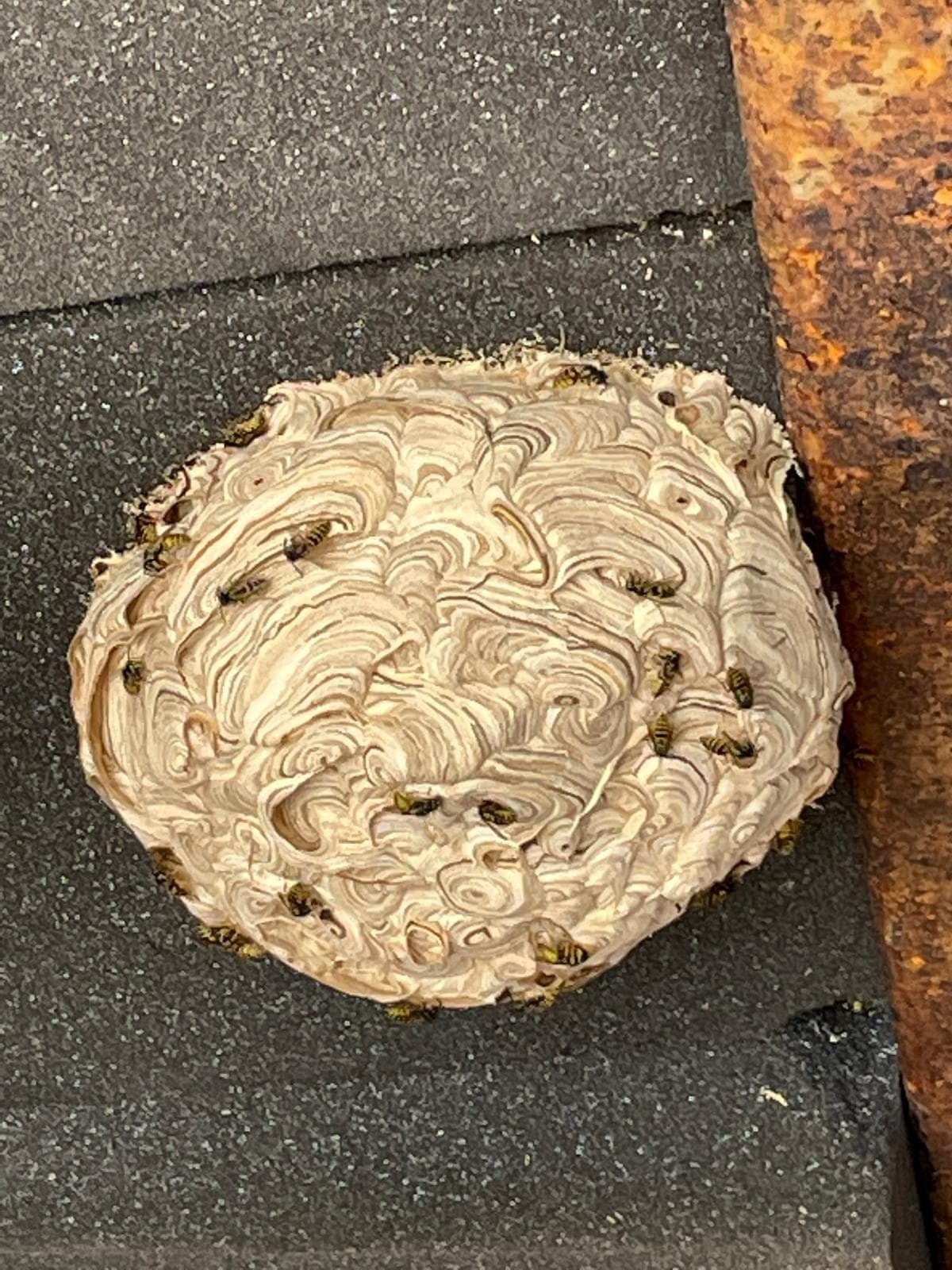
Common Wasp (Vespula vulgaris) — 12–17mm workers, up to 20mm queens. Bright yellow and black banding with a smooth, hairless body. Black anchor-shaped marking on the face. Brownish-cream papery nests with a swirled pattern. Colonies reach 5,000–15,000 workers.
German Wasp (Vespula germanica) — 13–17mm workers. Very similar to common wasp but distinguished by three black dots on the face and slightly more vivid yellow colouring. Grey-coloured nests rather than brownish.
Both species nest in lofts, wall cavities, sheds, underground, and in bushes. Both are aggressive when defending the nest, attracted to sweet food in late summer, and can sting multiple times. For nest signs and locations, see our signs of wasp nests guide.
European and Asian Hornets
European Hornet (Vespa crabro) — 20–35mm, the UK's only native hornet. Reddish-brown head and thorax with yellow-brown banding. Active at night and attracted to light. Less aggressive than wasps — treat only if the nest poses a direct safety risk.
Asian Hornet (Vespa velutina) — 25–30mm. Invasive species, dark brown or black with a single orange-yellow band and yellow-tipped legs (key feature). Serious threat to honeybees. Do not treat — report immediately via the Asian Hornet Watch app or alertnonnative@ceh.ac.uk.
For full details on both species, including when to treat and how to report, see our hornets guide.
Honeybee (Apis mellifera)
Protected pollinators — should not be killed unless there is a direct and serious safety risk.
Size — workers 12–15mm.
Appearance — golden-brown with darker brown banding. Noticeably hairy body compared to wasps. Pollen baskets on hind legs often visible as yellow lumps.
Nesting — hives (managed) or cavities such as wall voids, chimneys, and tree hollows. Nests are made of wax honeycomb, not wood pulp.
Behaviour — not aggressive when foraging. Honeybees die after stinging (barbed stinger pulls out). They swarm in spring — a swarm is a temporary cluster relocating and is not dangerous.
Treatment — contact a local beekeeper first. Most swarms and colonies can be relocated. BuzzKill only treats honeybee nests as a last resort after contacting a qualified beekeeper.
Need professional help with wasp removal? BuzzKill Pest Control offers fast, effective treatment with no call-out charge.
Bumblebee (Bombus spp.)
Important pollinators — should not be treated in almost all circumstances.
Size — workers 10–20mm, queens up to 25mm.
Appearance — very hairy, round body. Black with yellow, orange, or white banding. Some species have a distinctive white tail.
Nesting — underground (often old mouse burrows), bird boxes, compost heaps, and under sheds. Small colonies of 50–400 workers.
Behaviour — very docile. Rarely sting unless physically handled. Colonies die naturally in autumn.
Treatment — no. Leave the nest alone. If it truly cannot be avoided, contact a beekeeper for relocation advice.
Quick Identification Summary
Bright yellow and black, smooth body, narrow waist — Common or German wasp. Professional treatment recommended.
Large (25mm+), brown and yellow, flies at night — European hornet. Treat only if a safety risk.
Dark brown/black, yellow-tipped legs, orange band — Asian hornet. Report immediately. Do not treat.
Golden-brown, hairy, wax nest — Honeybee. Contact a beekeeper.
Round, very furry, buzzing loudly — Bumblebee. Leave alone.
Frequently Asked Questions
How do I tell a wasp from a bee?
Wasps are smooth-bodied with bright yellow and black markings and a narrow, pinched waist. Bees are hairier, rounder, and have more muted brown and gold colouring. Wasps fly with their legs tucked in; bees often fly with legs trailing.
Are all wasps pests?
Only common wasps and German wasps regularly cause pest problems. Other solitary wasp species (such as mason wasps and potter wasps) are harmless and beneficial. European hornets are also generally beneficial and should only be treated if posing a direct risk.
Will a beekeeper remove wasps?
No. Beekeepers handle honeybee swarms and colonies. Wasp nests require a pest controller. If you are unsure whether you have bees or wasps, a pest controller can identify the species and advise.
Can I be fined for killing bees?
Bees are not individually protected by law, but destroying a honeybee colony without first attempting relocation is strongly discouraged and may attract negative attention. Several bee species are listed as priority species under the UK Biodiversity Action Plan. A responsible pest controller will always try relocation first.
What is the most dangerous stinging insect in the UK?
In terms of number of deaths, honeybees and wasps cause roughly equal numbers of fatal anaphylactic reactions (about 4 per year combined). European hornets are more painful but less aggressive. Asian hornets are the most aggressive when defending their nest but are currently rare in the UK.
Professional Wasp Removal Service
Learn more about our wasp removal service, pricing, treatment methods, and customer reviews.
View Wasp Removal Service