
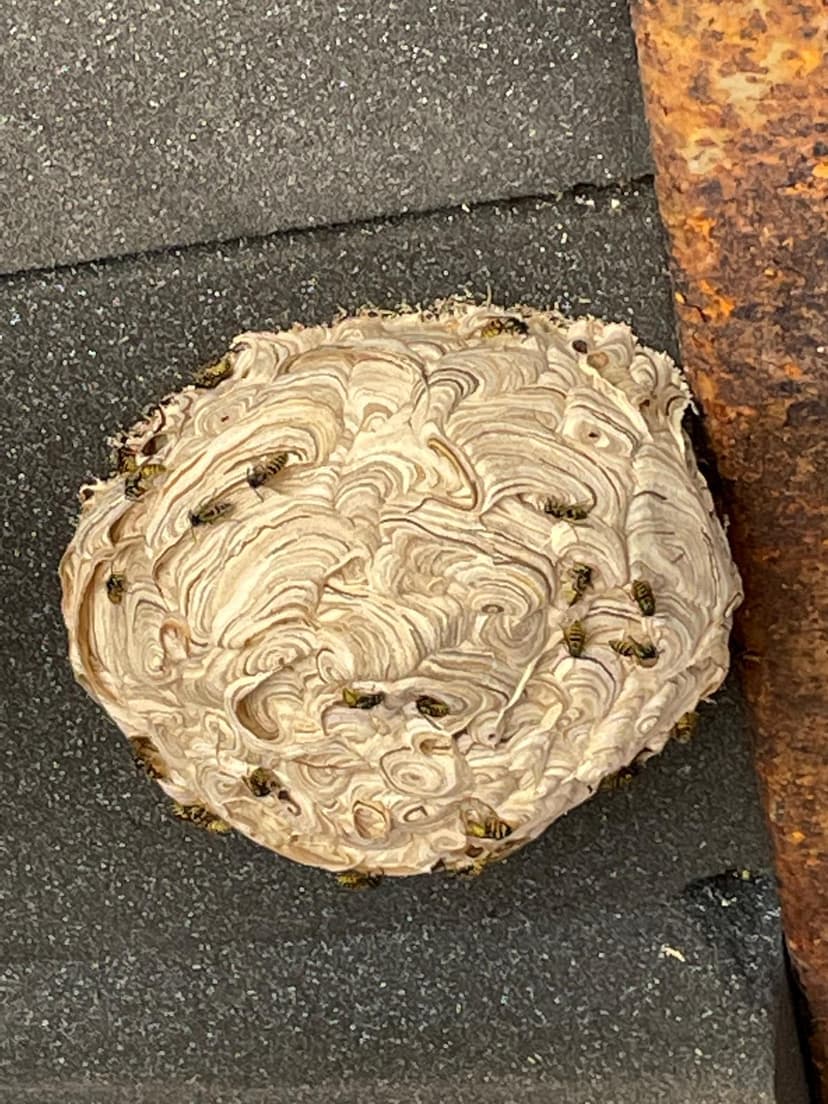
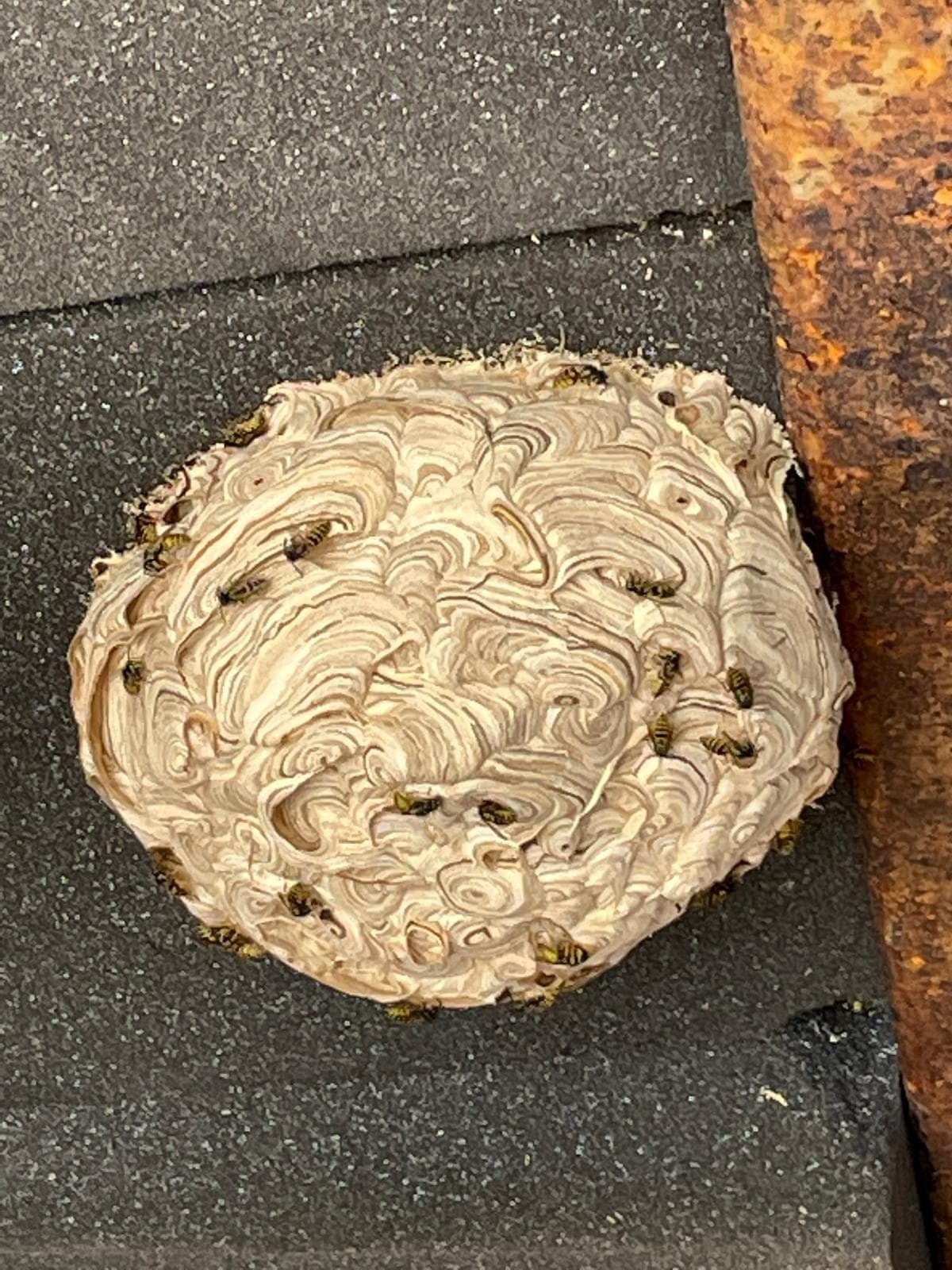
Individual wasps in your garden are a normal part of summer. But if you are seeing large numbers of wasps, finding them inside your home regularly, or noticing a concentrated flight path to a specific point on your building, you likely have a nest nearby.
This guide covers how to manage individual wasps, when you need professional treatment, and how to reduce the chance of wasps nesting on your property.
Published:
Individual Wasps vs a Nest Problem
It is important to distinguish between occasional wasp visitors and a nest. The response is very different:
Occasional wasps — a few wasps in the garden or house during summer is normal. They are foraging for food and will leave on their own. No treatment is needed.
A nest nearby — a steady stream of wasps flying to and from a single point on your property — a hole in the wall, a gap under the eaves, a spot in the ground — means you have a nest. This requires professional treatment.
If you are being bothered by individual wasps but do not have a nest, these steps help:
Stay calm and move slowly — swatting or flapping at wasps makes them more likely to sting. Stand still or move away slowly.
Cover food and drinks — outdoors, keep food covered and use lids on drinks. Wasps are attracted to sweet liquids, meat, and ripe fruit.
Avoid strong scents — perfume, aftershave, and scented body lotion attract wasps. Avoid wearing these when eating outdoors.
Keep bins sealed — open bins are a major attractant. Use bins with tight-fitting lids and clean them regularly.
Clear fallen fruit — rotting fruit in the garden draws wasps in large numbers. Pick up windfalls promptly.
What Not to Do If You Have a Nest
If you have identified a nest, avoid these common mistakes that make the situation worse:
Do not block the entrance — this traps wasps inside and they will find or chew alternative exits into your living space. It also makes professional treatment harder.
Do not use shop-bought sprays on a nest — aerosol wasp killers are not powerful enough to destroy a colony. They kill surface wasps but enrage the rest, making the nest far more dangerous.
Do not disturb the nest — hitting, shaking, or poking a nest triggers a mass attack. Wasps release alarm pheromones that signal every worker to sting.
Do not attempt DIY removal — a mature nest can contain 10,000+ wasps. Without professional protective equipment, you risk hundreds of stings.
Do not shine torches at the nest at night — wasps are less active at night but will attack if the nest is illuminated or disturbed.
The only safe approach is professional treatment. For a detailed breakdown of how it works, see our wasp nest removal guide.
Wasp Traps — Do They Work?
Wasp traps can reduce the number of nuisance wasps in outdoor areas — beer gardens, patios, and restaurant terraces — but they do not solve a nest problem.
How they work — traps attract and kill individual foraging wasps using sweet liquid bait (sugar water, beer, or jam dissolved in water).
Where they help — they can significantly reduce nuisance levels in outdoor dining and entertaining areas. Commercial properties like restaurants, pubs, and golf courses benefit most during peak wasp season (August to September).
Limitations — traps do not affect the colony. The nest continues producing hundreds of new workers daily. They are a management tool alongside professional treatment, not a replacement for it.
DIY trap — cut the top off a plastic bottle, invert it into the base to create a funnel, and fill with sugar water. Wasps enter but cannot find their way out.
Need professional help with wasp removal? BuzzKill Pest Control offers fast, effective treatment with no call-out charge.
Preventing Wasps From Nesting
You cannot guarantee prevention, but these measures make your property less attractive to nest-building queens in spring:
Seal entry points — check and repair gaps in soffits, fascia boards, roofline, and around windows before April when queens start scouting for nest sites.
Close off loft and roof access — fit mesh over loft ventilation openings and repair any broken roof tiles or lifted lead flashing.
Maintain your property exterior — fill cracks in mortar, repair damaged air bricks, and ensure garage and shed doors close tightly.
Remove old nests — although wasps do not reuse nests, old nests left in place can signal to queens that the location is suitable for nesting.
For more prevention tips, see our signs of wasp nests guide.
Late Summer Wasps — Why They Get Aggressive
In late August and September, the queen stops producing worker larvae. Workers — whose role was to feed the young — are now redundant. They leave the nest and seek sugary foods, which is why wasps become a much bigger nuisance around food and drink in late summer.
These end-of-season wasps are more erratic, more persistent, and more likely to sting. They are attracted to sweet drinks, ripe fruit, ice cream, and any sugary food. This is the peak period for wasp stings and the time most people call for treatment.
The colony dies naturally in October or November. New queens leave the nest to hibernate and start new colonies the following spring.
Frequently Asked Questions
Will wasps go away on their own?
The colony dies naturally in October or November when temperatures drop. However, a nest at peak population (August to September) poses a serious stinging risk for weeks before it dies. Professional treatment is recommended rather than waiting.
Can I use a shop-bought wasp killer on a nest?
Shop-bought aerosol sprays are not powerful enough to penetrate a nest and kill the colony. They may kill surface wasps but will enrage the rest of the colony, making the situation more dangerous. Professional-grade insecticides are far more potent and are applied directly into the nest.
Why are there so many wasps in my garden in August?
In late summer, workers leave the dying colony to forage for sugar. They are attracted to ripe fruit, drinks, and food waste. This is normal seasonal behaviour. If you also have a concentrated flight path to a single point on your property, you have a nest.
Do wasps nest in the ground?
Yes. Wasps commonly nest underground in old rodent burrows, compost heaps, and holes in banks. Ground nests are particularly dangerous because they are easy to disturb accidentally — stepping on or near the entrance triggers a mass attack.
Can I just leave a wasp nest alone?
If the nest is in a location where nobody goes — deep in a hedge or in an undisturbed corner of an outbuilding — and nobody in the household is allergic, it may be safe to leave it until autumn when the colony dies. However, nests near doors, windows, paths, and play areas should always be treated.
Professional Wasp Removal Service
Learn more about our wasp removal service, pricing, treatment methods, and customer reviews.
View Wasp Removal Service