
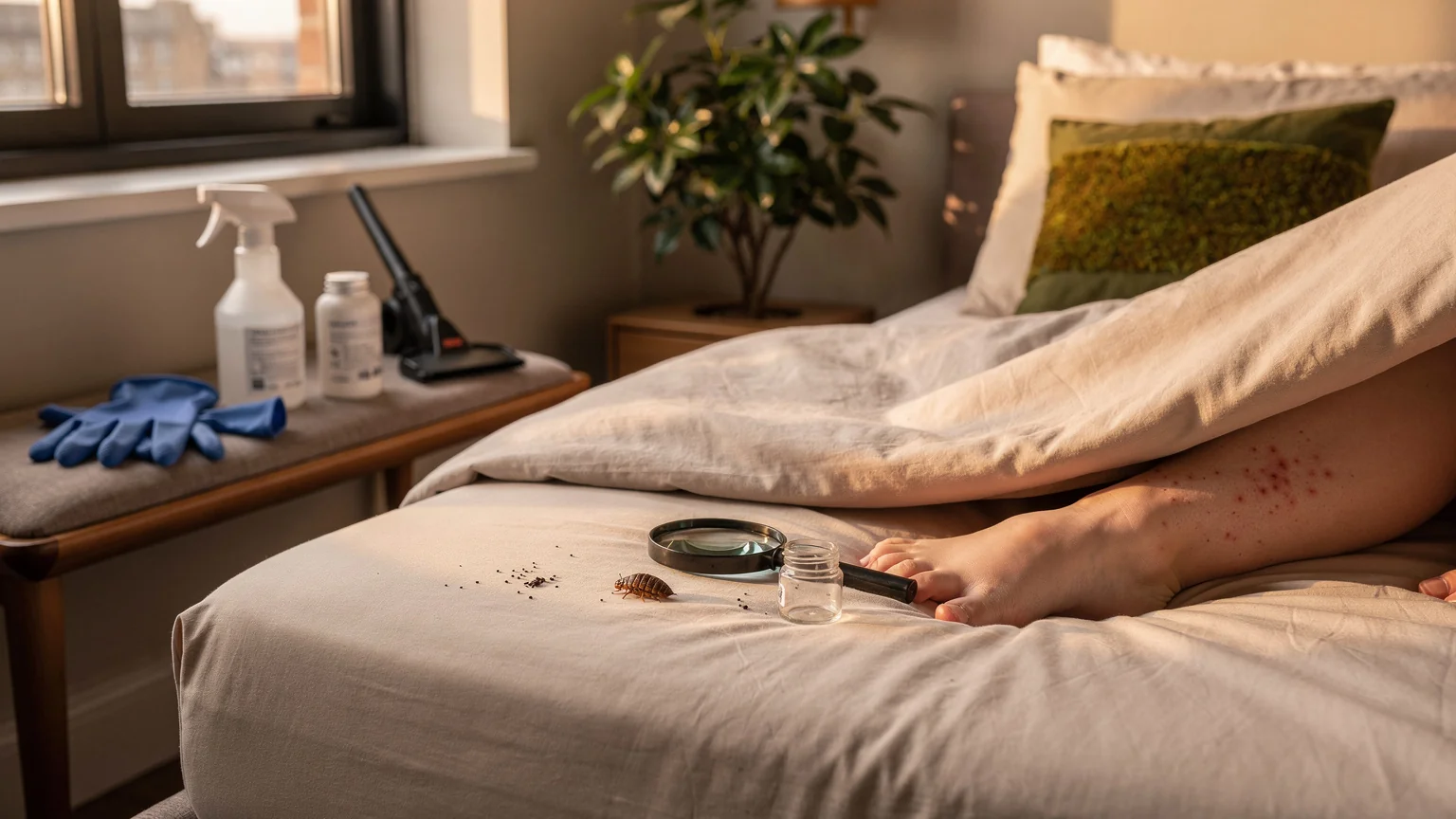
Your First 24 Hours After Finding Bed Bug at Home
A calm, step-by-step checklist for the first day after you spot bed bugs or wake up with bites. You will learn what to photograph, how to treat the bites safely, what not to throw away, and when the situation calls for a professional.
You found something in the bed seam. Maybe it was a tiny brown oval insect, or a rust-coloured smear on the sheet. Perhaps you woke up with a line of itchy welts across your arm that was not there the night before. Your heart rate spikes, and the first instinct is to strip everything and throw it out. Resist that urge for the next ten minutes. What you do in the opening hour after discovering bed bugs determines how efficiently the problem gets resolved, and preserving the right evidence is part of that solution. This guide walks you through the first 24 hours in the order that matters most, from the moment you spot the signs to the point where a professional takes over.
What to do in the first 15 minutes
The safest first step is to document before you touch anything. Bed bugs are small, fast for their size, and excellent at hiding once disturbed. Moving bedding or furniture before you have photographed the evidence can scatter bugs and make a professional's job harder later.
Grab your phone and take clear, close-up photographs of:
The insect itself, if visible, against a plain background for scale
Any dark spots or streaks on the mattress seam, headboard, or fitted sheet
Bites on your skin, ideally with a ruler or coin for size reference
The area around the bed, including bedside tables and skirting boards
Newham Council's adult social care guidelines describe adult bed bugs as oval and roughly the size of an apple seed, with a reddish-brown colour that darkens after feeding. Noting the size and shape in your photographs helps confirm the identification later.
Once you have photographed everything, resist the urge to spray anything. Household insect sprays repel bed bugs into wall cavities and adjacent rooms, which spreads the problem rather than solving it. You are gathering evidence right now, not treating the infestation.
Strip the bed and bag everything that touched it
After photographing, carefully remove all bedding from the affected room: sheets, duvet cover, pillowcases, mattress protector, and any loose clothing draped over the bed or nearby chair. The key word is carefully. Fold each item inward so that any bugs or eggs trapped in the fabric stay contained rather than dropping onto the floor.
Place everything into heavy-duty bin bags and tie them tightly. Do not carry loose bedding through the flat or house. You want to minimise the chance of dropping a live bug in the hallway.
Wash the bagged items at 60 degrees Celsius or above if the fabric allows. According to the NHS 111 Wales bedbug guidance, bed bugs and their eggs are killed at temperatures above 55 degrees. Tumble-dry on a high heat setting for at least 30 minutes after washing. Items that cannot be washed, such as shoes or soft toys, can go into the tumble dryer on high heat for 30 minutes on their own.
If you do not have immediate access to a washing machine, keep everything sealed in the bags until you do. The goal is isolation, not disposal.
Understand what the bites are telling you
Bed bug bites vary enormously between people. Some individuals show no reaction at all, while others develop raised, red welts arranged in a line or cluster. The pattern often appears where skin was exposed during sleep: arms, neck, shoulders, and ankles are common locations.
One useful detail: bed bug bites typically take 24 to 48 hours to appear after the initial bite. If you woke up with marks this morning, the feeding likely happened one to two nights ago. This tells you the bugs have been present for at least a few days, which is a useful piece of information for the pest control technician who will assess the situation.
The CDC's clinical care guidance on bed bug bites states that most bites require only minimal treatment and good hygiene to prevent secondary infection. The real concern at this stage is not the bites themselves but confirming whether the source is bed bugs and not fleas, mosquitoes, or an allergic reaction to something else entirely. Your photographs from the first 15 minutes help a professional make that call.
Resist the common first-day mistakes
When the stress hits, several instinctive reactions can make the problem worse. Knowing what to avoid is just as valuable as knowing what to do.
Throwing out the mattress. This is the most common expensive mistake. A mattress can be treated. Replacing it does nothing if bugs are already in the bed frame, skirting boards, or adjacent furniture. The new mattress becomes infested within days. Save the money for professional treatment instead.
Sleeping in another room. Moving to the sofa or spare bedroom feels logical, but bed bugs follow carbon dioxide and body heat. If you relocate, they will find you within a few nights, spreading the population to a second room and doubling the problem.
Using aerosol sprays or bug bombs. Over-the-counter sprays repel rather than kill. They scatter bed bugs into wall voids, electrical sockets, and neighbouring flats. In a terraced or semi-detached property in East London, that can mean the problem spreads to adjoining homes. Per the Bedbug Guidelines for Social Care, bed bugs do not transmit diseases, so there is no medical urgency to reach for chemical treatments without professional guidance.
Panic-cleaning everything. Vacuuming the mattress and surrounding area is fine if done gently, but aggressive scrubbing or dismantling furniture pushes bugs deeper into crevices. A methodical approach works better than a frantic one.
Search the room methodically
Once the bed is stripped and photographed, widen your search to the rest of the room. Bed bugs are not confined to mattresses. They harbour in dark, tight crevices within two metres of where you sleep.
Check these locations with a torch:
Bed frame joints and screw holes
Behind the headboard and the wall behind it
Inside bedside table drawers and the undersides of lamp bases
Along skirting board gaps, especially behind the bed
Behind picture frames or wall-mounted shelves near the bed
Inside curtain folds closest to the bed
Under the edges of fitted carpets near the wall
What you are looking for at this stage: live bugs (flat, oval, roughly 4 to 5 mm long), cast skins (translucent, shell-like husks), tiny white eggs (about 1 mm, rice-shaped), and dark faecal spots that bleed into the fabric like a felt-tip pen mark.
Document anything you find with a photograph. If you discover bugs in a second room, that information changes the treatment scope, so flag it early. Our guide on the five warning signs of bed bugs covers the full range of evidence to look for.
Treat the bites safely
Bed bug bite care is straightforward and focused on managing symptoms while the skin heals. Most bites resolve on their own within one to two weeks.
For immediate relief:
Apply a clean, cool, damp cloth to the affected area for 10 to 15 minutes to reduce swelling and itching
Keep the skin clean and avoid scratching, which can break the skin and introduce infection
A pharmacist can advise on mild hydrocortisone cream for adults and children over 10, though pregnant women and parents of younger children should consult a GP before using it
Oral antihistamines may help if the itching is persistent and affecting sleep
According to the CDC's clinical care recommendations, most bed bug bites need only minimal symptomatic treatment. Topical steroid creams can help with more severe reactions, and secondary bacterial infections from scratching may require antibiotics, but these situations are less common.
If you notice spreading redness, pus, or increasing pain around a bite site after 48 hours, contact your GP. These are signs of a secondary skin infection that needs medical attention.
Prepare for the professional visit
The most useful thing you can do on day one, after documenting and isolating, is to leave the evidence in place. Do not throw out the bagged bedding yet, do not repaint the bedroom wall, and do not disassemble the bed frame. A qualified pest control technician needs to see the site as it was when you found the problem.
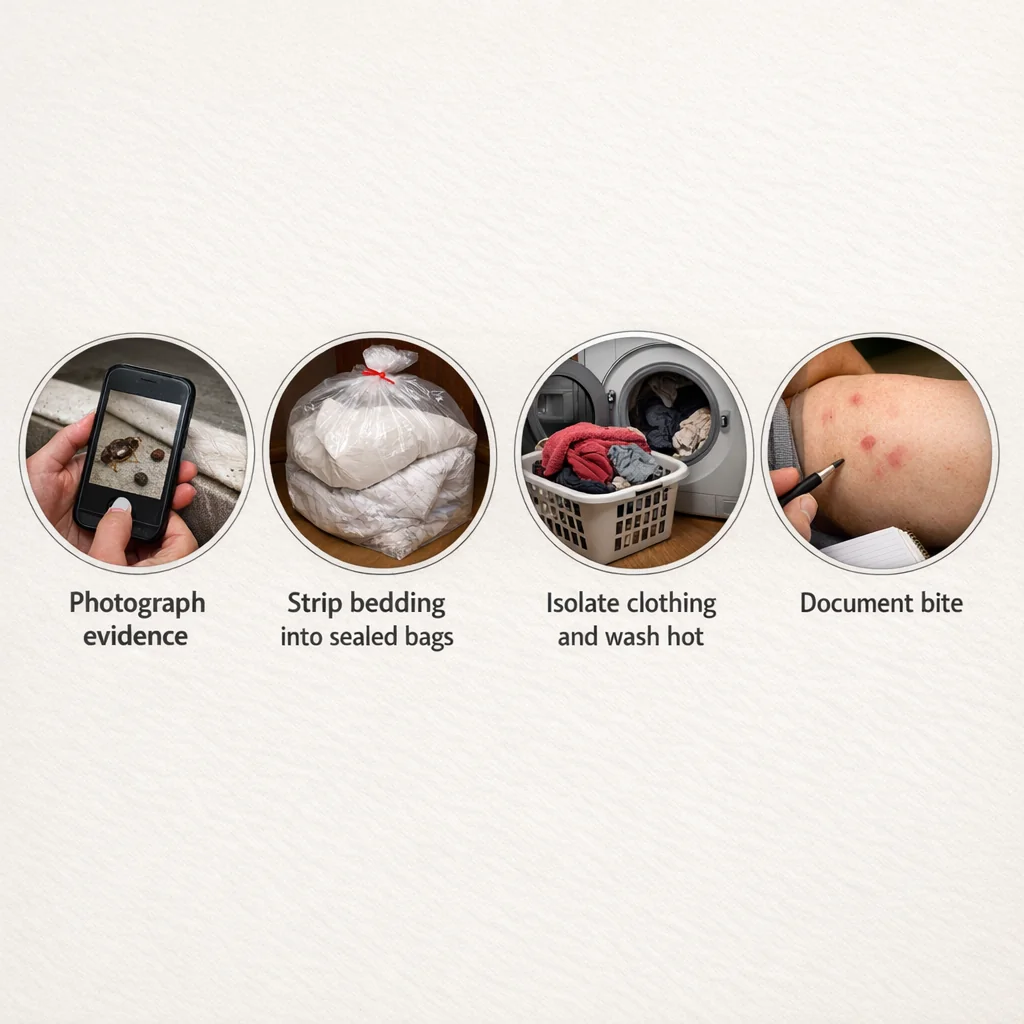
Before the technician arrives, prepare a short written note covering:
When you first noticed the bites or saw the bugs
Which rooms are affected (or suspected)
Whether anyone else in the household has bites
Any treatments you have already applied (ideally none)
The photographs you took earlier
This information speeds up the survey and helps the technician recommend the right treatment method. Bed bug control is not one-size-fits-all. The approach depends on the severity, the layout of the property, and whether the infestation has spread beyond the bedroom.
At BuzzKill Pest Control, RSPH Level 2 qualified technicians carry out a full site survey before recommending any treatment. If you are in East London or Essex and need a same-day inspection, you can request a callback with no call-out charge. Our bed bug removal service covers identification, treatment, and follow-up, and you can check current pricing before you commit.
What happens after the first 24 hours
By the end of day one, you should have clear photographs of the evidence, a sealed bag of bedding ready for a high-temperature wash, a clean bite care routine in place, and a professional visit booked or requested. That is a productive first day.
Over the next 48 hours, keep monitoring the bedroom. Check the mattress seam and bed frame each morning for fresh faecal spots or cast skins. If you notice new bites appearing on consecutive mornings, that confirms the bugs are still active and the professional visit is the correct next step. If no new evidence appears after three nights, it is still worth honouring the inspection, because bed bugs can survive for weeks between feeds and early-stage populations are easy to miss at home.
The single signal that means it is time to escalate is spread. If you find evidence in a second room, or if other household members start getting bitten, the infestation has outgrown a first-response checklist and needs professional treatment without further delay.
Related reading
Need professional help? BuzzKill offers fast, reliable pest control services across London and Essex.