
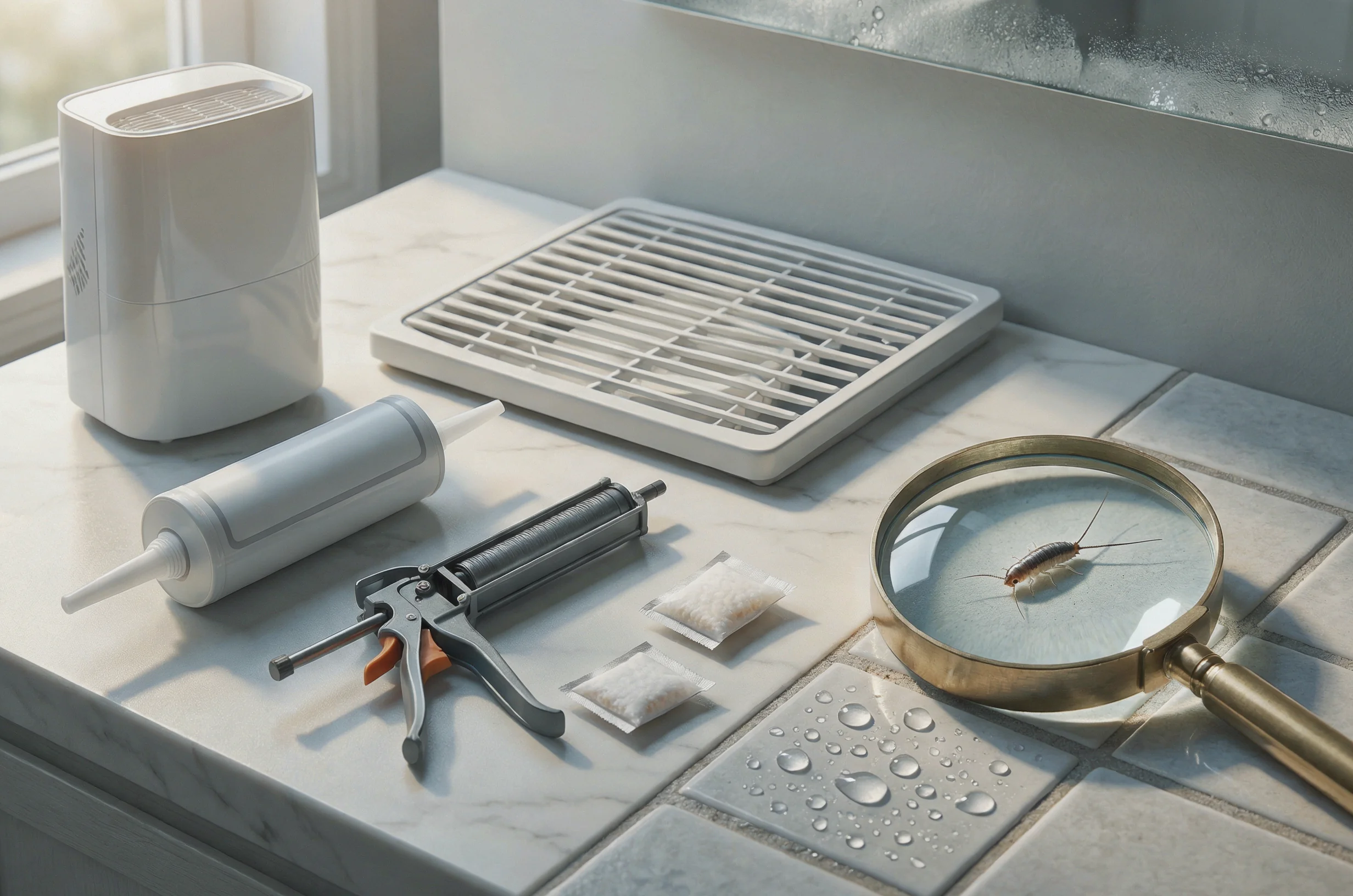
Most people who spot silverfish in the bathroom reach for a spray. That is the wrong first move, and it is why the same little grey insects show up again three weeks later. Silverfish control in a bathroom is a moisture problem before it is a pesticide problem. Get the room dry and they cannot survive there. Skip that step and you are just clearing the floor for the next generation.
I have been into enough London flats to know the pattern. A tenant sees one silverfish behind the toilet at 2am, panics, buys a can of spray, kills two, and assumes it is sorted. Then autumn arrives, the windows stay shut, laundry dries on the radiator, and the bathroom turns into exactly the kind of warm, humid box these insects evolved for. The spray did nothing about the conditions. It never does.
So here is the honest ranking. These are the reasons silverfish keep coming back, ordered by how often they turn out to be the real cause on a callout, not by how easy they are to fix. Work down the list and you will usually find your answer in the top three.
The humidity threshold that decides whether they stay
Silverfish need damp air to survive. Not slightly damp. Properly damp. Rentokil puts their preferred range at Rentokil, and other pest specialists converge on a similar figure, with breeding and egg development falling away below roughly 50%. That number is the whole game.
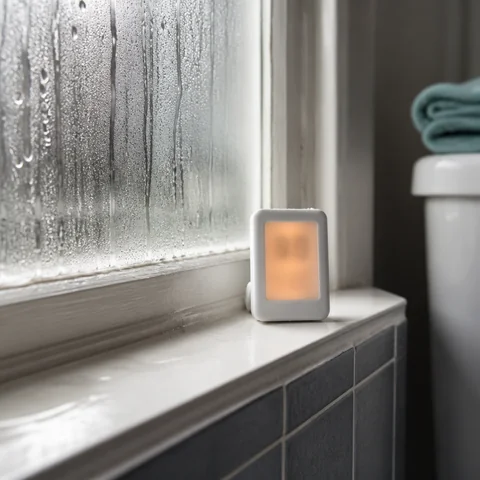
A working bathroom after a hot shower can sit above 90% for a while. In a flat with no window and a weak extractor fan, that moisture lingers for hours. Do that twice a day and you have built a habitat.
The practical target is to get the room back under 50% within about half an hour of a shower. You do not need a lab-grade hygrometer to check. A cheap digital humidity meter from a hardware shop, left on the windowsill for a week, will tell you more about your silverfish problem than any inspection you can do by eye.
If your meter reads 70% or higher on a normal day with no shower running, you have found the reason they keep coming back. Everything below on this list is secondary to that reading.
1. The extractor fan that stops the moment you leave
This is the single most common cause I find, and it is almost always a habit problem rather than a broken fan.
People switch the fan off as they walk out. But the moisture does not leave with you. It sits in the air, condenses on cold tiles and pipework, and soaks into grout and sealant. Sam Davies, director at Age Care Bathrooms, made the point in a recent piece on preventing silverfish in your bathroom that keeping the fan running for around 15 to 20 minutes after showering is what actually clears lingering moisture. Better Termite goes slightly further, recommending Better Termite after every shower.
The fix is mechanical, not behavioural. Fit a timer switch or a humidity-sensing fan so it runs on its own and you cannot forget. If your fan is more than ten years old, check its airflow by holding a sheet of toilet paper against the grille. If the paper does not stay put, the fan is moving almost nothing and needs replacing.
The limit: a fan can only clear a room it is sized for. A 4-inch fan in a large family bathroom will never keep up. If you have a window, use both.
Verdict: if you change one thing today, change this. It costs the least and fixes the most.
2. Hidden leaks feeding the room from behind the tiles
Dripping taps are obvious. The ones that matter are usually invisible.
A slow weep from a waste pipe under the bath, a failed seal around the shower tray, or a cistern that trickles continuously all keep the fabric of the room wet without ever showing a puddle. CCS Environmental notes that silverfish are drawn to bathrooms precisely because of CCS Environmental, and that they will happily feed on soap residue, glue and even mould while they are there.
Check the easy things first. Look under the sink for staining on the cabinet base. Feel the floor around the toilet for softness. Look for bubbling paint or blown plaster on the wall behind the shower. Any of those means water is going somewhere it should not.
The limit: a leak inside a wall or under a tiled floor is a job for a plumber, not a pest controller. No treatment will hold while the substrate stays wet.
Verdict: worth an hour with a torch. If you find nothing, you have ruled out the second most common cause.
3. Condensation on cold pipes and cisterns
This one catches people out because there is no leak at all. The water is coming from the air.
Cold water pipes, the outside of the toilet cistern, and single-glazed windows in a steamy bathroom all drop below the dew point. Moisture in the air condenses on them, runs down, and keeps a small area permanently damp. Silverfish find those spots and stay.
Insulating the cold pipe run with foam lagging is a cheap fix. So is a cistern jacket on older toilets. If you get heavy condensation on the window every morning, that is a ventilation problem showing itself in a different way, and it points straight back to point one.
The limit: lagging reduces the symptom. It does not remove the moisture from the air.
Verdict: a genuine cause, but usually a supporting actor rather than the main one.
4. Wet towels, bath mats and indoor laundry
Sophie Thorogood, technical training manager at Pelsis and a director of the National Pest Technicians Association, explained to Good Housekeeping that damp-room habits get worse in winter, when humidity is higher and drying laundry indoors adds more moisture to the air.
That is the quiet one. A bath mat left on a cold floor, a towel draped over the radiator, a drying rack parked in the bathroom because it is the only space — each one adds water vapour to a room that is already struggling. In a small flat with the heating on and the windows shut, this can push a bathroom from borderline to genuinely damp.
Move the drying rack somewhere with airflow, or run the extractor while laundry dries. Hang towels spread out rather than bunched. Shake the bath mat and hang it over the bath edge after use.
The limit: this is a contributing factor, rarely the sole cause. But it is the one that tips a marginal bathroom over the edge in September and October.
Verdict: easy to fix, and worth fixing even if it is not the whole story.
5. Grout, sealant and gaps that hold water
Cracked silicone around a bath or shower tray does two things. It lets water into the fabric behind, and it gives silverfish a sheltered crevice to hide in during the day.
Healthy Home Pest Control lists sealing gaps and replacing Healthy Home Pest Control as a core step, and it belongs on this list for a reason. Silverfish are flat, nocturnal and thigmotactic, which is the technical way of saying they like tight spaces against their bodies. A lifted edge of sealant is a perfect daytime retreat.
Cut out the old silicone properly rather than smearing new sealant over the top. Dry the joint fully, then apply a mould-resistant bathroom sealant. Do the same around the base of the toilet and any pipe where it passes through a wall or floor.
The limit: sealing over a wet joint traps moisture and makes things worse. Dry it first or leave it to a professional.
Verdict: a real hiding place, but sealing alone will not solve a humid room.
6. Paper, cardboard and stored clutter
Silverfish eat starch. That means paper, book bindings, the glue in cardboard boxes, wallpaper paste and cotton fabric. A bathroom with a stack of cardboard boxes, spare loo rolls stored in the open, or a shelf of paperbacks is a larder as well as a habitat.
Clear cardboard out of the bathroom entirely. Store toiletries and paper in sealed plastic containers rather than open baskets. If you keep a laundry hamper in there, choose one with a lid and empty it regularly.
The limit: removing food sources reduces how many can survive, but it does not remove the moisture they need. Do this alongside drying the room, not instead of it.
Verdict: worth doing, but it is a supporting measure. Nobody solves silverfish with storage boxes alone.
7. The wrong treatment applied at the wrong time
This is where most DIY attempts go wrong, and it is worth being blunt about it.
Spraying a residual insecticide around the skirting does kill silverfish that walk over it. But silverfish spend most of their time in cracks, behind tiles and inside wall voids. The spray reaches a fraction of the population. The survivors carry on, and because the room is still humid, the population recovers within weeks.
Diatomaceous earth dust worked into cracks and voids is a better DIY option than spray, because it keeps working while it stays dry. The catch is right there in the sentence: while it stays dry. In a damp bathroom it clumps and stops working. That is the trap.
If you have tried two or three products and they have not held, the issue is almost certainly that the moisture source was never addressed. This is the same pattern we see with DIY pest control failures on other pests — the treatment is fine, the conditions are wrong.
The limit: no product compensates for a wet room.
Verdict: treat this as the last step, not the first. And if you have already done the moisture work and they are still there, that is the signal to bring someone in.
8. A building-wide damp problem you cannot fix from inside
Sometimes the cause is not in your bathroom at all.
In older London housing stock — Victorian terraces, converted flats, anything with a solid wall and no cavity — damp moves between properties. A leaking downpipe two floors up, a blocked gutter, a failed damp course in the basement flat below, or a bathroom above yours with no working extractor can all keep your ceiling and walls permanently moist.
This is common in the kind of airtight new-build flats that were designed to hold heat. Panther Pest Control made the point that silverfish need at least 75% relative humidity to thrive and that keeping a home below 50% makes it uninhabitable for them. In a sealed flat with a shared ventilation stack, hitting that target can be genuinely difficult without fixing the building.
The limit: you cannot solve a neighbour's leak from your side of the wall. This is where a survey and a conversation with the freeholder or managing agent comes in.
Verdict: if you have done everything above and the humidity meter still reads high, this is your answer.
What the professional providers actually offer
If you have worked through the list and the silverfish are still there, these are the routes people commonly take. I have ranked them by how well each fits a domestic bathroom problem, not by size or brand.
Vergo
Vergo's guidance on Vergo leads with humidity control and dehumidifier use in damp areas, which matches what we see on site. Their material is a sensible starting point if you want to understand the biology before booking anything.
Best fit: readers who want to try the prevention route properly first. Limitation: published guidance is general, so it will not tell you whether your specific flat has a hidden leak.
Rentokil
Rentokil is the largest name in the UK pest control market and publishes detailed technical guidance, including the 75% to 95% humidity range cited above. They offer survey-led treatment with follow-up visits.
Best fit: commercial premises, landlords with multiple properties, or anyone who wants a national provider with a formal reporting trail. Limitation: as a national operator, response times and pricing vary by branch, and you may not get the same technician twice.
CCS Environmental
CCS Environmental's silverfish guidance covers moisture reduction, ventilation and leak repair as a combined approach, and they work on domestic and commercial properties in the UK.
Best fit: homeowners who want a provider that treats the moisture cause alongside the insect. Limitation: coverage is regional, so check they operate in your postcode before booking.
Healthy Home Pest Control
Healthy Home Pest Control sets out a five-step approach starting with humidity control, then leaks, caulk, and paper removal. Their framing is prevention-first, which is the right instinct for silverfish.
Best fit: readers who want a clear sequence to follow. Limitation: this is a US-based operator, so their service is not available to London readers — useful as a reference, not as a booking.
Better Termite
Better Termite publishes one of the more specific sets of numbers we have seen, including the 20-minute fan run and a 50 to 70 pint dehumidifier capacity for a typical bathroom. They also flag calling a professional if silverfish keep returning.
Best fit: anyone sizing a dehumidifier or setting up a routine. Limitation: again a US operator, so the guidance is transferable but the service is not.
What to do today, and what to stop worrying about
If you want one action, take the humidity reading. Buy a cheap meter, leave it in the bathroom for a week, and note the number an hour after a shower. Above 70% and you have your answer. Below 50% and the problem is probably a hidden leak or a building issue, not your habits.
Then fix the fan. A timer switch costs very little and does more for silverfish control than any spray you can buy. Bathroom moisture prevention is not complicated — it is just easy to skip because the payoff is invisible.
The thing people overreact to is the sighting itself. One silverfish on a tile at night is not a crisis, and it does not mean your home is dirty. They are a symptom of damp air, nothing more. If you have dried the room, sealed the gaps, cleared the cardboard and they are still turning up after a fortnight, that is when a survey is worth the call. We handle recurring pest issues across East London and Essex, and silverfish jobs usually come down to finding the moisture source the homeowner could not see.
Silverfish questions we get asked on site
How do I know if I have silverfish or something else?
Silverfish are about 12 to 20mm long, silver-grey, wingless, and they move in a fast, fish-like wiggle rather than a scuttle. If it runs in short bursts and stops, it is probably a silverfish. If it jumps, it is a springtail, which also likes damp bathrooms but needs different treatment.
Do silverfish bite or carry disease?
No. They do not bite people and they are not known to spread disease to humans. The damage they do is to paper, book bindings, wallpaper and fabric. That is worth knowing if you have been losing sleep over them.
Will a dehumidifier actually get rid of them?
It will make the room unsuitable if you run it consistently enough to hold humidity below 50%. A dehumidifier that runs for two hours a week will not. This is a routine, not a one-off.
How long before they stop coming back?
Once the room is genuinely dry, existing silverfish die off over a few weeks because they cannot replace the moisture in their bodies. If you are still seeing them two months later, the humidity has crept back up or there is a moisture source you have not found.
Should I just call a pest controller first?
Only if you have already dealt with the moisture and they are still there, or if you cannot find the source. Treatment without moisture control is money spent twice.

Need professional help? BuzzKill offers fast, reliable pest control services across London and Essex.