
If you've found a trail of ants working its way across your kitchen worktop in Romford, Hornchurch or Upminster, your first instinct is probably to spray them and hope for the best. Before you do, it's worth seeing how a professional actually approaches the job. This article is built around a short, practical video from Rentokil Pest Control that walks through the basics of getting rid of ants and keeping them away, and I've used it as the backbone for a fuller picture of what ant control in Havering looks like when a trained technician turns up at your door. Watch the clip first, then read on for the detail it doesn't cover: the survey, the species check, why gel bait beats spray in most homes, and the follow-up visit that actually finishes the job.
Video: [How to get rid of](https://youtube.com/watch?v=V1nu7oqcjZE) ants: Stop ant infestations and keep ants away Rentokil - YouTube
The video runs about three minutes and covers the common hotspots where ants hide, plus the broad strokes of prevention. That's a solid starting point, but a three-minute overview can't show you what happens between booking and a dead colony. So let's walk through the day itself.
Why Havering homes get ants in the first place
Ants don't appear from nowhere, and Havering has a particular mix of conditions that suits them. The borough is one of London's greenest, with big gardens, parks and open spaces sitting right next to 1930s semis, post-war estates and older Victorian terraces. Garden ants (the common black ant, Lasius niger) nest happily in lawns, under paving and along the base of walls, then send foragers indoors the moment they find a food source.
Warm weather accelerates everything. During the UK's recent hot spells, pest controllers reported a noticeable surge in ant callouts, with the Daily Mail covering rows of ants appearing on kitchen cabinets and window sills across the country in May 2026. Heat speeds up colony growth, and colonies under pressure send more workers further afield. A July pest forecast for London and Essex from Bugwise Pest Control noted that ant trails become more visible indoors through the summer months across Romford, Hornchurch and the wider RM postcode area, alongside the usual wasps and flies.
The two triggers that matter most in a Havering kitchen:
- Food. Ants are in your home for one of two reasons, as pest technician Trapper Tony explains in his carpenter ant walkthrough on the Pest Protection Plus channel: they're either nesting or looking for food. A sticky jar rim, pet food left down overnight, or crumbs behind the bin is enough.
- Access. Gaps around pipework, cracked mortar, perished sealant around window frames and the gap under a badly fitted back door are all standard entry points in the borough's older housing stock.
One useful habit before treatment day: don't clean away the ant trail. That line of ants is a map. The technician will read it to find the entry point and, ideally, the nest direction, so resist the urge to wipe it down with vinegar the morning of the visit.
The survey comes before any treatment
A proper ant job starts with questions and a torch, not a sprayer. When a BuzzKill technician arrives at a property in Harold Hill or Collier Row, the first ten to fifteen minutes are spent walking the trail backwards: where are the ants coming from, what are they feeding on, and what species are they?
The species check matters more than most people expect. The common garden ant is straightforward. Pharaoh ants, which turn up in London's flats, HMOs and heated commercial buildings, are a different problem entirely. They're tiny, pale, and they nest inside walls and around communal heating pipes. Spray them with a standard repellent insecticide and the colony does something called budding: it splits into multiple sub-colonies, each with its own queens, and the problem multiplies across floors and flats. Bugwise's guidance on Pharaoh ant treatment is blunt about it: incorrect treatments, especially sprays, can cause colonies to split and spread, making things significantly worse. Baiting is the only sensible route for that species.
During the survey the technician will also check:
- Moisture issues. Leaking traps under sinks, damp subfloors and rotten timber attract ants and give some species nesting material. If there's a plumbing problem, you'll hear about it, because treating the ants without fixing the leak is wasted money.
- The garden. Nests under paving slabs, along path edges and in lawn mounds near the house explain most indoor trails in Havering's semi-detached streets.
- Pets, children and food storage. This shapes where bait can legally and safely be placed, which brings us to the treatment itself.
If you want to sense-check the person doing this work before they arrive, our guide to pest controller credential checks explains what NPTA and BPCA membership actually mean and how to verify them in two minutes.
Why the technician reaches for gel bait, not spray
This is the heart of treatment day, and it's the part that surprises people. The most common homeowner reaction to ants is to spray, and as Trapper Tony puts it in his video on spraying for ant infestations, spraying can actually make the problem a lot worse. Here's why.
A contact spray kills the ants it touches. That's a few dozen workers out of a colony that may hold thousands, plus a queen (or several) safely underground or inside a wall void. Worse, many over-the-counter sprays are repellent: the surviving ants detect the treated surface and reroute around it, so the trail you killed today reappears somewhere else next week. You've moved the problem, not solved it.
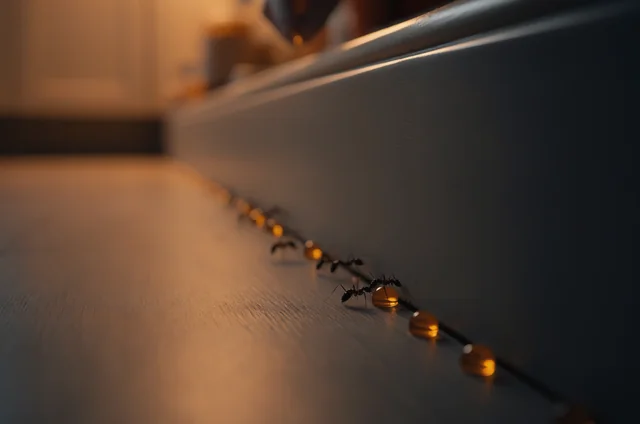
Gel bait works the opposite way. It's a non-repellent, slow-acting food. Workers find it, feed on it, and carry it back to the nest, where it's shared with the rest of the colony, including the queen. As the Pest Protection Plus baiting video explains, you're using the ants against themselves: the bait eliminates the source, not just the ants you're seeing. That's why the technician will often place small dots of gel along the active trail, near the entry point, and deliberately not kill the foragers walking past it. Those workers are the delivery system.
A quick DIY guide to ant baits on YouTube makes two points worth repeating here. First, bait formulations vary: gels, granules and dusts with active ingredients ranging from boric acid to fipronil and imidacloprid, and the right choice depends on the species and the site. Second, bait works best when competing food sources are removed. Professional gel baits used by NPTA-registered technicians are applied in tamper-resistant stations or in cracks and crevices that children and pets can't reach, which is the safety framing the supermarket products don't come with.
What this means in your kitchen on the day:
- The technician places bait at measured points along the trail and at the entry point.
- You're asked to leave the foraging ants alone for several days. This feels wrong, but it's the mechanism working.
- You keep worktops clear of other food so the bait stays the most attractive option.
- Any spray use is limited, targeted and non-repellent, typically reserved for the exterior nest itself once it's located.
The quiet week: why the ants vanish before the colony dies
Here's the timeline most service pages skip, and it's the bit that causes the most anxious phone calls.
For the first two or three days after bait placement, you may see more ant activity around the bait points, not less. The workers have found a rich food source and they're recruiting. Then traffic drops off sharply, often within five to seven days for a garden ant colony. The trail disappears. This is the moment people assume the job is done.
It usually isn't. Foraging stops because the workers are dying and the colony is collapsing, but the queen and brood die last, and a large or multi-queen colony can take two to three weeks to fail completely. This is also why a single visit isn't always the whole job. The follow-up visit, typically booked two to three weeks after the first, exists to confirm the colony is dead, check whether a satellite nest has taken over the trail, and re-bait if a neighbouring colony has moved into the gap. Havering's gardens are full of ants; killing one nest doesn't remove the pressure from the ones either side of the fence.
If three weeks pass and you're still seeing fresh trails, that's a signal something was missed: a second nest, a species misidentification, or a bait the colony has gone off. Our ant bait troubleshooting guide covers what to check and when to escalate, and the same logic applies in Havering.
Keeping them out after the follow-up visit
The video's prevention advice, finding and dealing with the hotspots where ants hide, is the right long-term frame. Once the colony is gone, the goal shifts to making your home a bad bet for the next scouting party. The work is unglamorous and mostly free:
- Seal the entry points the technician flagged. Flexible sealant around pipe entries, mortar repairs on pointing, new brush strips under external doors. Our home pest-proofing tips article ranks the UK rooms to seal first, and kitchens and utility rooms top the list for good reason.
- Remove the food reward. Rinse recycling before it goes in the bin, store sugar and honey in sealed containers, pick up pet bowls overnight, and wipe under the toaster weekly.
- Manage the garden edge. Keep soil and mulch below the damp-proof course, trim vegetation off the walls, and check paving near the back door each spring for fresh nest mounds.
- Watch for flying ant day. That single humid summer day when winged queens pour out of nests across London is your annual reminder of how many colonies live around your property. It's normal and mostly harmless, but a swarm emerging inside the house means a nest in the structure, and that needs a proper look.
If you like checklists, this is a topic that would suit a simple seasonal tick-box tool: spring sealing tasks, summer monitoring, autumn food storage resets. Worth bookmarking this page and working through the list each April.
What treatment costs around Havering
People naturally want a number before they book. Published pricing in this area is thin, but Able Group, which operates in the borough, states that over the past 12 months the average price of an ant control job in and around Havering has been £214, with individual jobs ranging from £113 to £517 depending on the species, the size of the colony and how many visits are needed. Treat that as a ballpark rather than a quote: a single garden ant nest in a Romford semi sits at the lower end, while a Pharaoh ant problem spread across a tenanted block costs more because it needs multiple baiting visits and monitoring.
The questions worth asking any company before you agree a price: does the quote include the follow-up visit, what happens if the trail returns within the guarantee period, and is the technician qualified (RSPH Level 2 or equivalent) and a member of a recognised trade body? A suspiciously cheap single-visit price often means a spray-and-go job, and you now know why that fails. BuzzKill's ant control service across East London and Essex is priced after a proper survey for exactly this reason, with the follow-up built into the plan rather than sold back to you later.
Questions Havering homeowners ask before booking
How long does a treatment visit take? Usually 45 minutes to an hour for the survey and first treatment in a typical house. Pharaoh ant jobs in flats take longer because more of the building needs checking.
Is the gel bait safe around my kids and the dog? Applied professionally, yes. Bait goes into cracks, crevices, behind appliances or inside tamper-resistant stations, never on open worktops. Tell the technician about pets and children during the survey so placement accounts for them.
Should I clean the kitchen before the visit? Tidy, yes, and clear food from worktops. But leave the visible ant trail alone so the technician can follow it to the entry point.
Why am I seeing more ants two days after treatment? That's the bait working. Workers recruit nestmates to a good food source before the active ingredient takes effect. Activity should drop sharply within a week.
Do I need to leave the house during treatment? No. Gel baiting has no airborne spray, so you can stay home. The technician will tell you which spots to avoid touching for a few hours.
The ants came back after a month. Did the treatment fail? Not necessarily. A new colony from next door's garden can colonise the same entry point. The follow-up visit and the sealing work exist for this scenario, and a reputable company's guarantee should cover a re-treatment within the stated period.
If you've watched the video and recognised your own kitchen in it, the practical detail it couldn't give you is the follow-up: gel bait only finishes the job when someone comes back to confirm the colony is dead. That's the one action to insist on, whoever you book.

Need professional help? BuzzKill offers fast, reliable pest control services across London and Essex.