
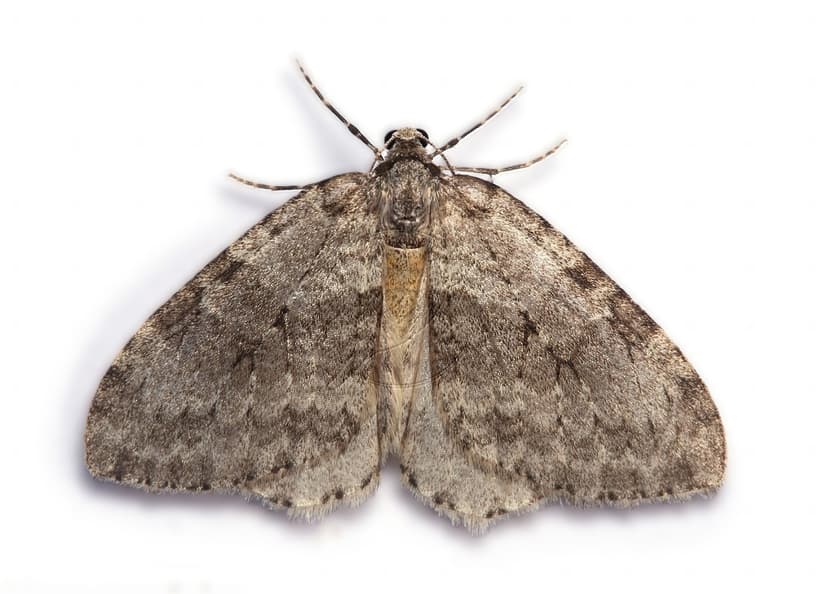
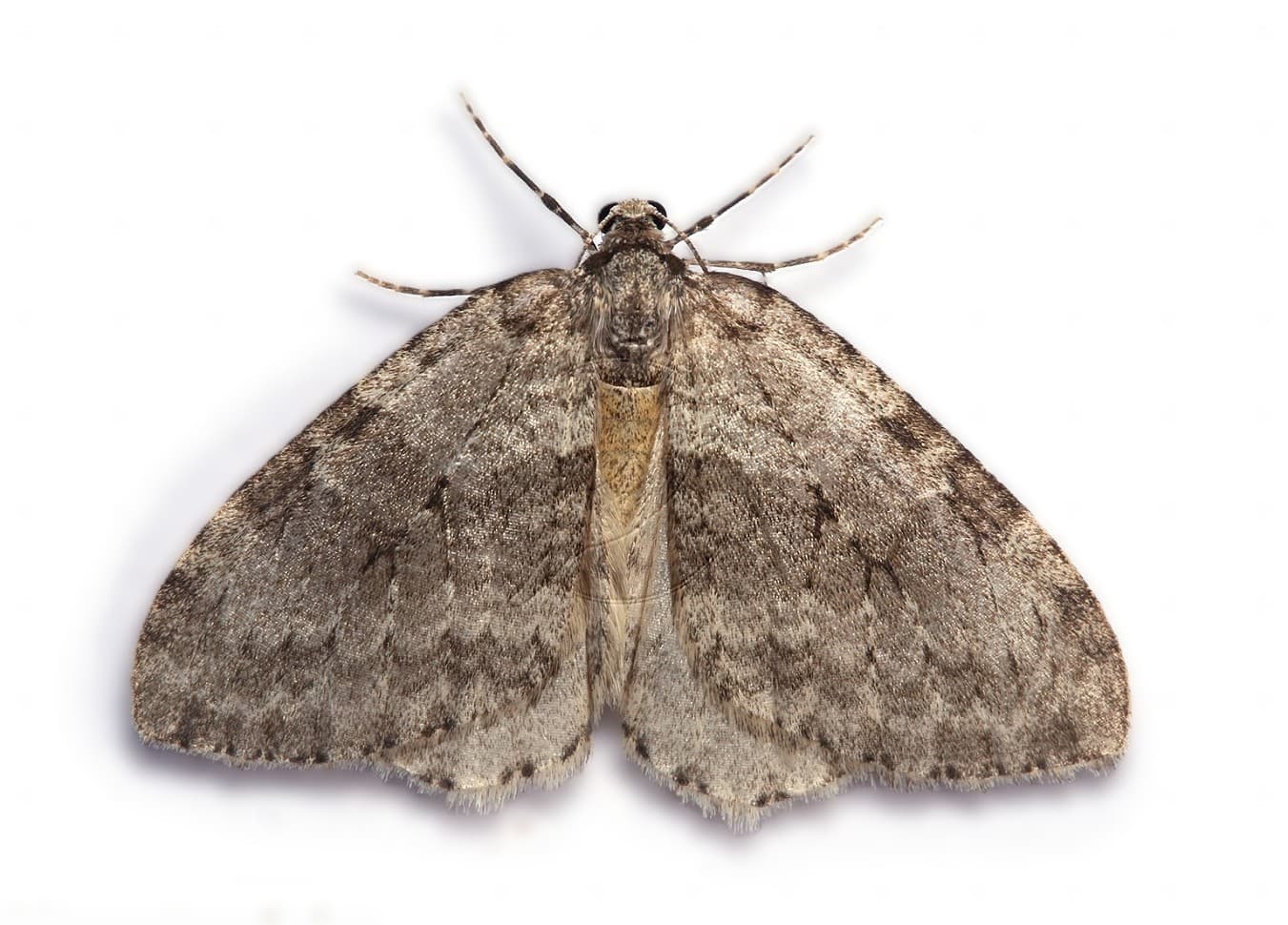
There are around 2,500 recorded moth species in the UK, but most are harmless. Four species in particular cause problems in homes and businesses — damaging clothing, carpets, textiles, and stored food products. Identifying which species you are dealing with is important because each requires a slightly different control approach.
This guide covers the four most common pest moth species, their appearance, lifecycle, habits, and the damage they cause.
Published:
Common Clothes Moth (Tineola bisselliella)
The common clothes moth is the most widespread textile pest moth in the UK and the species most likely to be responsible for holes in your clothing and damage to carpets.
Appearance — Adults are 6 to 8mm long with plain, straw-coloured wings and no markings. The trailing edge of the wings has a distinctive strong fringe. Larvae are up to 10mm long, creamy white with a brown head.
Lifecycle — Egg to adult takes approximately 6 weeks in ideal conditions (warm, humid, with plentiful food). In poor conditions or cold temperatures, the lifecycle can extend to 10 to 18 months. Females lay 40 to 50 eggs directly onto suitable fabric.
Habits — Adults do not feed. They run rather than fly and actively avoid light — if you see a small moth scurrying along the floor rather than flying to a window, it is almost certainly a clothes moth. Larvae feed on keratin in natural fibres — wool, silk, cashmere, fur, and feathers. They spin loose silk webbing over the surface of the fabric as they feed.
Case-Bearing Clothes Moth (Tinea pellionella)
The case-bearing clothes moth is less common than the common clothes moth but causes similar damage. It is distinguished by the portable silken case that the larva constructs and carries with it as it feeds.
Appearance — Adults are 6 to 8mm long with dark buff forewings and three faint spots (which may appear as two). Larvae are up to 10mm long, creamy white, and live inside a portable case made from silk and fibres of the material they are feeding on — so the case is often the same colour as the affected fabric.
Lifecycle — Similar to the common clothes moth. Egg to adult in approximately 6 weeks under ideal conditions, longer in cooler environments.
Habits — More rare than the common clothes moth. The portable case is the key identifying feature — look for what appears to be a small grain of rice moving across the fabric. Check imported goods such as hides, furs, or objects of animal origin, as this species is sometimes introduced on imported textiles.
Brown House Moth (Hofmannophila pseudospretella)
The brown house moth is very commonly seen in UK homes. It is larger than the clothes moth species and causes damage to a wider range of materials.
Appearance — Adults are 8 to 14mm long, brown in colour with three or four darker spots on the wings. Larvae are up to 20mm long — noticeably larger than clothes moth larvae.
Lifecycle — One generation per year in typical UK conditions, though this can be faster in warm, heated buildings.
Habits — Larvae feed on a wider range of materials than clothes moths — including animal textiles like wool, leather, and feathers, but also cereals, cork, and other organic matter. Brown house moths are more commonly associated with general household damage rather than the targeted fabric destruction of clothes moths.
Need professional help with moth pest control? BuzzKill Pest Control offers fast, effective treatment with no call-out charge.
White-Shouldered House Moth (Endrosis sarcitrella)
The white-shouldered house moth is generally less damaging to textiles than the other species but can still be a nuisance, particularly in outbuildings and unheated spaces.
Appearance — Adults are 6 to 10mm long with a distinctive white head and mottled grey-brown wings. Larvae are up to 12mm long, cream coloured with a red-brown head, and pupate inside a silk cocoon.
Lifecycle — Normally one generation per year.
Habits — Often found in unheated outdoor buildings such as garages, sheds, and barns. Larvae are scavengers that feed on a wide range of organic materials. They are less of a threat to indoor textiles than clothes moths but can cause damage to stored goods and bird nesting material in loft spaces.
Which Species Do I Have?
The quickest way to identify which moth species you have is by observing the adult moth's behaviour and appearance. If it is small (6-8mm), straw-coloured with no markings, and runs along the floor avoiding light — it is a common clothes moth. If the larvae are inside portable cases — it is a case-bearing clothes moth.
If the moth is larger (8-14mm) and brown with dark spots — it is a brown house moth. If it has a white head and mottled wings — it is a white-shouldered house moth. If moths are found near food cupboards with distinctive copper-brown wing tips — you have pantry moths (Indian meal moths), which require a different treatment approach.
If you are unsure, a professional pest controller can identify the species during an initial inspection. Accurate identification ensures the right treatment is applied. Our moth control service page covers pricing and the full treatment process.
Frequently Asked Questions
Which moth species causes the most damage?
The common clothes moth (Tineola bisselliella) is responsible for the majority of textile damage in UK homes. Its larvae feed exclusively on natural fibres and can cause significant damage before being detected due to their preference for dark, undisturbed areas.
Are brown house moths the same as clothes moths?
No. Brown house moths are larger and their larvae feed on a wider range of materials. Common clothes moths are smaller, straw-coloured, and their larvae specifically target natural fibres like wool and silk. Treatment approaches are similar but harbourage locations may differ.
Do all moth species damage clothes?
No. Of the 2,500 UK moth species, only a handful are household pests. The common clothes moth and case-bearing clothes moth specifically target textiles. Brown house moths and white-shouldered house moths are more general scavengers. Most moth species live outdoors and never enter homes.
Can I identify the species from the damage?
Partially. Common clothes moths leave loose silk webbing over the feeding area. Case-bearing moth larvae leave distinctive portable cases. Brown house moth damage tends to be more widespread across different materials. However, adult identification is more reliable — contact a pest controller if you are unsure.
Are pantry moths the same as clothes moths?
No. Pantry moths (Indian meal moths) infest stored food products — flour, cereals, nuts, dried fruit. They are slightly larger than clothes moths, have copper-brown wing tips, and are attracted to light. They require different treatment focused on food storage areas rather than textiles.
Professional Moth Pest Control Service
Learn more about our moth pest control service, pricing, treatment methods, and customer reviews.
View Moth Pest Control Service