
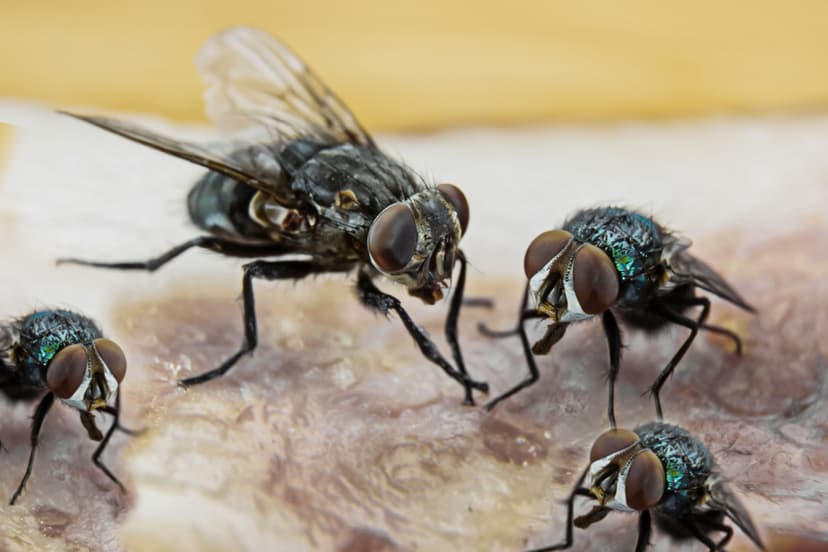
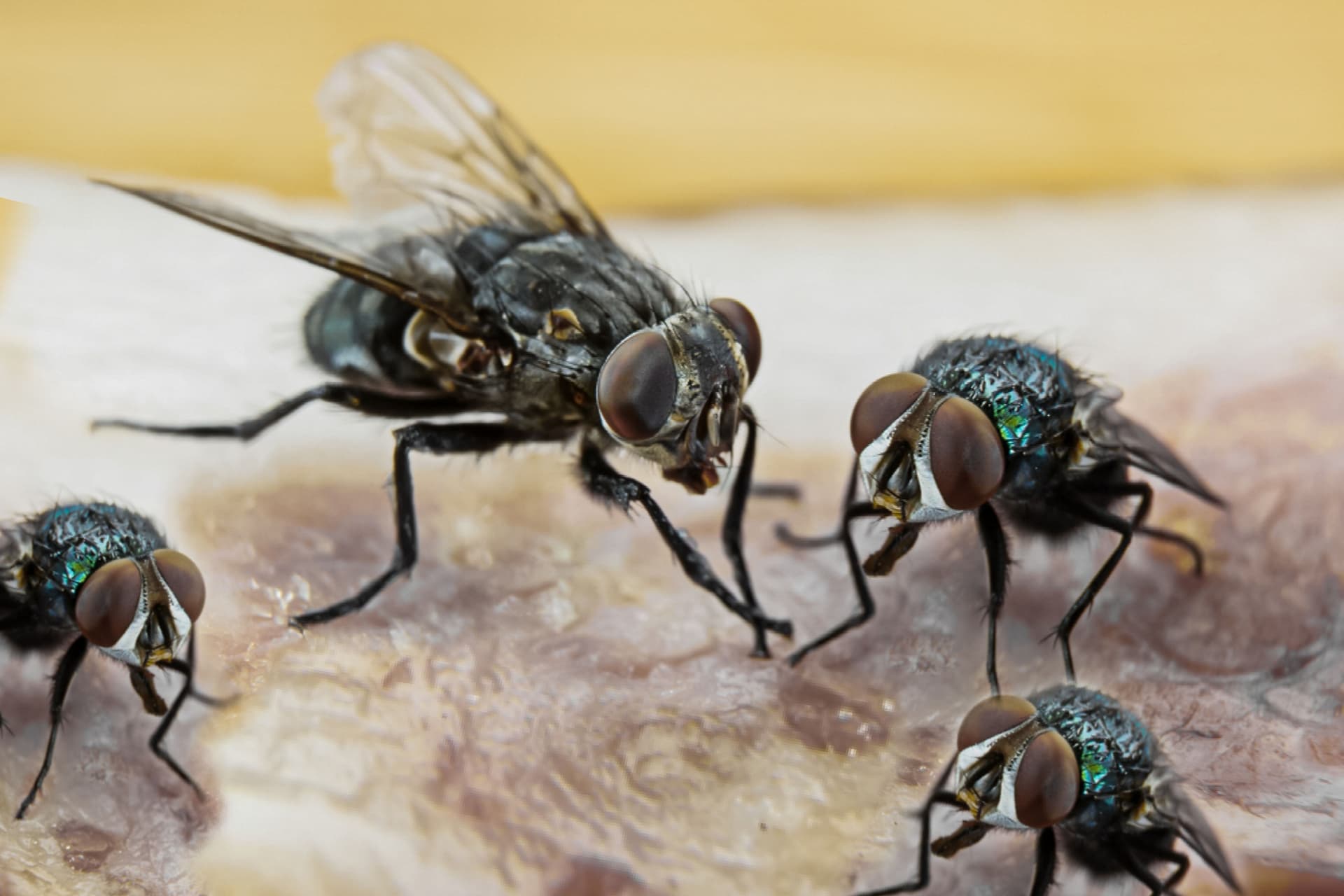
There are practical measures you can take to deter house flies, such as thorough cleaning which can get rid of breeding spots, and removing potential areas for flies to lay eggs — as they can reproduce very quickly.
Removing decaying food such as meat, fruit, vegetables and faeces is essential, as these attract the common house fly. Fruit flies like sugary substances and will feed on overripe fruit, spilled soft drinks and alcohol. Drain flies typically seek moist areas to lay their eggs, so keeping your property and drains as clean and dry as possible will reduce opportunities for them to breed.
Published:
How To Get Rid of House Flies
House flies breed in rotting organic matter and can complete their lifecycle in as little as 7 to 10 days. The key to getting rid of them is removing what attracts them and eliminating breeding sites.
Remove Food and Waste Sources — House flies are attracted by the smell of decaying organic matter. Remove decaying meat, fruit, vegetables and faeces promptly. Keep bins sealed and clean. Store food in airtight containers. Clear pet food bowls immediately after feeding. Compost bins should be kept well away from doors and windows.
Clean Thoroughly — Wipe down kitchen surfaces, cooker tops, and splashbacks daily — even small food residues attract flies. Clean inside and underneath bins regularly — sticky residue at the bottom of a bin is a prime breeding site. Mop floors to remove food spills, particularly around pet feeding areas. Clean drains weekly with an enzyme-based cleaner to prevent organic buildup that attracts drain flies and fruit flies.
Use DIY Fly Control Products — DIY products can reduce adult fly numbers but will not eliminate the breeding source. Electric UV fly killers are effective for house flies in kitchens — the industry standard for food businesses. Sticky fly strips on windows catch flies without chemicals. Aerosol fly sprays provide quick knockdown but no lasting protection. Vinegar traps work well for fruit flies specifically. For a detailed review of what works, see our DIY Fly Products guide.
How To Get Rid of Cluster Flies
Cluster flies can be more problematic than the odd house fly. In autumn months, they gather in large numbers. Cluster flies (Pollenia rudis), or attic flies, are large black flies similar in size, shape and behaviour to the blowfly.
The adults breed and lay their eggs outside in summer. During autumn, the adult lifecycle brings them into buildings — normally attics and roof voids — in order to hibernate over the winter months. This type of infestation can occur in very large numbers.
Cluster flies can enter your property through the smallest of cracks around door and window frames. Once these flies get into your home, there is not much you can do but try to trap them or kill them.
Vacuuming — Keep carpets, rugs and floors clean and vacuum up dead insects. After vacuuming, you can apply DIY residual insecticides or knockdown sprays on remaining adult flies. Empty the vacuum bag or container outside immediately after — dead cluster flies can attract carpet beetles and other secondary pests.
Sealing Up the House — You can try to limit access to your property by filling any cracks and crevices in walls, window or door frames with caulking. Make sure the roof is in good order and replace slates or tiles that are broken. Seal up holes around your home and make sure windows have screens and that the screens are free of holes. Sealing is most effective when done in late summer (August) before cluster flies begin seeking hibernation sites. Once they are already inside, sealing will not help — they need to be treated first.
Need professional help with cluster fly pest control? BuzzKill Pest Control offers fast, effective treatment with no call-out charge.
Professional Cluster Fly Treatment
Professional treatment is recommended when cluster fly numbers are high (hundreds or thousands) or when they return year after year. Professional ULV fogging is far more effective than DIY methods:
A fine insecticidal mist is dispersed throughout the loft space using professional equipment. The mist penetrates every crack, crevice, and void where flies are hibernating. Treatment takes 30 to 60 minutes and kills flies on contact. Residual spray on window frames continues killing for several weeks. Annual preventative treatment in late summer (August to September) stops the problem before it starts.
For pricing, visit our Fly Control page or call 0203 468 1999.
Frequently Asked Questions
Why do cluster flies keep coming back every year?
Cluster flies leave pheromone markers that attract other cluster flies to the same building year after year. The only way to break the cycle is annual preventative treatment in late summer before they arrive, combined with sealing entry points.
Can I use a bug zapper for flies?
Electric fly killers (UV light traps) are effective for house flies in kitchens and commercial premises. They are less effective for cluster flies, which are sluggish and less attracted to UV light. Bug zappers do not address the breeding source.
How fast do flies breed?
House flies can complete their lifecycle in as little as 7 to 10 days in warm conditions. A single female lays 400 to 600 eggs in her lifetime. This is why removing the breeding source is critical — killing adult flies without addressing the source is futile.
Will keeping my house clean stop flies?
Good hygiene significantly reduces house flies, fruit flies, and drain flies by removing breeding sources. However, cluster flies are not attracted by food or waste — they enter buildings to hibernate regardless of cleanliness. Cluster flies require a different approach.
Is fly spray effective?
Aerosol fly sprays provide quick knockdown of individual flies but do not address the breeding source or provide lasting protection. Professional residual sprays continue killing for weeks. For large infestations, professional treatment is far more effective than shop-bought sprays.
Professional Cluster Fly Pest Control Service
Learn more about our cluster fly pest control service, pricing, treatment methods, and customer reviews.
View Cluster Fly Pest Control Service