
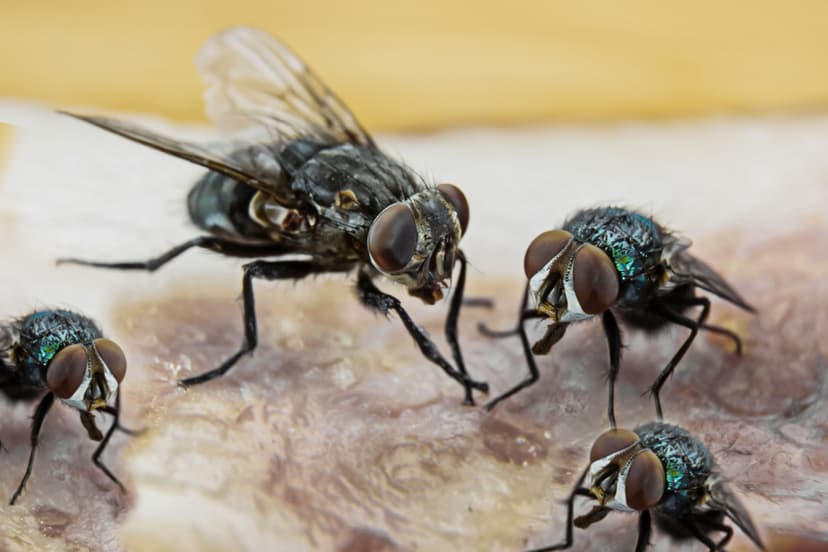
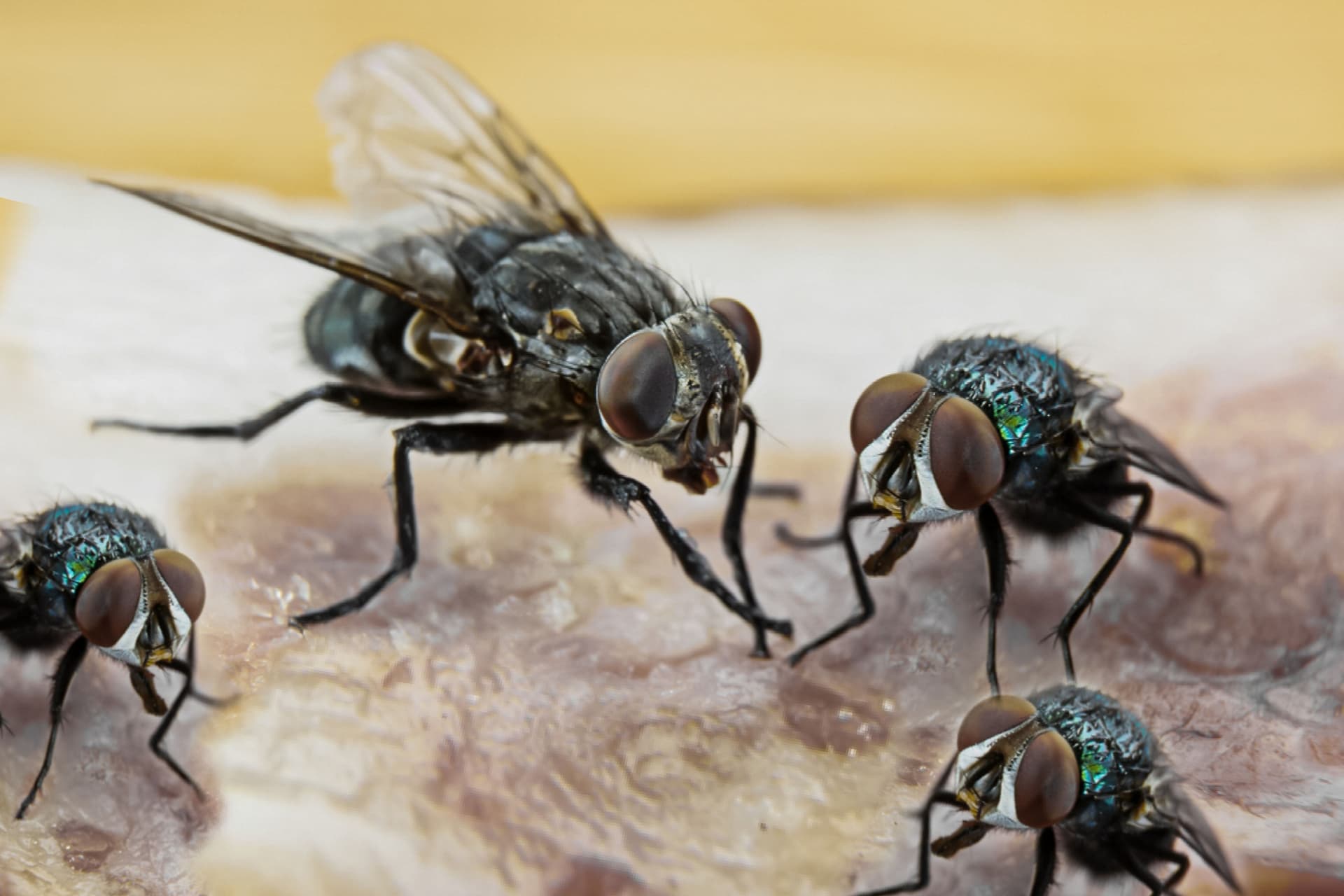
Flies can be a nuisance when buzzing around your home or business. You may initially decide to ignore the problem, but if you see flies in large numbers you could be facing an infestation that requires professional fly control.
Flies can cause potential harm by spreading diseases, contaminating food, and some species will bite humans and animals. It is important to act quickly if you see an unusually large number of flies or if they are really interfering with your home life or business.
Published:
Signs of a Fly Infestation
Noticing a few noisy flies may not mean you have an infestation. However, it should act as a warning sign to take some preventative action. Common signs to look out for:
Small dark clusters of spots — Look for small dark clusters of spots in light areas — roughly the size of a pinhead. These are fly droppings (also called fly specks) and are typically found on ceilings, walls, light fittings, and around window frames. A heavy concentration of spots indicates flies have been resting and feeding in that area for some time.
Regular sighting of flies — Seeing flies regularly around your home, near food, or around your bins is a strong indicator. Occasional flies in summer are normal, but if you are seeing them daily — particularly in the same areas — it suggests a breeding site is nearby. Pay attention to where flies concentrate, as this helps identify the source.
Maggots — Maggots are flies in their larval stage and are a clear sign of a breeding site on your property. They are small, white, worm-like larvae typically found in bins, around drains, near pet food, or close to any decaying organic matter. Finding maggots means adult flies have already laid eggs and the infestation is actively growing.
DIY Measures
If you have spotted any of these signs, you could choose to install some DIY fly products like light traps around your home. This may be able to reduce the number of adult flies, but DIY products are unable to affect a potential breeding site. Professional treatment of fly breeding sites is essential for long-term fly control.
For more information on what works, see our DIY Fly Products guide.
Need professional help with cluster fly pest control? BuzzKill Pest Control offers fast, effective treatment with no call-out charge.
Our Professional Fly Control Service
Our professional fly control service will eliminate flies on your property and identify and remove any potential breeding environments.
Identify fly species — to offer the most suitable and targeted fly control solution depending on the invading species.
Qualified, experienced staff — trained and certified to provide the most effective solution to your fly problem.
Safe, targeted treatments — our fly control treatments offer safe, long-lasting and effective solutions for homes and businesses.
Prevention advice — practical, low-cost fly deterrent measures that will reduce the risks of another infestation in the future.
No obligation site survey — for business premises, we provide a free assessment to identify the scale of the problem and recommend the right treatment.
For professional fly treatment, visit our Fly Control page or call 0203 468 1999.
Frequently Asked Questions
Why do I suddenly have lots of flies in my house?
A sudden influx usually has a specific cause. Cluster flies arrive in autumn seeking hibernation sites. House flies and bluebottles increase when a food source appears — uncovered bins, pet food, compost, or a dead animal. Drain flies indicate organic buildup in pipes.
Are flies in the house a health risk?
House flies and bluebottles are a significant health risk — they carry over 100 pathogens including Salmonella, E. coli, and Campylobacter, transferring bacteria from waste to food surfaces. Cluster flies and fruit flies are nuisance pests and not a major health concern.
How do I tell the difference between a cluster fly and a house fly?
Cluster flies are slightly larger, darker grey, and move sluggishly — they often sit still on windows. House flies are lighter grey, more active, and buzz rapidly around food. Cluster flies appear in autumn in large numbers; house flies are present year-round.
What does it mean if I find maggots?
Maggots are fly larvae and indicate an active breeding site very close by — rotting food, a dead animal, or organic waste. The maggots themselves are not dangerous but the breeding source needs to be found and removed urgently.
Professional Cluster Fly Pest Control Service
Learn more about our cluster fly pest control service, pricing, treatment methods, and customer reviews.
View Cluster Fly Pest Control Service