
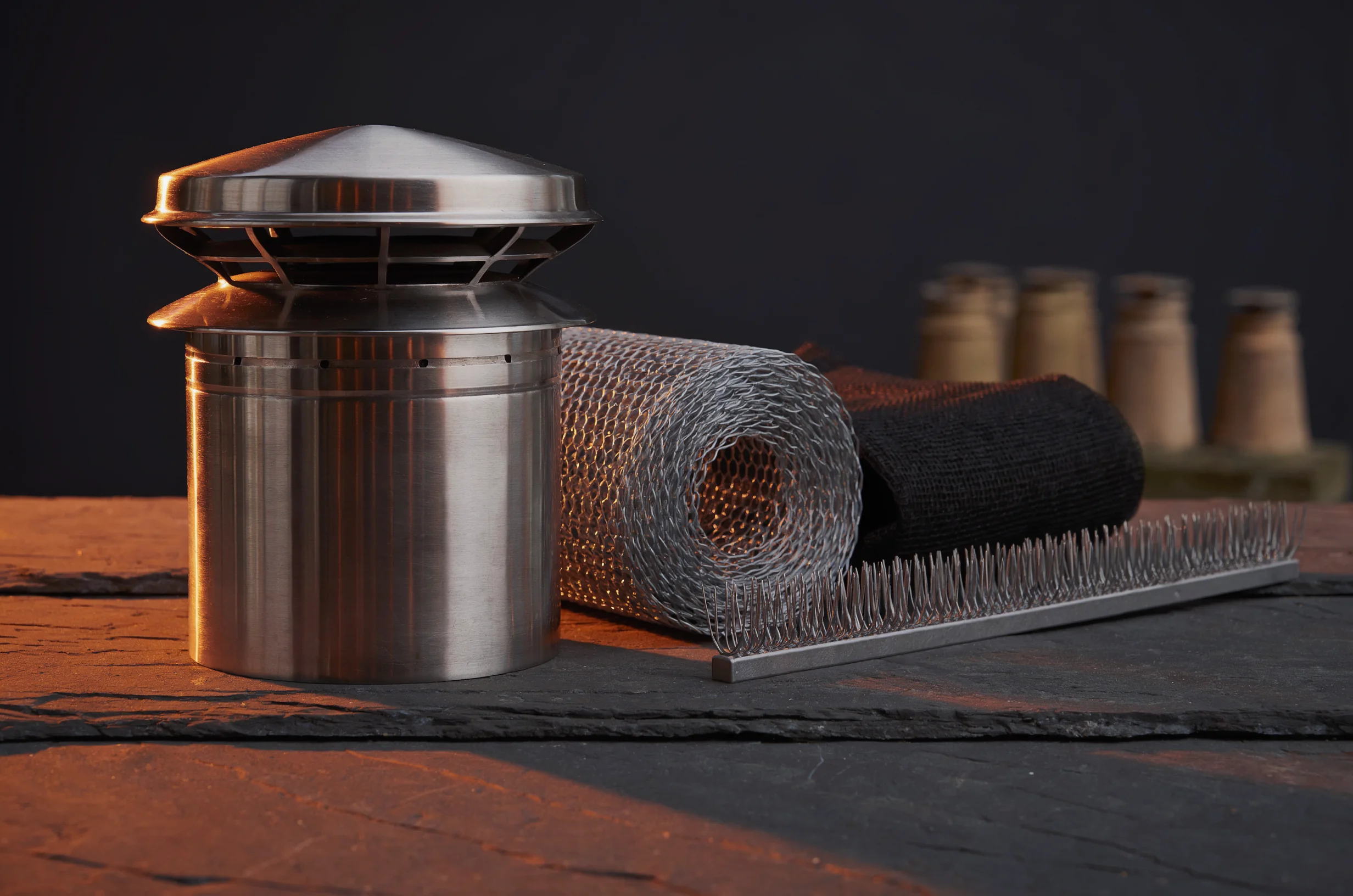
For London homeowners comparing pigeon proofing chimney stacks and pots, the useful price is the cost of the complete roof job. That includes reaching the chimney, preparing the surfaces, fitting the right protection and checking that the chimney can still do its job. A small fitting can sit within a much larger access bill.
Mesh guards, cowls, spikes and netting address different parts of the problem. I’d choose between them by checking where the birds enter or settle, whether the chimney is used, and how the installation will be maintained. This shortlist covers fitted barriers and perch deterrents; sound devices and visual scarers sit outside that scope.
No verified London price bands or product-specific lifespan figures are available for this comparison. The guidance below therefore explains what each quote needs to cover, rather than attaching unsupported pound figures or replacement dates to the options.
What a chimney proofing price needs to include
A chimney proofing quote becomes easier to compare when access, preparation and fitting are separate items. Otherwise, two prices can describe very different amounts of work.
Separate the fitting from the roof job
Ask the contractor to identify each pot and each part of the stack included in the price. The stack is the masonry structure above the roof; the pots are the outlets at its top.
A quote for one pot guard should say which pot it covers. A proposal for spikes should show the ledges covered. Netting needs a defined enclosure, including its edges and any maintenance opening.
The written scope should account for:
- The survey and proposed roof access.
- Existing fittings that need inspection, removal or replacement.
- Bird droppings and loose material that need clearing.
- The proofing materials, fixings and installation labour.
- Any separate chimney inspection or repair.
- Waste removal, completion photographs and follow-up arrangements.
Ask whether VAT is included and whether access equipment appears in the total. Where several properties share a stack, establish which owner or managing agent can approve the work.
Also confirm what each pot connects to. A flue is the passage that carries fumes from a fireplace or appliance. Its use needs checking before a fitting is selected.
Treat lifespan as a product-specific question
A material name alone doesn’t establish how many years an installation will last. “Stainless steel mesh” or “bird netting” leaves the product, attachment method and maintenance requirements unspecified.
Request the proposed product details, its care instructions and the installer’s workmanship terms. Separate a manufacturer’s warranty from any promise about the installation.
For budgeting, ask how inspections will happen and whether they require another access booking. Record the expected service life only when the contractor can explain the basis for it.
Mesh, cowls, spikes and nets protect different places
The strongest reason to include a method is a survey finding that matches its purpose. An open pot and a broad landing ledge need separate decisions, even when they belong to the same chimney.
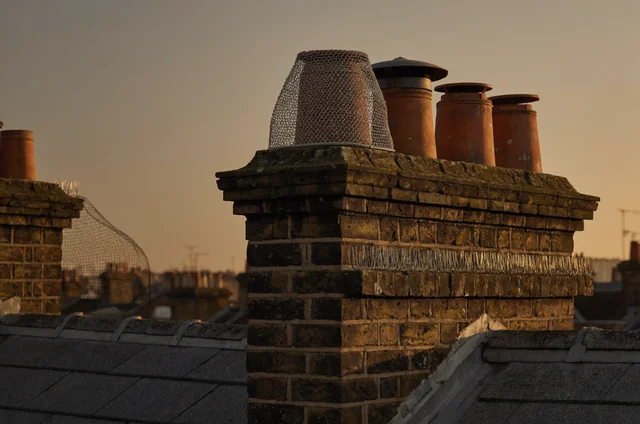
| Method | Main area addressed | Detail that decides whether it fits |
|---|---|---|
| Mesh guard | A defined pot opening or gap | Suitability for that opening and chimney use |
| Bird-resistant cowl | The outlet above a chimney pot | Compatibility with the flue and appliance |
| Spikes | Identified landing ledges | Coverage across the actual perching surface |
| Netting | A larger, defined enclosure | Secure boundaries and maintenance access |
Mesh guards for a clearly identified opening
A mesh guard belongs on the shortlist when the problem is access through a particular opening. The survey signal is a route into the pot or another gap, rather than pigeons resting somewhere on the surrounding brickwork.
Ask the quote to name the guard, its material, its dimensions and its attachment method. It should distinguish a purpose-made chimney fitting from mesh intended for another use. Any proposal affecting a working flue needs confirmation from an appropriately qualified chimney or appliance specialist.
The cost scope should include checking the opening, preparing the attachment area and securing the guard. Ask whether an existing fitting needs removal and whether debris inside the chimney needs separate attention.
Its limit is coverage. A guard over one opening leaves nearby ledges outside its scope. Equally, mesh around a stack should not be assumed suitable for covering a flue outlet.
For lifespan, request the product specification and inspection requirements. Ask how the guard can be removed for chimney maintenance and refitted afterwards.
I’d shortlist a correctly specified guard where the survey identifies a discrete entry point and confirms that the proposed fitting suits the chimney.
Bird-resistant cowls for compatible chimney pots
A cowl is a fitting placed over a chimney pot. A bird-resistant design may suit a property where the outlet needs protection, but the exact model matters.
This option earns consideration when a chimney specialist can match a fitting to the pot, flue and connected fireplace or appliance. “Chimney cowl” is too broad a description for a final quote. Ask for the model and written confirmation of its intended use.
The price should distinguish the fitting itself from installation, access and any chimney checks. If several pots stand together, have each one identified. Similar-looking pots should not automatically receive identical fittings.
A cowl’s limit is that it addresses the outlet for which it is specified. Pigeons may still have places to settle elsewhere on the stack. Ask the surveyor to show whether the evidence points to entry, perching or both.
Service life remains product-specific. Request the manufacturer’s maintenance instructions and ask how sweeping or future appliance work affects the fitting.
I’d consider a bird-resistant cowl where outlet protection and chimney suitability have been assessed together, with the proposed model recorded in the quote.
Spikes for exposed landing ledges
Spikes belong in the comparison when pigeons are settling on accessible ledges around the stack. Their purpose is to interrupt a landing surface; they do not close an open chimney pot.
Ask for photographs or a marked-up view showing every proposed strip. The quote should state the coverage, fixing method and preparation needed beneath it. A total length without a location plan makes it difficult to judge whether the work matches the birds’ landing places.
Look closely at the boundaries of the proposal. A short strip on one edge leaves other surfaces outside the quoted area. Ask whether the contractor expects those remaining surfaces to need attention.
The installation cost should include removing loose material from attachment areas and assessing the condition of the surface. Where masonry needs repair, that work needs its own scope rather than an assumption that the spikes will cover it.
For longevity, ask about the complete assembly, including its base and attachments. Have the inspection plan identify loose strips, gaps and accumulated material as points to check.
I’d choose spikes for defined perching surfaces where the survey shows that pot access is either absent or addressed separately.
Netting for a larger enclosure
Netting deserves consideration where the proposed job is to exclude pigeons from a broader space around the chimney. It needs a complete design, rather than a loosely described patch of material.
Ask the contractor to draw the intended boundary and identify every edge. The design should explain how the net attaches, where maintenance access sits and how future chimney work will be accommodated.
The quote needs to cover the net, supporting components, fixings, installation and any opening required for inspection. Ask how the contractor will confirm that the enclosed space is clear before completion.
Its honest limit is complexity. A netting proposal creates an enclosure whose edges and access points all need attention. Ask a chimney specialist to assess any arrangement near working outlets; a general bird-control proposal should not settle that question by assumption.
Lifespan depends on the specified system and its upkeep. Request inspection instructions and a repair arrangement. The warehouse-focused bird netting maintenance checklist provides a separate maintenance-planning prompt.
I’d consider netting where a defined enclosure solves a broader access problem and the design preserves the required chimney maintenance routes.
Roof access can change the chimney budget
The access proposal deserves as much attention as the proofing material. Ask each contractor to explain how the chimney will be reached and which access costs are included.
Roof ladders and powered access need a site assessment
A roof ladder may appear in a proposal for some properties, but it should follow an assessment of the actual roof and working position. A photograph alone should not become your instruction to use a particular access method.
Ask whether the proposed arrangement allows the contractor to inspect, clean and fit the protection properly. The written plan should account for the chimney’s position and the surfaces around it.
A cherry picker is a powered platform used to reach elevated work areas. If one is proposed, ask where it will stand, whether access to that position is available and who arranges it.
For a London property, provide information about driveways, rear access, narrow passages and shared entrances. Let the contractor establish which details affect the equipment booking.
Scaffold needs a defined scope and booking period
Scaffold may be proposed where the job needs a working platform or where proofing accompanies chimney repairs. Ask why it is required for this particular property.
The quote should identify who supplies it, what area it serves, how long it remains and what happens if work is delayed. Confirm whether the price includes assembly and removal.
Where a roofer or chimney contractor already has access equipment planned, ask whether the proofing can be coordinated within that arrangement. Agreement should cover the working area and timing.
For managed premises, the guide to commercial roof guano cleanup can help frame a separate discussion about cleaning and roof access.
Cleaning and chimney checks belong in the work plan
Proofing should follow an assessment of what is already on or inside the chimney. Ask for cleaning, bird activity and the condition of the structure to be addressed before installation is approved.
Give droppings removal its own scope
Guano means bird droppings. A proposal that simply says “clean chimney” leaves the area and extent unclear.
Ask whether cleaning covers the pot surrounds, stack ledges, nearby roof surfaces or material inside the flue. These are different locations, and the contractor should identify which ones have been assessed.
The cleaning plan should explain the working method, protective equipment, waste arrangements and protection of areas below. For background on that discussion, see the guide to pigeon droppings health risks.
Avoid choosing cleaning products from a description of the deposit alone. Ask the contractor to consider the surface being treated and any adjacent materials.
The article on guano and masonry damage provides further background for that conversation. Keep the proposed cleaning method and any masonry repairs as separate written items.
Resolve bird activity and chimney condition first
Birds entering a pot, repeated movement beneath a fitting or visible nesting material are reasons to establish occupancy before closing an opening.
If occupancy is uncertain, pause the fitting decision. Ask a competent bird specialist to identify the situation and advise on the correct handling and timing. The bird nest removal checks are useful background before that assessment.
Separately, ask whether the pot, surrounding mortar and proposed attachment surfaces are sound enough for the installation. Proofing and masonry repair need clearly assigned responsibilities.
If debris may be inside a working flue, arrange an appropriate chimney assessment before further use. A guard fitted above it does not establish that the passage below is clear.
Request completion photographs that show both the finished protection and the areas prepared beneath it.
Compare written quotes against the same chimney scope
The fairest comparison is between proposals covering the same pots, ledges, cleaning and access. I’d first mark any missing item as “unpriced” rather than assume it is included.
Ask for a description of the completed result. That might be a specified guard on an identified pot, or coverage of the ledges shown in survey photographs. A phrase such as “bird proof chimney” leaves too much open.
A quote from BuzzKill Pest Control or another contractor should identify the proposed method and its boundaries. Ask who takes responsibility for chimney suitability, who handles cleaning and who returns if an attachment needs attention.
Check the terms of any guarantee. Ask what it covers, what inspections are required and whether later access equipment is included. Keep those answers with the quote.
A useful quote-comparison tool would let you enter each contractor’s access, cleaning, fitting and follow-up charges, then flag missing items before displaying a comparable total.
For landlords, also record who will arrange tenant access and notify occupants about the work. Agree how weather delays and newly discovered defects will be handled before the booking is confirmed.
Questions to settle before the chimney work is booked
These chimney-specific questions help turn a shortlist into a defined job. Each answer should relate to your property rather than a general promise about pigeon control.
Can one fitting protect the pot and the stack?
Treat them as separate areas in the survey. A pot guard addresses an opening, while spikes address the surfaces on which they are fitted.
One property may need both. Another may need attention to only one confirmed route or landing place.
Ask the contractor to show which evidence justifies each part of the proposal. Approve coverage by location, with the pot and surrounding ledges clearly identified.
Is buying a guard myself a useful saving?
Buying the fitting first leaves its suitability unresolved. The installer still needs to confirm the dimensions, attachment method and compatibility with the chimney.
I’d settle the specification before purchasing materials. Ask whether the contractor will fit a customer-supplied product and how that affects responsibility for the finished work.
Keep ground-level photographs and notes about bird activity for the survey. Leave roof access and fitting to people equipped and competent for that work.
Does an unused chimney need the same protection?
Its future use and ventilation requirements still need assessment. “Unused” should not become an instruction to seal a pot without checking the chimney.
Tell the assessor whether the fireplace has been removed, blocked internally or retained for possible use. Have them establish what the proposed fitting must allow.
If several pots share a stack, record the status of each one. Keep that record with the installation details for future owners or contractors.
Which work should I approve for my chimney?
For a confirmed entry route through a pot, compare a suitable guard with a bird-resistant cowl specified for that chimney. Ask the chimney specialist to resolve compatibility before choosing between them.
For birds settling on stack ledges, consider spikes across the surveyed landing surfaces. If the proposal concerns a broader enclosure, assess netting through a drawn boundary, attachment plan and maintenance route. Require a separate decision for any affected working flue.
The overlooked alternative is assessment and repair of existing protection. Where a guard or net is already present, ask whether a defect can be corrected and whether the remaining system is suitable. Replacement should follow that assessment.
Choose the proposal that accounts for the observed bird activity, chimney use and access arrangements. Have every included pot, ledge and repair recorded before work begins.
Need professional help? BuzzKill offers fast, reliable pest control services across London and Essex.