
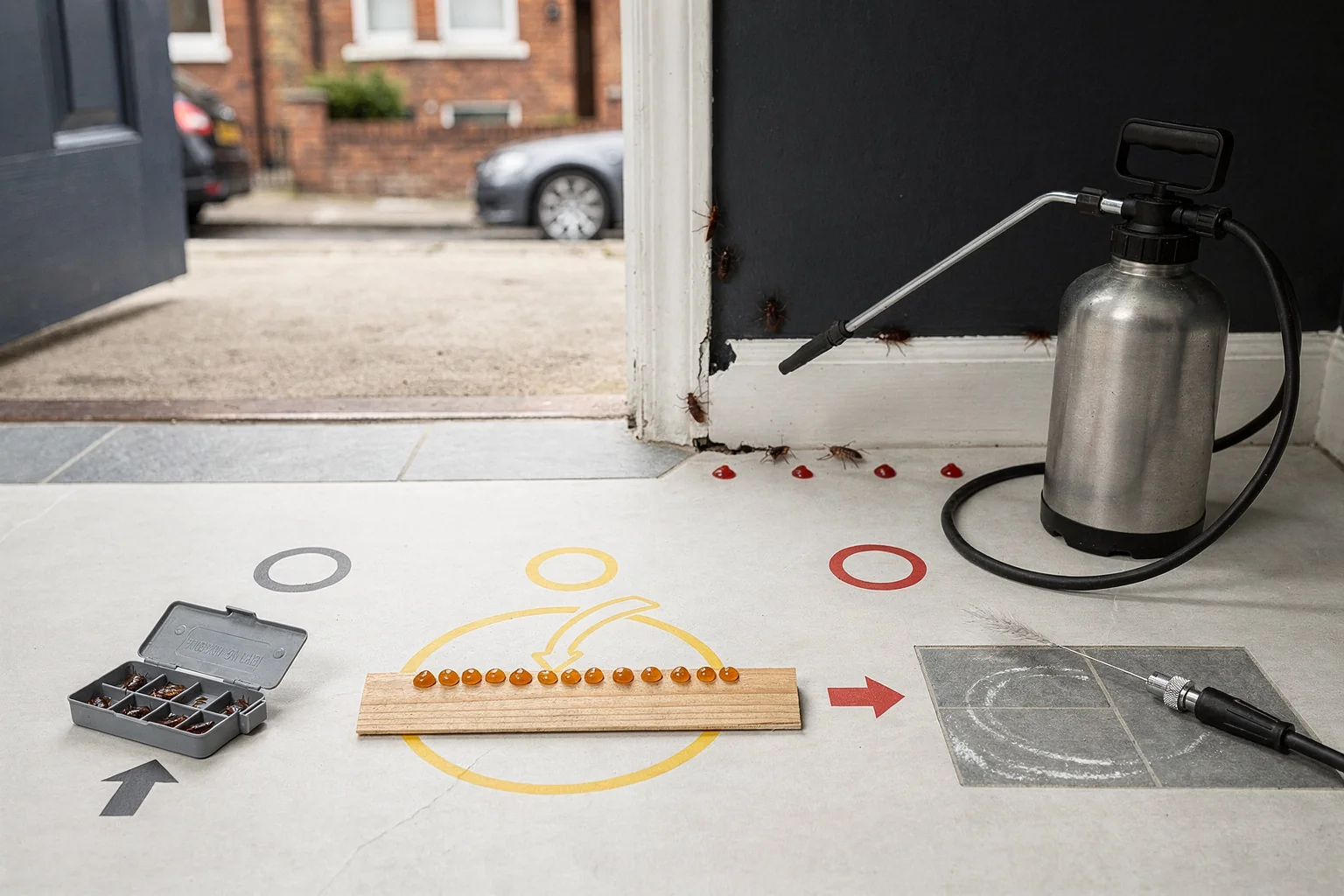
When you flip on the kitchen light at midnight and see something scatter behind the fridge, the question isn't whether you have cockroaches — it's what a same-day cockroach exterminator in Barking actually costs and whether the treatment will stick. This article walks through what professional technicians do, why pricing varies, and how to read the difference between a quick spray and a proper eradication programme. The video below shows a seasoned pest controller demonstrating how targeted insecticide applications work in practice, including the critical detail that roaches pick up treatment on their legs and spread it through the colony themselves.
Video: Get Rid of German Roaches FAST Using Alpine WSG – Pro Exterminator Method
The footage comes from Dusty Showers Pest Tips & Animal Rescues, a Florida-based operator who has used the same Alpine WSG product line for over a decade. While his climate differs from ours, the biology of German cockroaches and the mechanics of professional-grade bait transfer are identical whether you're in Tampa Bay or Barking and Dagenham. The key is matching the method to the property type, the species present, and the extent of harbourage — then pricing honestly for the labour and follow-up involved.
What You're Actually Paying For
A same-day call-out in Barking typically breaks down into three cost layers: the emergency response fee, the treatment application itself, and any follow-up visits required to break the reproductive cycle. Understanding these separately stops you from comparing quotes that aren't actually quoting the same service.
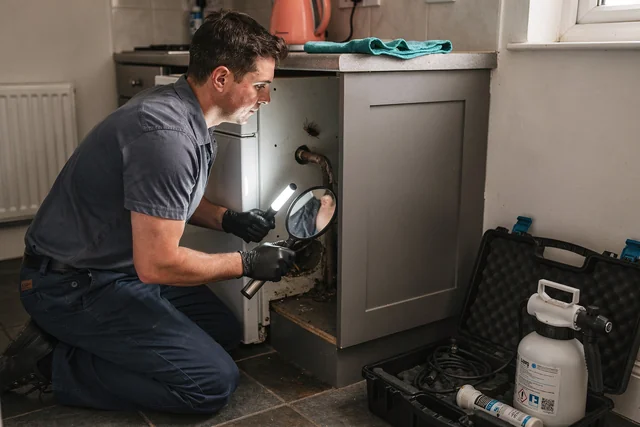
The emergency response layer covers technician travel, inspection time, and the diagnostic work of tracing harbourage points. In East London's dense Victorian housing stock and converted flats, this often takes longer than the treatment itself. Technicians need to check pipe runs, party-wall voids, extractor fan ducts, and the gaps behind built-in kitchen units where German cockroaches establish satellite populations. A thorough inspection might reveal the infestation extends into neighbouring properties — common in Barking's terraced and ex-council blocks — which changes both the treatment scope and the cost structure.
The treatment layer depends on method selection. Gel baits placed at harbourage points cost less in material but more in technician time and expertise. Residual sprays cover larger areas faster but may drive roaches deeper into voids if applied too broadly. Heat treatment is rarely used for cockroaches in the UK — it's effective but disproportionately expensive for insect jobs compared to bed bug work — though some operators offer it for severe commercial kitchen infestations where downtime must be minimised.
Follow-up visits are where pricing honesty matters most. German cockroach egg cases (oothecae) can hatch up to 40 days after treatment, meaning a single visit rarely achieves full control. Reputable Barking operators include two or three follow-up inspections in their quoted price, checking monitor traps and re-baiting where activity persists. Quotes that seem cheap often exclude this, leaving you to pay separately when nymphs appear six weeks later.
How Barking's Housing Affects Treatment Complexity
Barking and Dagenham's property mix creates specific cockroach control challenges that influence same-day pricing. The borough retains significant post-war council stock — much now privately owned or housing association managed — with shared services, concrete construction, and limited access to void spaces. These buildings allow cockroaches to travel between flats through pipe ducts and electrical conduits, making single-unit treatment potentially ineffective.
Newer developments around Barking Riverside and the Gascoigne Estate regeneration present different problems. Modern flats with sealed windows and mechanical ventilation can create humid microclimates ideal for German cockroaches, while the tight construction tolerances make it harder to apply dust formulations into wall voids. Technicians often need borescope cameras or thermal imaging to locate harbourage in these properties, adding diagnostic time to the call-out.
Commercial premises — particularly the restaurant and takeaway cluster along the A13 and around Barking town centre — face additional compliance requirements. Food business operators must demonstrate due diligence in pest control to Environmental Health, meaning treatment records, risk assessments, and proofing recommendations become part of the service. This documentation adds labour cost but protects the business's operating licence.
Reading the Species: German vs Oriental Cockroaches
Not every "cockroach exterminator Barking" search leads to the same treatment need. The two species most commonly encountered in East London require fundamentally different approaches, and misidentification wastes money.
German cockroaches are smaller, lighter in colour, and prefer warm, humid indoor environments — kitchens, boiler cupboards, behind appliances. They reproduce rapidly, with females producing up to eight egg cases in a lifetime, each containing 30-40 eggs. This means populations can explode from a single introduction, often via second-hand appliances or food packaging. The video demonstration focuses on German cockroach control because this species dominates residential call-outs in Barking's flats and houses.
Oriental cockroaches are larger, darker, and more tolerant of cooler conditions. They're often found in basements, drains, and external bin stores, entering buildings through utility penetrations. Their slower reproductive rate makes control theoretically easier, but their association with drainage systems means treatment must address building defects — cracked gullies, broken manhole covers, defective soil stacks — that pure insecticide application cannot fix.
A same-day inspection should include species confirmation, because Oriental cockroach jobs often need a drainage survey as part of the treatment plan, significantly affecting cost.
Professional Methods: What the Video Shows and What It Misses
The Alpine WSG demonstration in the video illustrates a professional principle that applies directly to Barking properties: targeted application at harbourage points outperforms broadcast spraying. The technician sprays behind the refrigerator motor, along pipe runs, and into crack-and-crevice zones where roaches travel. The insecticide dries to a non-repellent film that roaches pick up on their legs and transfer to other colony members through grooming and cannibalism.
This "transfer effect" is why professional-grade products outperform consumer sprays. Supermarket aerosols often contain pyrethroids that repel roaches, causing them to scatter and establish new harbourage areas — exactly what you don't want in a flat with shared walls. The video's emphasis on motor and compressor areas is particularly relevant to Barking's housing stock, where older refrigeration units and boiler installations create ideal German cockroach harbourage.
What the video doesn't cover — because it's aimed at a US DIY audience — is the UK regulatory framework governing professional use. In England, anyone applying professional-grade insecticides commercially must hold a recognised qualification, typically RSPH Level 2 Award in Pest Management or equivalent BASIS PROMPT certification. This isn't bureaucratic box-ticking: these qualifications cover safe application around children, pets, and food preparation areas, plus the environmental risk assessment that determines whether a product like Alpine WSG is appropriate for a particular property.
The video also doesn't address the multi-visit protocol that UK best practice requires. The technician shows a single treatment achieving rapid knockdown, which is accurate for the immediate effect, but doesn't mention the follow-up inspections needed at 14-day intervals to catch emerging nymphs and break the reproductive cycle. When you're comparing same-day quotes in Barking, ask specifically whether the price includes these follow-ups — a proper programme typically spans six to eight weeks from initial call-out to final clearance.
Pricing Benchmarks: What Same-Day Treatment Actually Costs
Understanding what you'll pay requires distinguishing between council services, national franchises, and independent operators like BuzzKill Pest Control. Each has different cost structures and service models.
Barking and Dagenham Council's pest control service charges £395.48 for cockroach treatment including two follow-up visits, or £173.35 for a single visit without follow-up (as of their 2026 published schedule). The higher tier represents proper eradication protocol; the lower tier is essentially emergency knockdown that may need repeating. Council services typically have longer lead times for non-urgent bookings, though they do offer priority slots for severe infestations affecting vulnerable residents.
National franchises like Rentokil operate variable pricing based on survey, with published starting points around £150-£250 for initial call-out but total programme costs often reaching £400-£600 for German cockroach jobs requiring multiple visits and extended warranties. Their strength is standardised protocols and national account management for commercial chains; for a Barking homeowner, you're partly paying for infrastructure that doesn't directly benefit your job.
Independent NPTA-registered operators in the Barking area typically quote £130-£180 for same-day call-out including initial treatment, with follow-up visits at £80-£120 each or bundled into a fixed-price programme. The total cost for a standard three-visit German cockroach eradication usually falls between £250 and £400, depending on property size and infestation severity. These operators can often respond faster than council or franchise services because they don't route calls through centralised booking systems.
When comparing quotes, ask these specific questions: Does the price include the inspection time or is that charged separately? How many follow-up visits are included, and at what interval? What products will be used, and are they approved for use in food preparation areas if relevant? Is there a guarantee period, and what triggers a re-treatment at no extra cost?
Why Same-Day Response Matters for Cost Control
The economics of cockroach control worsen rapidly with delay. A single female German cockroach can produce 300-400 offspring in her lifetime, and populations can double every few weeks under favourable conditions. What starts as a localised kitchen problem can spread to bathrooms, bedrooms, and neighbouring properties within two months.
Same-day response isn't just about convenience — it's about limiting the treatment area and preventing secondary infestation. In Barking's flat conversions and HMOs, rapid containment protects your relationship with neighbours and your landlord. The NPTA's 2026 industry review notes that technicians are increasingly called to situations where delayed treatment has turned a single-unit problem into a building-wide issue, multiplying costs and complicating responsibility.
There's also a seasonal factor. As MyLondon reported in September 2026, turning central heating back on after summer creates ideal conditions for cockroach activity just as natural outdoor temperatures drop. September and October see peak call-out volumes in London, meaning same-day slots become harder to book and some operators surcharge for emergency response during peak periods. Calling promptly when you first notice signs — droppings, egg cases, or live sightings — secures both faster treatment and potentially lower cost.
DIY vs Professional: When the Supermarket Spray Wastes Money
The video's presenter acknowledges that homeowners can self-treat with professional-grade products purchased online, and the Reddit-sourced cockroach control overview similarly emphasises following product labels precisely and wearing proper protective equipment. Both sources are technically accurate, but they assume conditions that rarely apply in Barking properties.
Self-treatment becomes viable when: you live in a detached house with no shared services; you've confirmed the infestation is confined to one room; you can identify and access all harbourage points; you have time for the repeated applications and monitoring that proper control requires; and you're confident reading and following pesticide labels that, as the Vendetta Plus video notes, are printed in text so small that "if you don't have 2020 vision, you're not picking that up."
In practice, most Barking residents face at least one disqualifying factor: flat living with shared walls, limited access to void spaces, time constraints, or uncertainty about infestation extent. The Panther Pest Control 2026 pricing guide makes the point directly: "That ten-pound tin of supermarket spray might be the most expensive purchase you make this year" if it drives roaches deeper and spreads the problem.
Professional treatment also provides documentation that DIY cannot. For tenants, this means evidence to present to landlords about infestation origin and treatment scope. For leaseholders in blocks with shared services, it creates a paper trail if the problem proves building-wide. For food businesses, it's a legal requirement for due diligence records.
What Proper Proofing Prevents Reinfestation
Treatment without proofing is incomplete. The best cockroach exterminator in Barking will spend inspection time identifying entry points and harbourage conditions, then recommend practical fixes that prevent reinfestation after chemical control concludes.
Common proofing measures in Barking properties include: sealing gaps around pipe penetrations with appropriate mortar or intumescent sealant; fitting mesh screens over vent openings; replacing damaged door seals and brush strips; improving extraction in kitchens to reduce humidity; and storing food in sealed containers to eliminate feeding sources. In commercial kitchens, this extends to cleaning schedules, waste management protocols, and staff training on spotting early signs.
The cost of proofing varies enormously. Simple homeowner fixes — sealant tubes, mesh, door strips — might cost £30-£50 in materials. Structural drainage repairs for Oriental cockroach problems can run to hundreds. A good technician will prioritise: separating essential proofing that must happen for treatment to succeed from desirable improvements that reduce long-term risk.
Questions Barking Residents Ask About Cockroach Extermination
How quickly can a same-day exterminator arrive in Barking?
Most NPTA-registered independents in the area offer same-day response for calls received before early afternoon, with emergency evening and weekend slots available at premium rates. During September-October peak season, booking 24-48 hours ahead improves your chances of preferred timing.
Will treatment force me out of my home?
Modern gel bait and non-repellent spray treatments typically require only brief vacating of treated rooms during application and until products dry — usually 2-4 hours. Your technician should advise on any specific ventilation or re-entry requirements for the products used.
Are the chemicals safe around my children or pets?
Professional products applied by qualified technicians at label rates pose minimal risk once dry. The greater risk comes from improper DIY application or use of unapproved products. Ask your technician about the specific active ingredients and any temporary precautions needed.
How do I know the treatment has worked?
Reduction in live sightings within 48-72 hours indicates initial success, but this is not eradication. Monitor traps should show declining catch over the follow-up period, with no live nymphs at the final inspection. Egg case hatch means some delayed emergence is normal; the question is whether these nymphs contact treated surfaces before maturing.
What if my landlord refuses to pay?
For rented properties, the landlord is typically responsible for pest control unless the tenancy agreement specifically states otherwise or you caused the problem through poor hygiene. An NPTA-registered technician's report identifying harbourage points and likely infestation origin provides evidence for dispute resolution. In buildings with shared services, the infestation may be the landlord's structural responsibility regardless of which unit first showed signs.
Can cockroaches come back after successful treatment?
Reinfestation is possible if neighbouring properties remain untreated or if building defects allow re-entry. This is why proofing recommendations matter, and why severe building-wide infestations may require coordinated treatment across multiple units — something to discuss with your technician if monitoring suggests ongoing activity from external sources.
Reading Your Quote: Red Flags and Green Lights
A proper quote should specify: the species identified (or "presumed pending confirmation"); treatment areas and methods; product names or at least active ingredient classes; number of visits and intervals; guarantee terms; and any proofing recommendations with separate pricing. Vague language like "cockroach treatment" without method detail, or quotes that seem to assume single-visit resolution of German cockroaches, suggest incomplete service.
Green lights include: technicians who ask about building construction, neighbouring properties, and previous treatments; who explain why they've chosen specific products for your situation; who discuss follow-up before you've asked; and who provide written treatment records with product labels and safety data sheets. These are markers of professional practice that correlate with successful outcomes.
The cheapest quote is rarely the best value. A £130 call-out that achieves nothing and needs repeating at full cost exceeds a £250 programme that achieves clearance in the planned visits. Ask directly: what is your success rate for this type of property, and what happens if live activity persists after the final scheduled visit?

Need professional help? BuzzKill offers fast, reliable pest control services across London and Essex.