
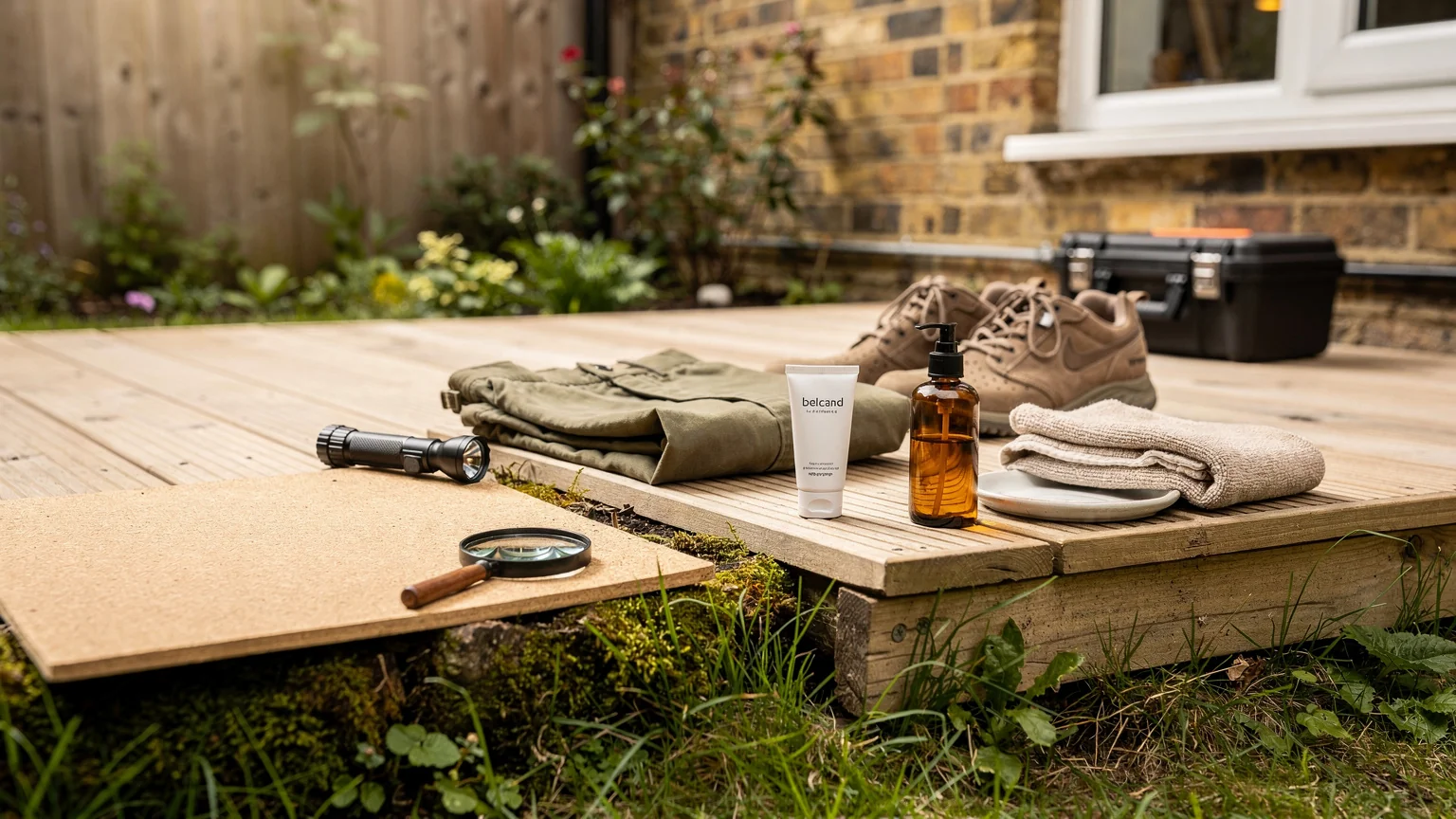
A field technician's guide to washing, soothing, and monitoring chigger bites so the itch fades instead of getting worse.
The moment you notice a ring of angry red welts around your waistband or sock line, the instinct is to scratch, coat them in something, or search for a quick fix that promises instant relief. Resist all three impulses for the next ten minutes. Chigger larvae do not burrow into skin and they do not stay attached once the itching begins, so the bites you are seeing are already from mites that have dropped off. The itch is your immune system reacting to enzymes the larvae injected while feeding, and most of the home remedies people reach for either do nothing or actively make the inflammation worse. Effective chigger bites treatment starts with soap, water, and a cold compress, not with nail polish, bleach, or essential oils.
The first 10 minutes
Strip the clothing you were wearing and place it directly into a hot wash at 60 degrees Celsius or above. Chigger larvae cling to fabric, and any mites still on your trousers, socks, or shirt will reattach the moment you dress again. According to StatPearls on chigger bites, exposed clothing should be washed in hot water to kill remaining larvae.
Shower using ordinary soap and lukewarm water. Scrub gently over the bite areas, paying attention to skin folds where clothing sits tight: waistband, sock tops, bra line, and behind the knees. The Cleveland Clinic confirms that chiggers do not burrow into skin, so washing will not dislodge anything living inside you. It removes surface irritants and reduces the enzyme residue that drives the inflammatory response.
Pat the skin dry with a clean towel. Do not rub. Apply a cold compress wrapped in a thin cloth for ten minutes. This constricts the small blood vessels around the bite and slows the histamine cascade that causes swelling and itching. Avoid scratching, picking, or applying any home remedy you have not verified with a pharmacist or GP. Nail polish, petroleum jelly, and bleach are common folk treatments that dermatologists advise against because they trap heat against inflamed skin and can cause chemical irritation on top of the bite reaction.
Confirm the evidence
Chigger bites produce clusters of small red welts, often in lines or tight groupings, concentrated where elastic or seams pressed against skin. The bites typically appear 1 to 3 hours after exposure and intensify over the following 24 to 48 hours. They resemble bed bug bites in appearance, which is why homeowners sometimes misidentify them. The key difference is location and timing: chigger bites cluster around waistbands, sock lines, and groin folds, while bed bug bites tend to appear on exposed skin during sleep, such as arms, shoulders, and the face.
Photograph the bites in natural light with a ruler or coin for scale. Note the date, time, and location where you were when the bites likely occurred. This record helps a GP or pharmacist assess whether the reaction is a normal inflammatory response or something that needs further investigation. False alarms include contact dermatitis from new detergent, heat rash from tight clothing, and reactions to other biting insects such as fleas. If you have pets, consider whether flea treatment might be relevant to your situation, as flea bites can appear similar on the lower legs.
Walk the exposure route
Chiggers live in tall grass, bracken, woodland edges, and overgrown garden borders. To work out where you were bitten, retrace your outdoor activity from the last 48 hours.
- Identify the outdoor area you were in: a park, allotment, garden border, footpath through long grass, or woodland walk.
- Check whether the area has dense ground cover, leaf litter, or unmown grass taller than 15 centimetres. Chigger larvae climb to the tips of low vegetation and transfer to passing hosts on contact.
- Inspect your garden if the exposure was at home. Look along fence lines, under hedges, and around compost bins where grass meets soil. Pay particular attention to south-facing borders that stay warm and damp.
- Bag a small sample of the ground cover if you want a pest control technician to confirm the species. Seal it in a labelled plastic bag with the date and location.
- Check other household members who were in the same area. Chigger bites on children often appear around sock tops and the waist of school trousers.
This route check matters because it tells you whether the exposure was a one-off event or whether your property has a habitat that supports chigger populations. A single walk through long grass is a different problem from a garden that produces repeated bites every summer.
What works and what does not
The itch from chigger bites can persist for one to two weeks. Per MedlinePlus guidance on chiggers, antihistamines and corticosteroid creams are the standard treatment approach. Antibiotics are not needed unless a secondary skin infection develops from broken skin.
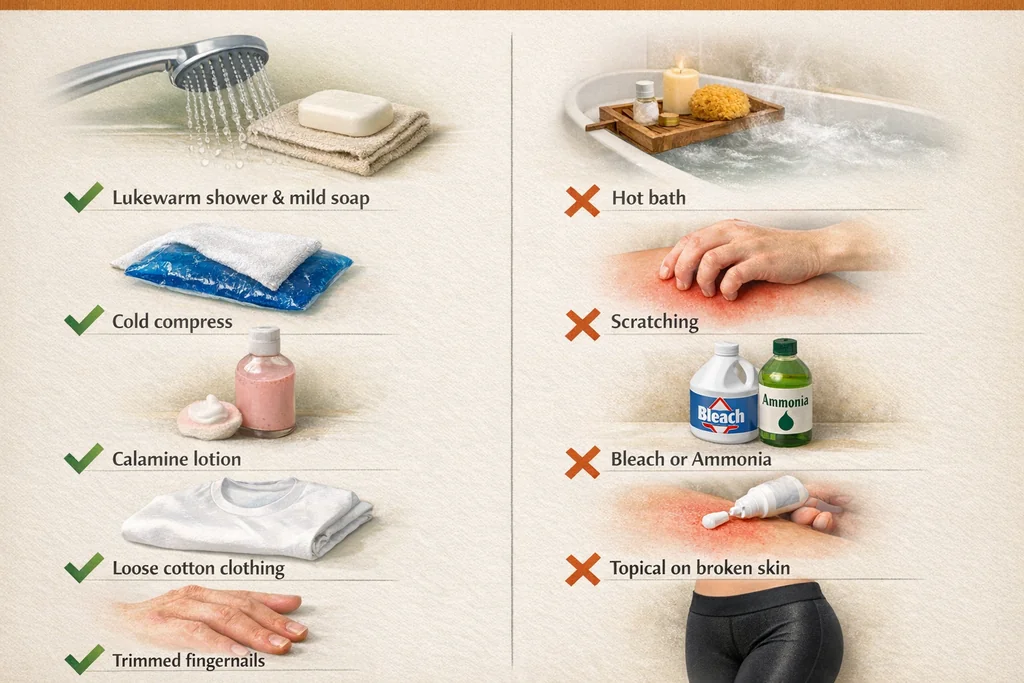
Effective treatments:
- Oral antihistamines such as cetirizine or loratadine, available without prescription at any UK pharmacy. These reduce the histamine response that drives itching.
- Hydrocortisone cream (1 percent), applied thinly to the bites twice daily for up to seven days. Calamine lotion is an alternative that dries and cools the skin surface.
- Cold compresses applied for ten minutes at a time, several times a day during the first 48 hours.
- Keeping fingernails short to limit damage from unconscious scratching, especially overnight.
Treatments that do not work or cause harm:
- Nail polish. This does not suffocate anything because the mites have already left. It seals heat against inflamed skin and introduces solvent chemicals to broken tissue.
- Bleach baths. These cause chemical burns on compromised skin and have no effect on the bite reaction.
- Undiluted essential oils. Tea tree and lavender oil applied neat can trigger contact dermatitis on top of the existing inflammation.
If you are unsure which product is safe for your skin, a pharmacist can advise on the right antihistamine and topical cream combination. The NHS antimicrobial prescribing guidelines for insect bites and stings confirm that most bite reactions do not require antibiotics and are managed with symptom control.
Tonight, tomorrow, and the next 48 hours
Tonight. Take an oral antihistamine before bed if the itching is keeping you awake. Sedating antihistamines such as diphenhydramine are available over the counter and can help with night-time itch, though they cause drowsiness. Wear loose cotton clothing to reduce friction on the bite areas. Keep the bedroom cool, as heat worsens itching.
Tomorrow morning. Reapply hydrocortisone cream if the bites are still inflamed. Wash bedding and any clothing that contacted the bites overnight. Check the bite sites for signs of secondary infection: increasing redness spreading outward from the bite centre, warmth, pus, or a fever. These are not normal chigger bite reactions and need medical attention.
The next 48 hours. The itch should peak around day two and then begin to ease. If the bites are spreading, producing fluid-filled blisters, or if the itching intensifies rather than fades after 72 hours, book a GP appointment. Photograph the progression so the clinician can compare. If you suspect the exposure happened at home, consider whether you need a site survey to assess the garden or grounds. BuzzKill technicians carry out property inspections across East London and Essex and can identify whether the habitat conditions support chigger or other mite populations on your land.
The sign that means stop DIY and call a technician
If you or a household member develop spreading redness with warmth and tenderness beyond the immediate bite area, pus or yellow crusting at the bite site, a temperature above 38 degrees Celsius, or swelling that affects breathing or swallowing, stop home treatment and contact your GP or NHS 111 immediately. These signs indicate a secondary infection or severe allergic reaction that requires clinical assessment and possibly prescription treatment. For the bites themselves, the DIY approach of washing, antihistamines, and hydrocortisone is sufficient for the vast majority of cases. For the habitat that produced them, a professional inspection is the only reliable way to confirm whether your property needs treatment to reduce chigger activity in the garden or grounds.
Need professional help? BuzzKill offers fast, reliable pest control services across London and Essex.