
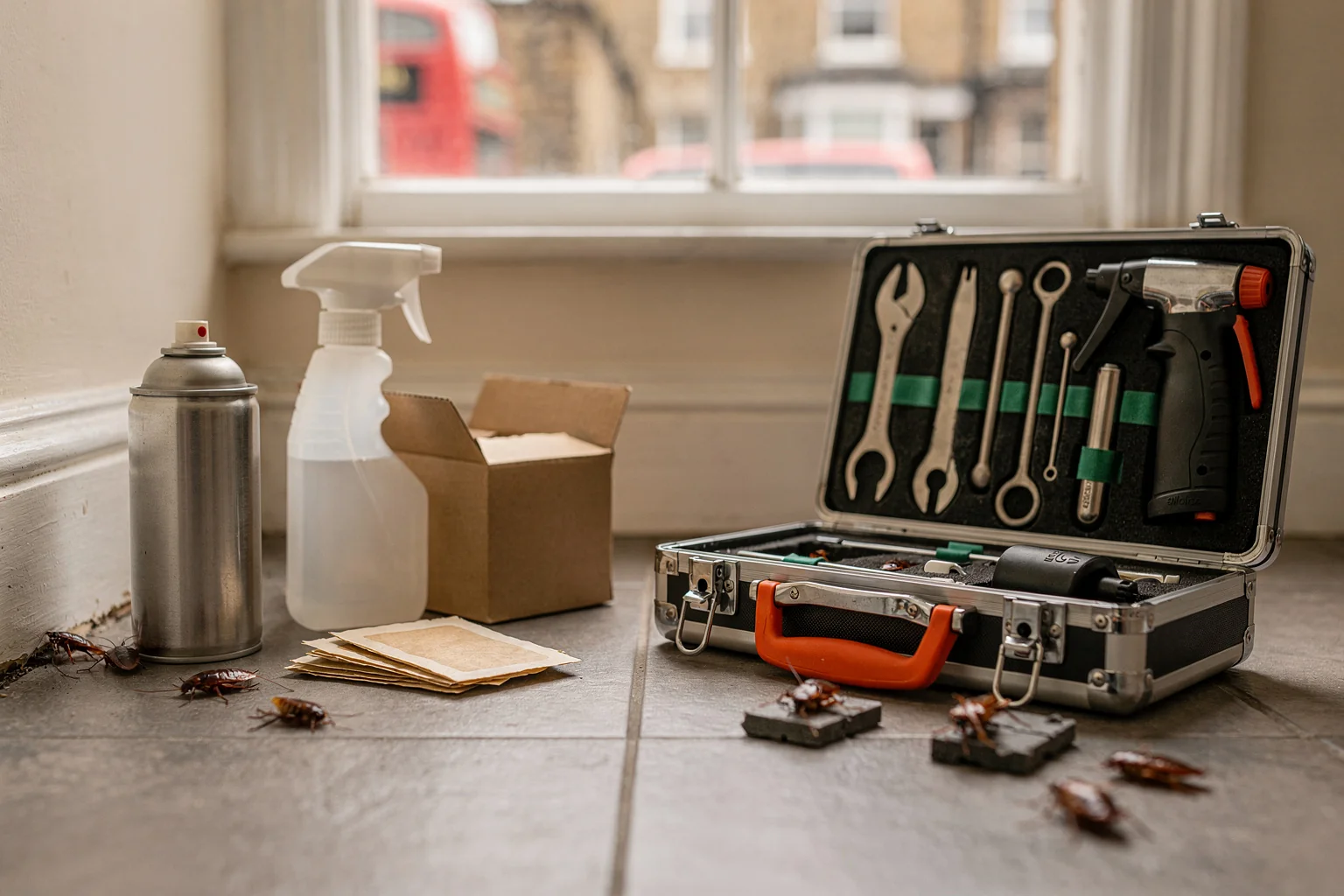
The ten-pound tin of cockroach spray from the supermarket checkout looks like a quick answer. You spot two German cockroaches skirting the washing machine in your Hackney kitchen, and you want them gone before the kids come home. But the question most people in East London really need to ask isn't "which spray" — it's whether any shop-bought kit can finish a cockroach problem that’s already breeding behind the skirting board. If you’ve searched for the best cockroach exterminator near me, you’re probably standing exactly where dozens of local callers stood last week: one hand holding a receipt for a product that didn’t work, the other hand reaching for a professional who will.
Why So Many East London Homes Are Seeing Cockroaches Right Now
London’s warm, moisture-heavy flats and terraced houses give both German and Oriental cockroaches exactly the conditions they need to multiply. In practice, German cockroaches — the smaller, light-brown species that scuttle across worktops — favour heated kitchens and boiler cupboards. Oriental cockroaches, which are darker and larger, tend to crawl up from drains and damp ground-floor voids. Both are drawn to the same things that make East London housing comfortable for people: central heating, compact pipework, and shared ducts between flats.
Recent reporting confirms the pattern. The BBC noted in May 2026 that pest controllers have seen a sharp rise in callouts, with one Welsh company handling five or six cockroach reports a week and Cardiff council logging a 9% increase in domestic claims between 2024 and 2025. Warmer winters and higher-density living are the main drivers. In Tower Hamlets, Newham, and Barking, where converted houses and purpose-built flats sit tightly together, a cockroach problem in one property doesn’t always stay in one property. They can squeeze through gaps as narrow as 3mm, follow shared heating risers, and travel along communal waste chutes.
Knowing why cockroaches arrive helps you judge whether a one-off spray can realistically knock them back — and why the answer usually depends on how far the colony has spread, not just how many you can see.
The Hidden Limit of Store-Bought Sprays and Baits
DIY cockroach products aren’t useless, but their reach is shallow. An aerosol insecticide might kill the adults you can see. It rarely reaches the egg cases (oothecae) tucked inside wall cavities, behind kickboards, or under the fridge motor housing. Many off-the-shelf sprays also act as repellents; the surviving cockroaches scatter deeper into the building, which can turn a single-flat problem into a block-wide headache.
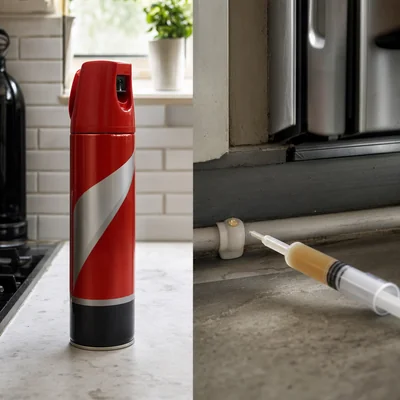
Resistance is another factor. Years of repeated exposure have left some UK cockroach populations less responsive to the pyrethroid compounds found in many supermarket products. The Pied Piper, a London pest control firm, has observed that the methods which worked five years ago are now failing in certain postcodes, forcing professionals to switch to non-repellent gel baits and insect growth regulators that consumer packs don’t carry. DIY bait stations can help with very light activity — a couple of foraging males — but they rely on the cockroach eating enough active ingredient before it breeds. When a gravid female is already laying an egg case every few weeks, speed matters more than affordability.
None of this means you should never use a shop-bought product. It means you need to match the tool to the scale of the problem. If you’ve spotted more than one cockroach in daylight, the nest is almost certainly larger, and a single can of spray won’t finish it.
What a Professional Extermination Actually Delivers
When a pest control technician walks into your home in East London, they’re not just carrying stronger chemicals. They’re carrying a process that the DIY aisle can’t replicate. The first step is a thorough inspection that maps out harbourage points, moisture sources, and access routes — often finding activity behind cabinets, inside electrical trunking, or underneath bath panels that a resident hasn’t noticed.
Treatment is layered. A technician will typically apply a non-repellent gel bait in precise 2–3mm dots near known runs, an insect growth regulator that stops nymphs from reaching reproductive age, and — where appropriate — a residual spray into cracks and crevices, not across open floors where children or pets walk. The goal isn’t just to kill visible adults. It’s to collapse the colony over a 2–3 week period as the bait is carried back to the nest and shared through the population.
Qualifications and insurance back that work. BPCA guidance explains that the RSPH Level 2 Award in Pest Management is the recognised industry standard for public health pest control. BuzzKill Pest Control’s team holds that qualification as well as NPTA registration and BASIS PROMPT certification, meaning treatments are applied to the British standard BS EN 16636 and the property is covered by appropriate public liability insurance. If a DIY attempt goes wrong — a product used on the wrong surface, or a pet licking a freshly sprayed area — the householder carries the risk alone. Professional work transfers that risk to the insured, qualified party.
Safety, Speed, and Recurrence: A Side-by-Side Look
Speed. A professional gel-baiting programme typically shows dead cockroaches within 24–48 hours and significant population reduction inside a fortnight. DIY baits often take 2–4 weeks to make a dent, and if the colony is deep inside shared voids, they may never get there. One resident in a Plaistow maisonette used three different shop-bought products over five weeks and still found live cockroaches under the dishwasher every morning. After a single professional visit, the sightings dropped to zero within ten days.
Safety. Many DIY sprays carry label warnings about aquatic life, cats, and children, but the instructions are easy to misread in the urgency of the moment — especially if you’re spraying inside a kitchen cupboard where plates are stored. Professional application uses targeted placements (gel dots along cable runs, dusts inside inaccessible wall voids) that keep active ingredient exposure away from living space and food contact surfaces. The GOV.UK pest control guidance reminds householders to use only products approved for the specific pest and to follow the label exactly; in practice, getting this wrong is surprisingly common.
Recurrence. A professional treatment usually includes a second follow-up visit at 14–21 days to check for surviving egg cases and reapply bait if needed. Many firms also offer a guarantee period — BuzzKill Pest Control, for example, provides guaranteed results and will return within the warranty window at no extra charge if activity resumes. DIY treatment carries no such promise. Reapply when you remember; pay again for another tin if it fails. Over the course of a stubborn infestation, the cost of repeat purchases and the sleepless hours spent worrying can easily surpass what a one-off professional visit would have cost from the start.
Where the Real Cost Difference Shows Up
Every East London household has a budget, and the £5–£30 price tag of a DIY kit feels immediately cheaper than a professional call-out. But the true cost of a cockroach infestation isn’t the product — it’s the time it lasts. If a colony is undisturbed for an extra month while shop-bought traps are failing, the number of egg cases laid in that window can add weeks to the eventual clear-up. A larger infestation takes more technician time, more product, and sometimes requires a third visit, raising the final invoice.
Landlords and letting agents face an additional pressure. The Housing Ombudsman has recently highlighted the importance of early, professional intervention in pest cases in social housing, noting that delayed or disjointed responses lead to worse outcomes for residents. For a private landlord in Barking or Dagenham, a tenant reporting cockroaches can become a dispute about disrepair if the response isn’t swift and documented. A professional treatment provides a service record and warranty that a supermarket receipt can’t match. For restaurant and café operators in Tower Hamlets or Hackney, the risk is even sharper: one environmental health visit following a failed DIY attempt can shut a kitchen for days.
A BPCA-registered exterminator brings more than chemicals — they bring a standard of practice that the council, insurers, and regulators recognise. That recognition alone can be worth the difference in cost when a pest report lands on a desk.
East London Cockroach Control: Who You Can Call
When the decision shifts from “can I handle this?” to “who should I call?”, the choices in East London range from local independents to large nationwide operators. The profiles below are based on public information available in mid-2026.
Panther Pest Control
Panther Pest Control’s published content highlights why DIY sprays often fail in London’s high-density flats. Their guides note that grease build-up in older kitchens provides a food source that consumer baits can’t compete with, and they describe a professional eradication process designed to stop cockroaches moving between adjacent flats through shared service ducts. They mention experience dealing with limited parking and access constraints common in central and inner East London postcodes.
The Pied Piper
A London-focused pest control company that has publicly discussed the growing resistance of local cockroach populations to traditional retail sprays. The Pied Piper emphasises that German and Oriental cockroaches require different elimination strategies and that professional-grade non-repellent products are increasingly necessary to achieve a lasting result. They describe a modern approach that moves away from blanket spraying and toward targeted baiting programmes.
PestPro Index
While not a local exterminator, PestPro Index publishes UK-wide guidance on professional versus DIY pest control. Their 2026 overview notes that the UK pest control industry is worth over £700 million per year and that around 700 BPCA member companies operate nationwide. Their rule of thumb: if a pest problem has not responded to two to three weeks of DIY treatment, or if it’s worsening, it is time to call a professional. That threshold is particularly relevant for cockroach cases where early action keeps the treatment scope small.
Bugwise Pest Control
Bugwise is a BPCA-certified firm serving East London directly. They describe their service as covering residential flats, homes, shops, warehouses, and commercial premises across the area, with technicians who understand the specific construction types and pest pressures of East London housing. Their offering includes targeted cockroach control for both German and Oriental species, framed as part of a broader integrated pest management service.
JG Pest Control
JG Pest Control operates a London cockroach treatment service with same-day response and RSPH (BPCA) Level 2 certified technicians. Their public profile notes a two-hour response time aim and a Trustpilot rating of 4.8 from more than 23,000 reviews. They market a commercial-grade cockroach treatment for both domestic and business clients, with a guarantee on the work.
If you’ve tried a shop-bought kit and are still seeing cockroaches after ten days, or if you’ve found more than one in daylight, the most cost-effective and least disruptive route is usually a professional inspection. For East London residents, BuzzKill Pest Control provides same-day visits with no call-out charge — and the team’s RSPH Level 2 qualifications mean the treatment meets the national standard without guesswork.
Need professional help? BuzzKill offers fast, reliable pest control services across London and Essex.