
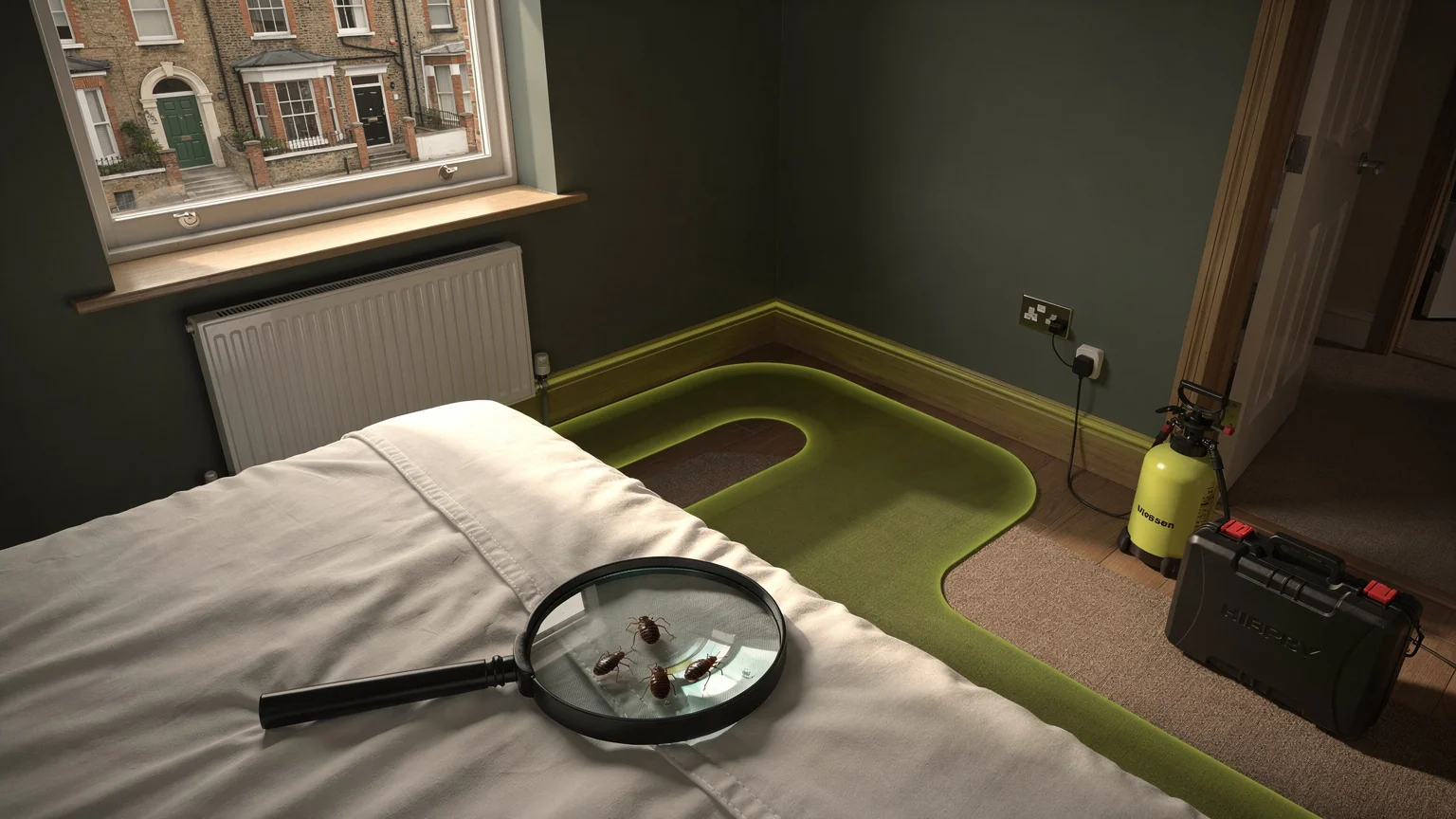
When you wake up with fresh bites and spot rust-coloured spots on your sheets, speed matters more than perfect research. The right move in the first hour is to stop sleeping in that room, bag your bedding, and start vetting local technicians before the population doubles again. Bed bugs can advance from a few hitchhikers to hundreds in roughly three weeks, and every day you delay gives them time to spread into adjacent rooms, soft furnishings, and wall voids.
This guide walks you through choosing a legitimate bed bug service in East London under pressure. You will learn how to verify credentials, spot red flags, compare heat and chemical treatments, and book a same-day inspection without falling for operators who charge for a quote or disappear after one visit.
What to do in the first 10 minutes
Strip the bed and seal sheets, pillowcases, and duvet covers in a tied plastic bag. Do not drag them through the hallway to the washing machine yet. Bed bugs cling to fabric, and moving bedding loosely can drop eggs or adults along the route. Set the bag aside in the infested room until you have a plan for hot-washing at 60°C or higher.
Next, inspect the mattress seams and headboard joints with your phone torch. Look for live insects roughly 5mm long, oval, and reddish-brown, plus tiny black faecal dots that smear when dampened. The Westminster Council pest guidance notes that bed bugs hide in mattress frames, bed bases, headboards, behind loose wallpaper, and even inside electrical sockets. Do not start dismantling furniture or spraying supermarket insecticide. DIY sprays often scatter the insects into deeper harbourages, making professional treatment harder and more expensive.
Finally, search for bed bug services near me and open three local provider tabs. Your goal is not to book the first name you recognise. It is to build a shortlist of two or three firms who can inspect today and treat tomorrow if needed.
Confirm the evidence before you call
Bed bug signs are distinctive but easy to misread. Blood spots on sheets can come from a skin condition or a mosquito. The key difference is pattern and location. Bed bug bites often appear in lines or clusters of three, nicknamed breakfast, lunch, and dinner, on exposed skin that touches the mattress: arms, shoulders, neck, and face. The insects feed for five to ten minutes and retreat to cracks within two metres of the bed.
Check these specific locations with your torch:
- Mattress seams and tags, especially corners and underside buttons
- Headboard joints and screw holes
- Bed frame slats and castor wheels
- Skirting boards directly behind the bed head
- Loose wallpaper or peeling paint near the sleeping area
- Electrical outlet plates and telephone sockets
Photograph anything suspicious with a coin or ruler for scale. These images help technicians assess severity over the phone and may speed up your quote. If you find cast skins, empty egg cases, or a musty sweet odour in heavy infestations, document those too. The absence of live bugs does not mean absence of infestation. A single fertilised female can restart the cycle from a single harbourage.
The inspection route through your property
Bed bugs move along predictable paths. Following this numbered route helps you gauge how far the problem has spread and gives the technician accurate intelligence.
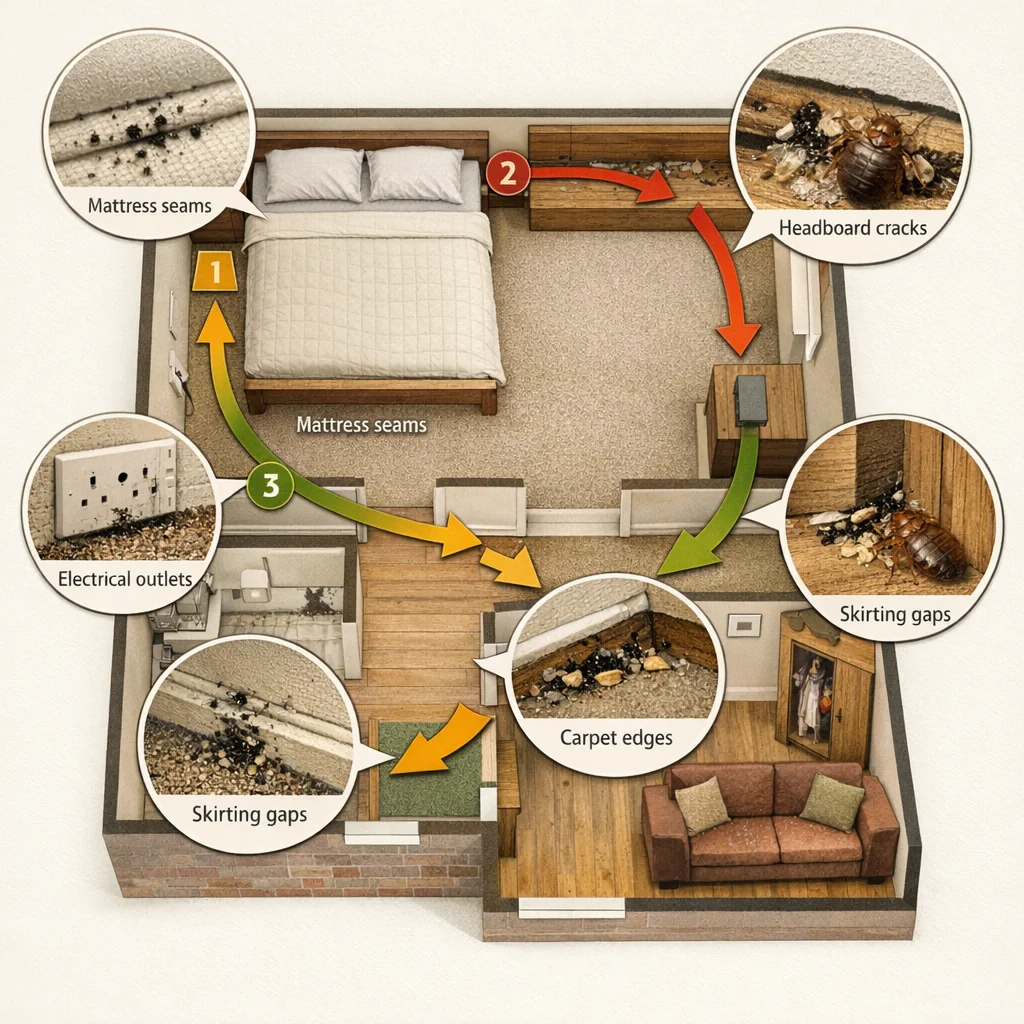
Start at the primary sleeping area. Strip the bed completely. Check every seam, tag, and corner of the mattress and box spring. Flip the mattress and inspect the underside. Shine your torch into the bed frame joints, especially wooden slats where screws create dark crevices.
Move to secondary sleeping spots. Sofas, armchairs, and spare beds are common overflow sites. Check cushion seams, zippers, and the dark interior of sofa beds. If anyone sleeps on a sofa regularly, treat this zone as a second primary site.
Inspect the two-metre radius. Bed bugs rarely travel more than a few metres from their host unless disturbed. Check bedside tables, drawers, books, and clutter within this zone. Pay attention to cracks in skirting boards and carpet edges.
Check wall fixtures and voids. Remove outlet covers carefully and shine a torch into the gap. Look behind picture frames, mirrors, and loose wallpaper. In flats, inspect shared wall areas where pipework or ducting creates passages to neighbouring units.
Examine luggage and stored items. Recent travel is a common source. Check suitcases, rucksacks, and vintage or second-hand furniture brought into the home in the past two months. Bed bugs can survive months without feeding, so an old bag in the wardrobe may still harbour live insects.
Record what you find by room. A technician who arrives with this map can target treatment immediately rather than spending the first hour searching.
Choosing between providers: what to check
East London has dozens of pest control listings, but not all are equipped for bed bugs specifically. This pest requires different skills than wasps or mice. Here is how to filter your shortlist fast.
Verify BPCA membership or equivalent accreditation. The BPCA Code of Best Practice sets minimum standards for inspection, treatment, and customer communication. Members must carry adequate insurance, use trained technicians, and provide written treatment plans. Ask for the membership number and cross-check it on the BPCA website. Non-members are not automatically cowboys, but membership removes guesswork when you are short on time.
Ask about technician qualifications specifically for bed bugs. RSPH Level 2 in Pest Management is a baseline. Better firms invest in additional bed bug training because heat treatment, the most reliable method, requires calibrated equipment and safety protocols. A technician who only offers chemical spraying may not have the full toolkit.
Confirm they cover your borough. A firm advertising London-wide service may subcontract East London jobs to self-employed operators with no local knowledge. Ask directly if they have technicians based in or near your postcode. Firms with dedicated Newham bed bug removal or Tower Hamlets bed bug treatment teams can usually respond faster than those routing calls through a central office miles away.
Request a fixed quote or clear price structure. Reputable firms can often quote over the phone for standard two-bedroom flats once you describe the evidence. Be wary of anyone who insists on a paid survey before giving any price indication. The survey itself should be free and no-obligation.
Check for follow-up guarantees. Bed bug treatments frequently need revisiting. Eggs hatch after seven to ten days, and no single treatment kills every egg. A provider who guarantees results should specify how many visits are included and what triggers a free callback. One-and-done promises are a red flag.
Heat versus chemical: which treatment suits your situation
Most East London providers now offer heat treatment, chemical treatment, or a combination. Understanding the trade-offs helps you ask the right questions and avoid being upsold unnecessarily.
Heat treatment raises room temperature to roughly 50–60°C for several hours, killing all life stages including eggs. It requires specialised equipment, temporary evacuation of pets and plants, and removal of heat-sensitive items like candles, aerosols, and some electronics. The advantage is speed: one day, often one visit, and you can sleep in the room that evening. The disadvantage is cost, typically higher than chemical, and the risk of cold spots if the operator rushes or your room layout is complex.
Chemical treatment uses residual insecticides applied to harbourages and travel routes. It is less disruptive and usually cheaper, but it requires multiple visits spaced two weeks apart to catch hatching eggs. You may need to sleep elsewhere for one or two nights after each application while residues dry. Chemical resistance is growing in some London populations, so ask which active ingredients the firm uses and whether they rotate products to manage resistance.
Combination approaches use heat for the main sleeping area and targeted chemicals for adjacent rooms or voids where heat penetration is difficult. This is common in HMOs, flats with shared walls, and properties with heavy clutter.
For a single-bedroom flat with confirmed bed bugs in one room, heat treatment is usually fastest. For a whole-house infestation or a rented room in a shared property, chemicals or combination may be more practical and cost-effective. Ask the technician to explain their recommendation in terms of your specific layout, not a generic sales pitch.
Red flags that signal a cowboy operator
Pressure and sleep deprivation make sharp judgment harder. Watch for these warning signs during your first phone call or survey.
- Demand for cash upfront before any work. Reputable firms invoice after treatment or take a deposit for large commercial jobs, not a full cash payment from a homeowner.
- No written treatment plan or guarantee. Verbal promises are worthless if the bugs return. Insist on a document stating what was treated, which products or temperatures were used, and what follow-up is included.
- Vague credentials or refusal to provide a BPCA number. A legitimate technician has this information ready.
- Pressure to sign immediately for a "today-only" discount. This is classic high-pressure sales, not professional pest control.
- Arrival in an unmarked van with no uniform or ID. Professional firms brand their vehicles and require technicians to carry identification.
- Suggestion to throw out all furniture. Most beds, sofas, and wardrobes can be treated in place. Mass disposal is rarely necessary and can spread the infestation through hallways and communal areas.
If you encounter two or more red flags, end the call and move to your next shortlist option. The extra thirty minutes of searching saves money and stress later.
Your time window: tonight, tomorrow, and the next 48 hours
Tonight: Sleep in a different room if possible. Bed bugs follow carbon dioxide and body heat, so moving to the sofa or spare room may simply relocate the problem. If you must sleep in the infested room, pull the bed away from the wall, tuck in sheets tightly, and place interceptor traps under bed legs if you have them. Do not apply supermarket sprays or essential oils. These scatter the insects and can trigger allergic reactions in sensitive individuals.
Tomorrow morning: Call your shortlisted providers between 8 and 9am. Same-day slots fill fast, especially in peak seasons from May through October when London bed bug callouts spike. Have your evidence photos ready, plus answers to these questions: how many rooms show signs, how long since you first noticed bites, whether you live in a flat or house, and whether anyone in the home has allergies, asthma, or is pregnant. This information affects treatment choice and safety precautions.
Within 48 hours: Aim to have a technician inspect and begin treatment. The Pest Control Policy from Harrow Council clarifies that council housing tenants may have statutory rights to certain pest treatments, though bed bugs in private rentals usually fall to the landlord or occupier. If you rent, notify your landlord or agent in writing immediately. They may have a preferred contractor, but you still have the right to seek independent professional bed bug removal and recover reasonable costs if they fail to act promptly.
If you live in a flat with shared walls, inform your neighbours discreetly. Bed bugs travel through ducting, electrical conduits, and gaps in partitioning. Early notification allows adjacent units to inspect before the infestation spreads, and some London bed bug services offer discounted block treatments for multiple flats in the same building.
Escalation signal: when to stop DIY and call a technician immediately
The single sign that overrides all self-assessment is finding live bed bugs in more than one room, or discovering eggs and cast skins in areas far from the bed. This indicates the infestation has established satellite harbourages and is actively spreading. At this stage, no amount of vacuuming, washing, or shop-bought spray will reach the full population. You need a technician with heat or professional-grade chemical equipment, and you need them within 24 to 48 hours to prevent further colonisation of your home.
If you are in East London and need same-day assistance, search for East Ham pest control, Hackney bed bug extermination, or your specific borough to find technicians with local coverage and rapid response times.
Need professional help? BuzzKill offers fast, reliable pest control services across London and Essex.