
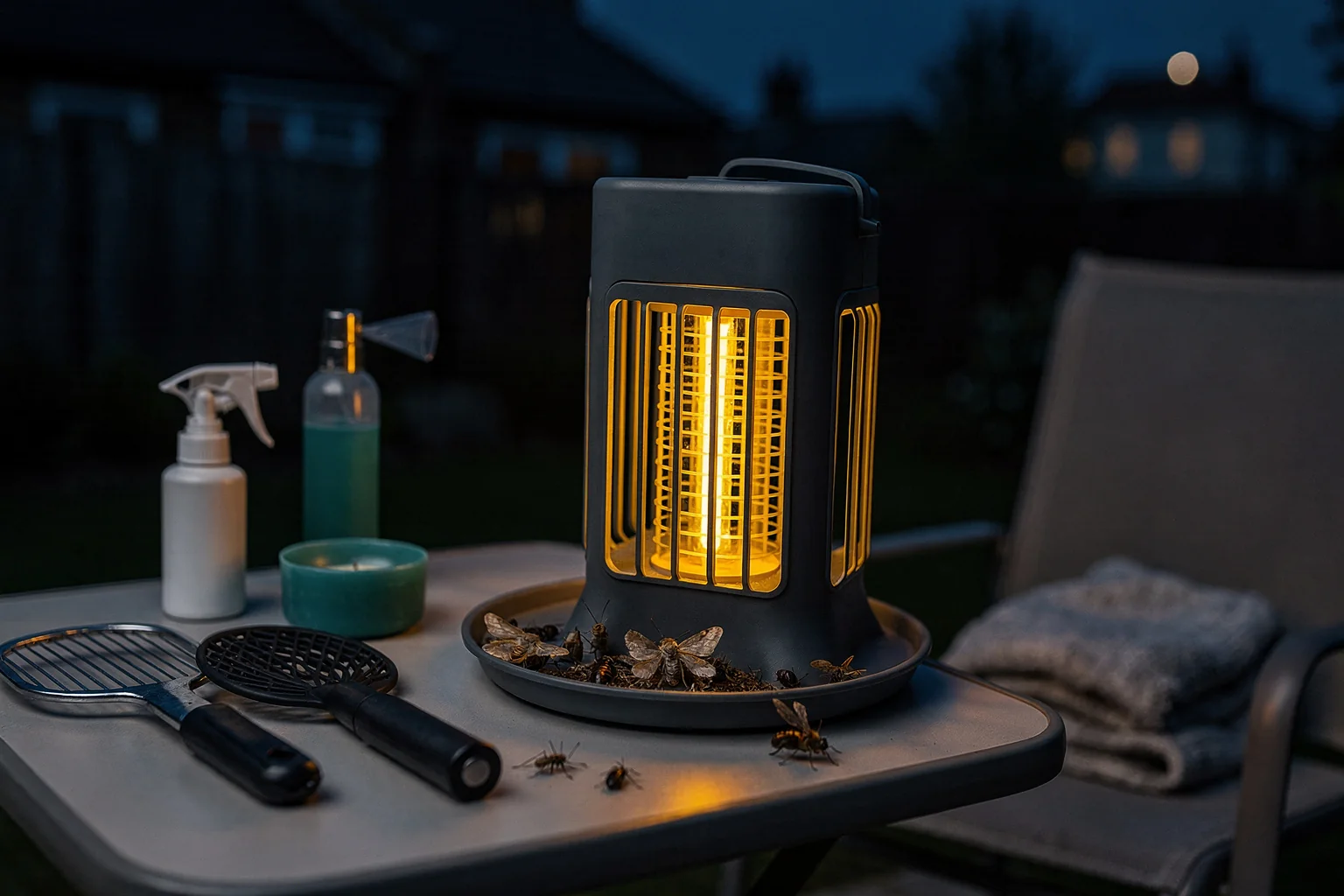
If you've ever sat in your garden on a warm evening in Greenwich, listening to the crackle of a bug zapper, only to finish the night with a fresh line of mosquito bites, you've probably asked the same question I hear from clients across East London: do bug zappers actually work? The short answer is that they kill plenty of insects — just not the ones you're trying to stop. When a homeowner called me out to a property in Waltham Forest last July, he had two zappers running all evening and was still being bitten badly enough that his kids wouldn't play outside. What we found inside the collection tray told the real story, and it's the same story that decades of entomology research keeps confirming.
The blue-purple glow is genuinely good at attracting insects, because many flying bugs navigate by ultraviolet light reflected off flowers and foliage. That's why you hear the satisfying snap every few minutes throughout the evening. But the catch tray reveals a collection you didn't really want — and a pile of creatures your garden actually needs. Over the years I've emptied enough zapper trays in London gardens to know that the marketing promise and the biological reality barely overlap. Here are the five facts that change how you think about those devices, and what to reach for instead.
They kill the bugs you don't need to worry about
Every time that zapper makes a noise, something has died. The problem is what that "something" almost always is. Researchers who sorted through the catch trays of bug zappers across a full summer found that only 0.22% of the insects killed were biting flies — female mosquitoes and biting gnats. The other 99.78% were mostly harmless or beneficial insects: moths, beetles, midges, and lacewings.
Only 0.22% of the insects trapped over the course of an entire summer were biting flies (female mosquitoes and biting gnats). — University of Delaware study, cited by Thinking About a Bug Zapper? The Truth Might Surprise You
That means you're removing the very creatures that keep your garden ecosystem working. Moths pollinate plants after dark; many species are as important as bees for night-blooming flowers. Ground beetles patrol the soil and mulch, eating slug eggs and vine weevil larvae. Hoverfly adults feed on nectar, and their larvae are aphid-eating machines. Parasitic wasps — the tiny, stingless kind that nobody ever notices — hunt aphids and caterpillars that would otherwise damage your veg patch. When I inspected that Waltham Forest garden, the zapper tray was thick with moth wings and the dried bodies of ground beetles, while aphids were still clustered on the roses untouched. The client had traded his natural defences for a light show.
Colin Purrington, a biologist who has compiled the evidence against zappers, notes that these devices can kill thousands of insects per night that are not mosquitoes, with no ecological benefit. For London gardens, that matters. Our urban green spaces already struggle with pollinator decline, and removing the small predators that keep plant pests in check just pushes you into a different problem. A few blocks of Hackney allotment or a back garden in Leyton might not seem like much, but together they form the green corridors that keep insect populations alive across the city.
If you spot a wasp nest nearby, zappers will often kill the larger workers too — but those wasps are the same ones that hunt flies and caterpillars. A summer wasp colony can remove hundreds of caterpillars and aphids from your garden in a week. If the nest really does need handling because it's too close to a doorway or a child's play area, for most homeowners it's far safer to arrange a professional wasp nest removal than to leave a zapper doing half the job badly. The zapper won't stop the colony's foraging; it'll just kill the workers that happen to fly too near the light, while the queen keeps producing more back at the nest.
Mosquitoes barely notice them
The reason you're still getting bitten while the zapper works overtime is simple: female mosquitoes — the ones that bite — are not attracted to ultraviolet light. They track their next blood meal by following the carbon dioxide you breathe out, your body heat, and the scent of your skin. A glowing tube on the other side of the patio doesn't register as a target. In fact, the warmth and CO₂ plume from a zapper's electric grid is so faint compared to a living mammal that it's irrelevant.
The numbers back this up. Purrington's analysis found that just 0.2% of insects killed by a typical bug zapper were mosquitoes, making essentially no difference to the number of biting mosquitoes in a garden. Even when researchers placed traps directly in mosquito-heavy environments, the UV light pulled in midges and gnats before it attracted the handful of mosquitoes that happened to drift into range.
London's mosquito species are changing. According to the London School of Hygiene & Tropical Medicine, warmer, wetter summers are extending the active season and, in some areas, shifting the species mix. The common Culex pipiens mosquito that leaves you with an itchy welt at dusk isn't strongly drawn to light at all; it rests in vegetation during the day and becomes active as temperatures drop. A zapper placed on the patio does nothing to intercept it on its flight from a nearby hedge to your ankles.
If you're dealing with real mosquito pressure in a London garden — and I've seen it become noticeably worse in boroughs like Newham and Barking over the last five summers — the fix isn't a bigger zapper. It's removing the standing water where mosquitoes breed. A saucer under a plant pot, a blocked gutter, a forgotten paddling pool, the fold of a tarpaulin: these are the spots that turn a few mosquitoes into a nightly headache. Each one can produce dozens of adults within a week. After you've cleared the breeding sites, a mosquito repellent that actually lasts out in the garden is a far better investment than anything with a glowing bulb. And for anyone trying to puzzle out whether the small flies buzzing around the houseplants are something a zapper could handle, it's worth knowing that many of them are fungus gnats — and identifying them correctly matters, because fungus gnats vs fruit flies require completely different fixes.
The mess you can't see can be a problem
When an insect hits the electrified grid, it doesn't vanish. The high-voltage discharge blasts the body apart, shooting tiny fragments — legs, wing scales, gut contents — up to two metres away. In a garden, that dust settles on surfaces, furniture, and plates of food. In a kitchen or food prep area, it's the kind of detail an Environmental Health Officer will notice.
That's why commercial kitchens, cafes, and restaurants across the UK have moved almost entirely to glue-board insect light traps rather than zappers. The sticky traps catch flies without scattering debris, making them acceptable in food preparation zones. For a domestic situation, it's less regulated but no less relevant: if you've ever placed a zapper near a seating area and later wondered what that fine dust on the table was, you already know the answer.
I once visited a pub in Greenwich where the owners had hung a domestic zapper over the bar, thinking it would keep midges off the fruit garnishes. Within three weeks the varnished countertop beneath the unit was speckled with a greasy, difficult-to-clean residue — a mix of insect fragments and heat-damaged finish. They replaced it with a glue-board unit and both the hygiene and the look of the bar improved overnight.
Even large-scale pest control operations think about this. Transport for London's own pest management guidance for the Underground system prioritises containment-based methods because loose insect fragments create secondary hygiene issues in public spaces. The G0233 Control of Pests document notes that physical collection and safe disposal are central to insect management on the network, precisely to avoid the sort of contaminated dust that zappers produce. A home composter or a family barbecue setup isn't the Tube, but the same principle applies: you don't want aerosolised insect debris floating near where people eat or children play.
Running costs and safety worries nobody mentions
Bug zappers seem like a one-off purchase, but they run for hours every evening through the summer, and that adds up. A typical 20-watt UV zapper left on for six hours a night adds roughly 44p per week to your electricity bill at current London energy rates. Over a summer, that's somewhere between £8 and £12 — not huge, but more than a few replacement citronella candles, and you still haven't bought the zapper itself. And because the UV tubes lose brightness after about a season, you'll need to replace the bulb each year, adding another £8–12 to the true cost. Suddenly a £30 zapper is a £50 annual commitment, for a tool that never actually stops the biting.
The bigger risk is what happens when the device isn't cleaned. As dry insect bodies accumulate in the collection tray, they create a tinder-dry layer resting directly underneath the high-voltage grid. I've seen units where the tray was a solid mat of desiccated moths and beetles, and all it would take is one spark catching at the wrong angle to turn that into a small but real fire risk. A zapper hanging near a timber pergola or a dry hedge is a far more combustible combination than most people realise.
Outdoor-rated electrical goods should be kept clean anyway, but zappers need a proper brush-out every couple of weeks during peak season — something most people simply forget. I recommend setting a phone reminder every second Saturday from June to September if you're going to keep one running. Unplug the unit, wear gloves, and empty the tray into a sealed bag you can bin immediately. Brush the grid lightly with a dry, stiff-bristled brush to remove any stuck fragments, and check that the safety guard hasn't warped with repeated heating and cooling. If the guard is warped or the cable shows any cracking, replace the unit; a cheap zapper isn't worth a garden fire.
You have more reliable options right now
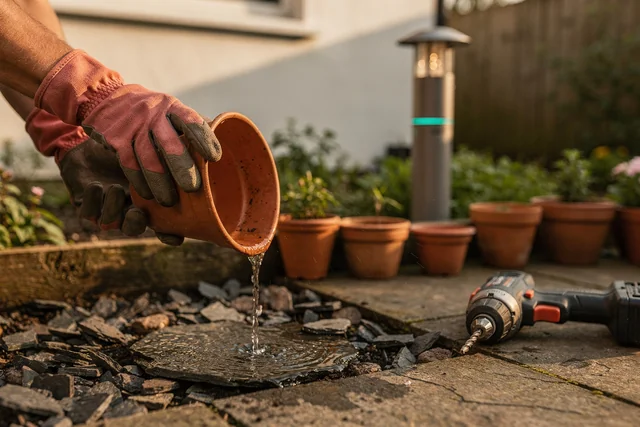
Knowing what doesn't work only helps if you know what to do instead. Start with the cheapest, most effective move: walk your garden one evening and tip out or drill drain holes in anything holding water. A single bottle cap of standing water can breed dozens of mosquitoes. Pay special attention to saucers under plant pots, blocked gutters, bird baths that haven't been refreshed in a few days, and children's toys that collect rainwater. If you do that and still notice biting pressure, then you're into the territory where targeted tools beat a glowing all-purpose lure every time.
For personal protection, repellents containing DEET or picaridin remain the gold standard, and there are UK-formulated versions that don't feel greasy. If you prefer a plant-based option, there are natural insect repellent for homes that have done well in controlled trials. Lemon eucalyptus oil-based products, for example, provide several hours of protection and are safe around children once applied correctly. Oil of lemon eucalyptus should not be confused with "lemon eucalyptus essential oil"; it's a processed, concentrated form that has been registered as a biopesticide. The key is to apply it like sunscreen, covering all exposed skin, and reapply after heavy sweating or if you've been out for more than three hours.
Where mosquitoes are so persistent that repellent alone can't keep the garden usable, a CO₂-baited trap is the first upgrade worth the money. These devices mimic the breath and warmth of a mammal, drawing female mosquitoes away from your seating area by creating a more attractive target. They use a small propane cartridge or a carbon dioxide generator to release a plume that the mosquitoes follow, then a fan pulls them into a net or a catch container. They cost more upfront than a zapper — good ones start around £70–100 — but they actually reduce biting pressure instead of just killing lacewings. How to Find a Mosquito Trap That Actually Works from Consumer Reports gives an honest breakdown of which designs hold up under real-world testing.
If you've done the groundwork and you're still swatting every time the sun drops, it's worth asking whether the problem is bigger than your garden. I've visited properties in Leyton, Hackney, and Stratford where the real mosquito source was a neighbour's blocked drain, a council-maintained gully, or a disused water butt a couple of gardens away that nobody was maintaining. A professional pest survey can pinpoint exactly where the breeding is happening and stop it at the source, which is usually far cheaper than buying another gadget and hoping for the best.
Walk the garden this weekend and find the standing water. Do that one thing before you plug the zapper back in — because once you've seen what's really in its catch tray, you'll wonder why you ever spent the money.
Need professional help? BuzzKill offers fast, reliable pest control services across London and Essex.