
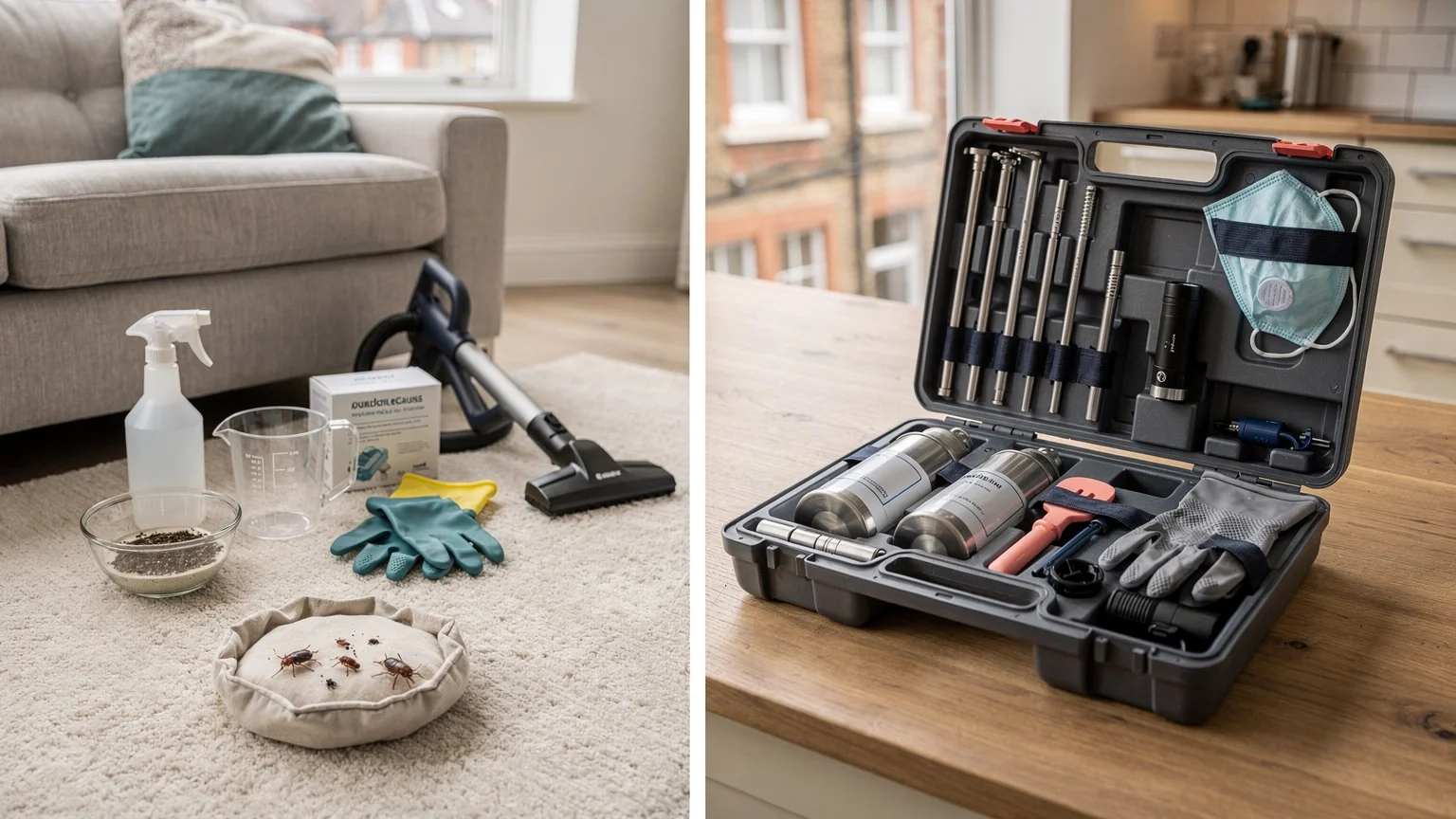
You have probably already bought the aerosol from the pet shop. You have sprayed the skirting boards, washed the dog's bedding on a hot cycle, and still found something jumping on your ankle three days later. That is the point where most people in London start searching for professional flea treatment London — but not before they have spent money, time, and a fair amount of hope on doing it themselves.
The choice between DIY and calling a professional is not really about pride or budget. It is about understanding what you are actually dealing with. Fleas are not surface pests. The adults you see make up roughly five percent of the population in your home. The rest are eggs, larvae, and pupae tucked into carpet fibres, floorboard gaps, and the underside of sofas. Miss any stage and the cycle restarts in two weeks.
This article looks at both routes honestly: what supermarket and home remedies can achieve, what professional expert flea treatment service involves, and how to decide which fits your situation.
What Supermarket Flea Treatments Actually Do
Walk into any pet supply shop in Camden or Bromley and you will find three main DIY options: room foggers, surface sprays, and spot-on treatments for pets. Each has a specific job, and each has hard limits.
Room foggers release insecticide into the air that settles on surfaces. They can kill adult fleas in open areas. They do not penetrate deep into carpets, they do not reach under heavy furniture, and they leave eggs and pupae untouched. Most fogger instructions tell you to vacate the property for several hours. You then return, vacuum thoroughly, and hope you have reached enough of the population.
Surface sprays give you more control over where the chemical goes. You can target skirting boards, pet bedding areas, and known resting spots. The limitation is the same: sprays sit on top of fibres rather than soaking through them. Eggs buried at the base of carpet pile or inside upholstered furniture remain viable.
Spot-on treatments for pets are essential but not sufficient. They kill fleas on the animal and can interrupt the breeding cycle. They do nothing for the environmental reservoir. A treated pet walking through a room full of eggs and larvae simply becomes a moving buffet until the next generation hatches.
The real problem with DIY is not that the products are useless. It is that they require perfect, repeated application across every harbourage point in your property. Most London flats and terraced houses have too many cracks, too much soft furnishing, and too many hard-to-reach corners for that to be realistic.
The Hidden Cost of Doing It Yourself
A single fogger costs £10 to £15. A decent surface spray another £8 to £12. Spot-on treatments for a medium dog run £15 to £25 per dose. If the first round fails — and it often does, because eggs hatch on their own schedule — you buy again. By the third attempt you have spent £60 to £100 and lost two to three weeks.
Then there is the labour. Washing every textile on a hot cycle. Moving furniture to spray underneath. Vacuuming daily for two weeks to stimulate pupae into hatching so they contact the insecticide before the next generation breeds. Most people start strong and taper off. Fleas do not.
Time matters too. A flea completes its life cycle in as little as fourteen days in warm London interiors. Each incomplete DIY attempt gives the population time to rebound. We have attended properties in Hackney where the owner had been fighting the same infestation for six weeks, buying progressively stronger products, before calling us. The total spend exceeded our single-treatment fee.
Safety is another consideration often glossed over on packaging. Foggers contain pyrethroids and insect growth regulators that are safe when used exactly as directed. "Exactly as directed" means removing pets, covering fish tanks, ventilating for hours afterwards, and keeping children away from treated surfaces until dry. In practice, people rush the process. We have seen cats become lethargic after owners reintroduced them too early, and asthmatic children triggered by residual airborne product.
What Professional Flea Treatment Involves
A proper Islington flea extermination or equivalent service starts with inspection, not spraying. The technician identifies the species — cat flea, dog flea, or less commonly bird flea — because each has slightly different harbourage preferences. They map where pets sleep, where people get bitten, and where the heaviest activity shows.
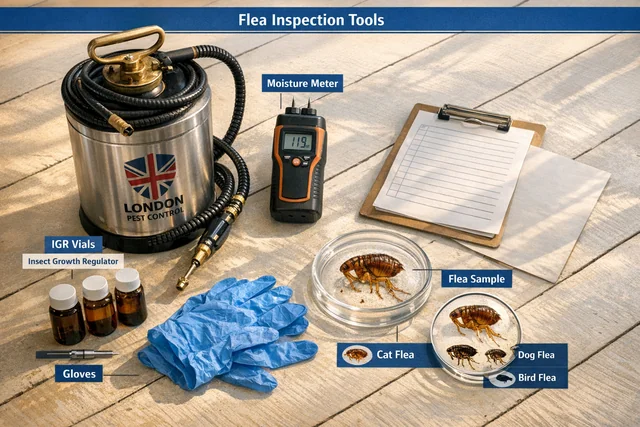
Treatment typically combines two approaches: a residual insecticide that stays active on surfaces for several weeks, and an insect growth regulator that prevents eggs and larvae from developing into breeding adults. The professional formulation penetrates deeper into carpet pile and upholstery than consumer products. Technicians also have access to compressed air sprayers and extension lances that deliver product into voids, under floorboards, and behind kitchen units where foggers cannot reach.
Heat treatment is sometimes offered as an alternative or supplement. This raises room temperatures to levels lethal for all life stages simultaneously. It works well in uncluttered spaces with good airflow. It is less effective in properties with heavy insulation, lots of soft furnishing, or complex layouts — which describes many Tower Hamlets Victorian conversions.
The follow-up matters as much as the initial visit. Professional treatments include a revisit window — typically seven to fourteen days — to assess whether pupae have hatched and whether a targeted second application is needed. This is where DIY most commonly fails: people do not know what to look for two weeks later, or they assume a few new bites mean the whole treatment failed and start over with different supermarket products.
Comparing London Pest Control Providers
JG Pest Control

JG Pest Control operates across London offering guaranteed chemical treatments and same-day eradication services. Their website emphasises fumigation and spray treatments for flea control, with heat treatment mentioned as an alternative option. They position themselves as a rapid-response service for residential and commercial properties.
Fantastic Services
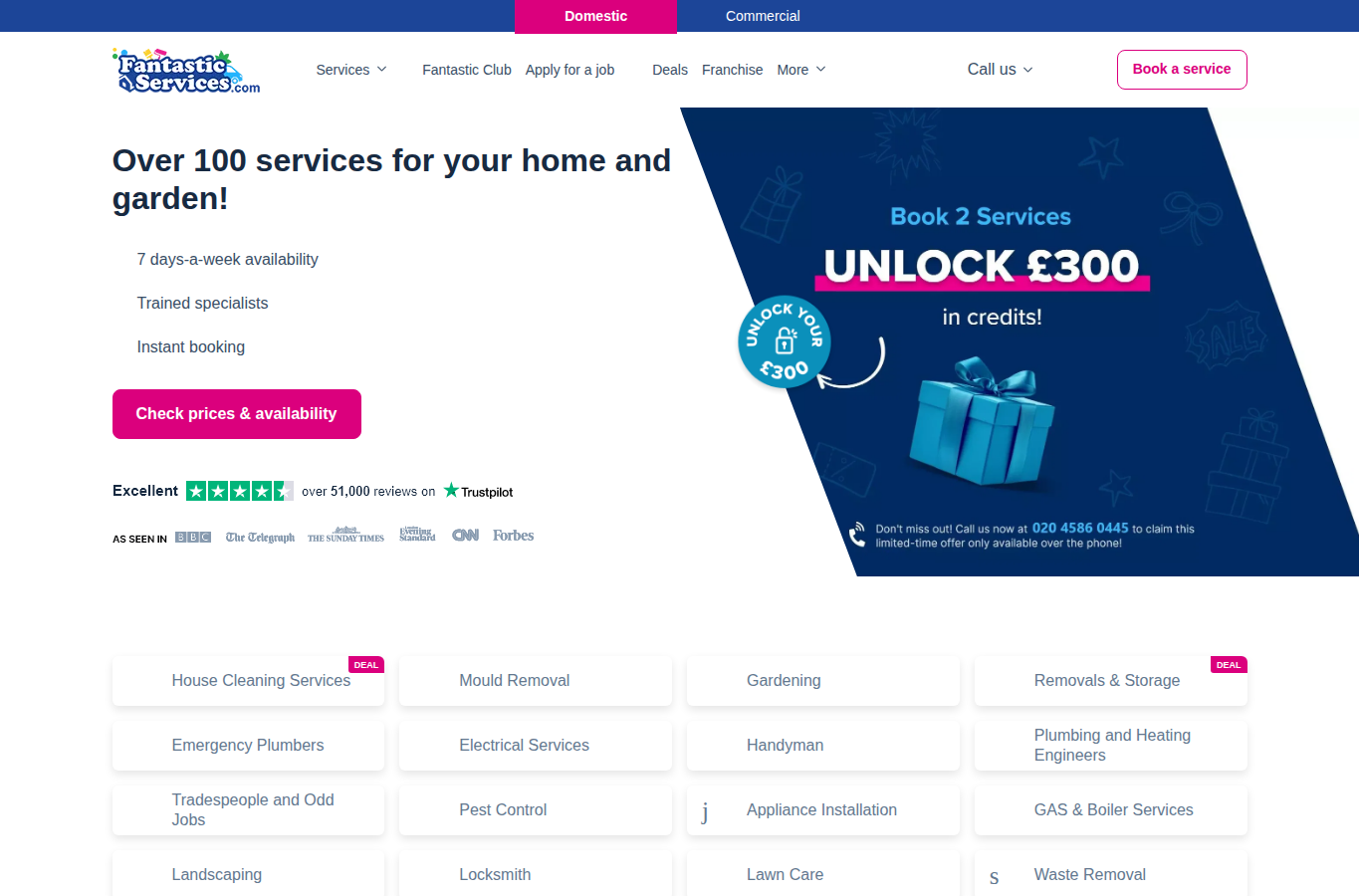
Fantastic Services provides a platform-based booking model for flea treatment and control across London. Customers enter their postcode, select a time slot, and are matched with a local pest technician. The service focuses on convenience and transparent pricing rather than ongoing pest management relationships.
Rentokil
Rentokil is the largest national pest control provider in the UK, offering safe and effective treatments for homes and businesses. Their flea control service includes inspection, treatment, and advice on preventing reinfestation. Their scale means consistent training and nationwide coverage, though response times can vary by postcode.
Project Multi Pest
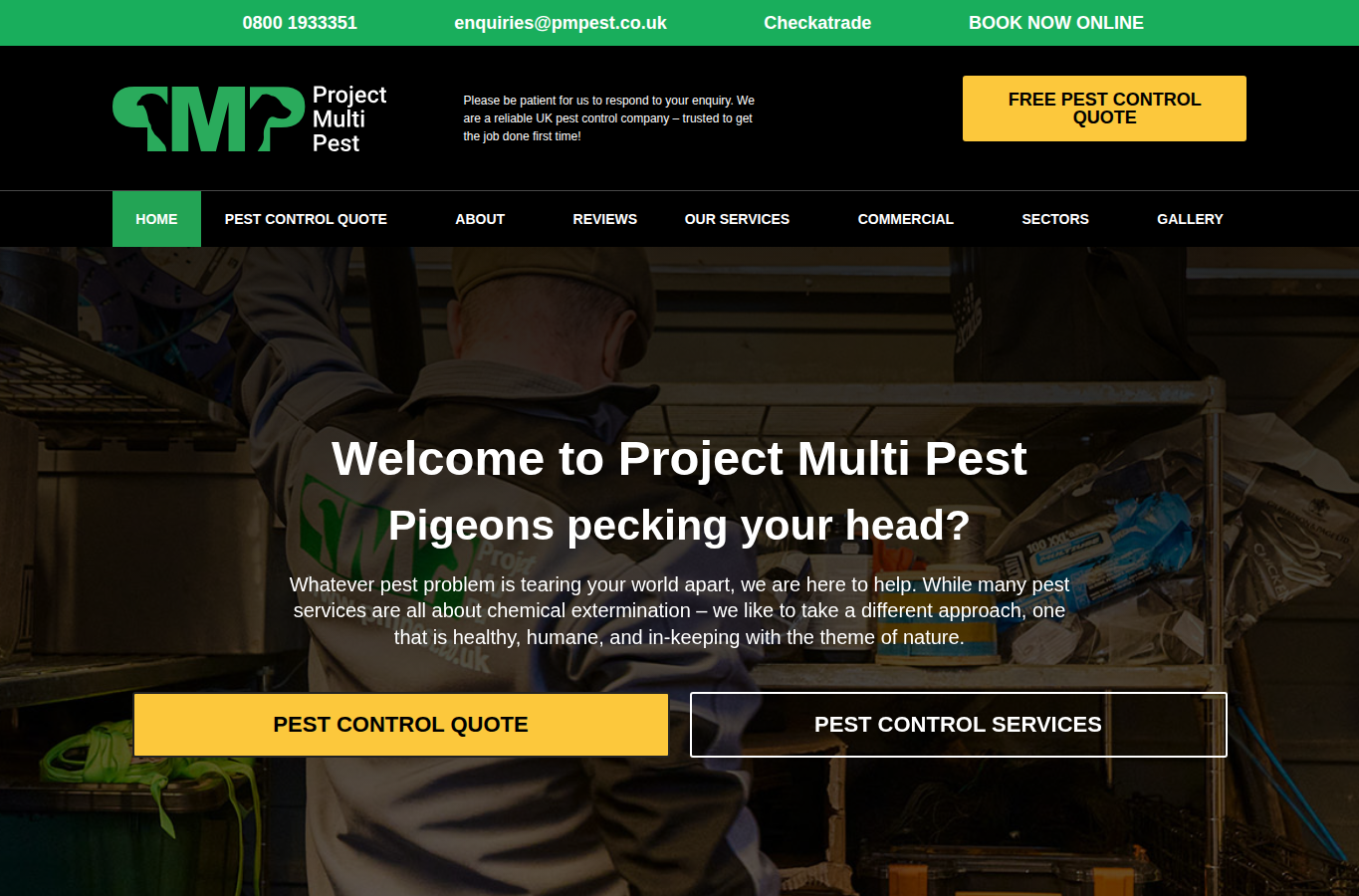
Project Multi Pest serves London and Kent with flea fumigation and control services for private residences and commercial premises. They emphasise long experience with flea infestations and offer tailored treatment plans based on property type and infestation severity.
When DIY Is Actually Enough
There are situations where supermarket products solve the problem. A single adult flea found after a walk in the park, caught before it breeds. A property with hard flooring throughout, minimal soft furnishing, and no pets that sleep on furniture. A quick-response situation where you treat the pet, wash textiles immediately, and vacuum intensively for seven days.
The key variable is early interception. If you catch the infestation at the very first adult sighting, before eggs scatter into the environment, DIY can work. The moment you find multiple adults, notice bites on humans, or spot the pepper-like faecal specks that larvae feed on, the population has already established itself in your home's fabric.
Rental properties in Newham or Waltham Forest with high tenant turnover present a particular challenge. You may be dealing with an inherited problem rather than one you created. In these cases, DIY treats the symptoms without addressing the reservoir built up by previous occupants.
The Safety Question Around Children and Pets
This is where the comparison shifts from effectiveness to risk management. Professional technicians are trained to calculate application rates based on room volume, surface type, and occupancy. They know which products are safe around cats — who metabolise pyrethroids poorly — and which require longer exclusion periods for aquariums or aviaries.
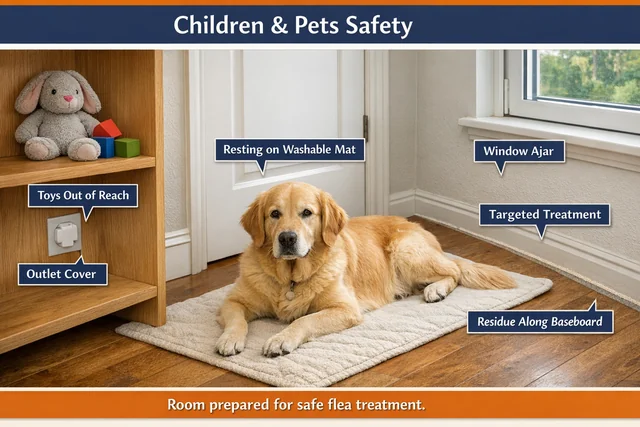
DIY products are safe when used perfectly. The problem is that perfect use is difficult in a busy household. You need to coordinate removing all people and pets, treating every room simultaneously so fleas do not simply migrate, ventilating adequately, and then keeping children and animals off treated surfaces for the full recommended period. In a typical Lewisham family home with two working parents, a toddler, and a cat, that coordination is genuinely hard.
Professional treatments also carry documentation. For landlords in Canary Wharf or other high-end rental markets, a treatment certificate from a BASIS PROMPT-certified company satisfies tenancy agreement clauses and provides evidence if disputes arise. DIY receipts from a pet shop do not.
How to Decide in the Next Ten Minutes
If you are reading this with a flea on your arm, trying to choose before the shops close, here is a quick routing guide.
Choose professional Greenwich pest control or equivalent if: you have found more than three adult fleas; anyone in the household is getting bitten; you have carpets or extensive soft furnishing; you have already tried one DIY treatment that did not fully work; you have children under five, elderly residents, or pets with health conditions; or you need documentation for a landlord or property manager.
Consider DIY if: you found a single flea on a pet with no other signs; your property is mostly hard-floored with minimal textiles; you can commit to intensive vacuuming and washing for fourteen consecutive days; and you have no vulnerable occupants who might be affected by insecticide residues.
The middle ground — trying DIY first, then calling professionals if it fails — sounds sensible but often costs more. Each week of partial control lets the population expand. By week three, what would have been a single professional visit may require two.
What Happens After Treatment Ends
Whether you choose DIY or professional Bromley flea specialists, the post-treatment period determines success. Fleas in the pupal stage are protected from insecticides by their cocoon. They emerge when stimulated by vibration, warmth, or carbon dioxide — in other words, when you walk back into the room.
This is why vacuuming matters so much after treatment. It creates the vibration that triggers emergence, draws larvae to the surface, and removes dead adults and eggs. Professionals will tell you exactly when and how to vacuum. DIY packaging mentions it in small print that most people skim.
Pet treatment must continue alongside environmental control. A treated home with an untreated pet becomes reinfested within days. Conversely, a treated pet in an untreated home simply serves as mobile bait. The two fronts — animal and environment — must be tackled together.
For persistent or recurring problems, especially in Haringey terrace houses or Enfield semi-detached properties with shared walls, consider whether the source is external. Neighbouring infestations, garden wildlife, or previous tenants' pets can reintroduce fleas regardless of how thorough your treatment was. Professionals assess these wider risk factors; DIY does not.
If You Are Still Unsure
The honest answer is that most flea infestations in London properties are beyond DIY by the time owners notice them. The lifecycle is too fast, the harbourage too extensive, and the coordination required too demanding for supermarket products to deliver reliable results. That does not make DIY pointless — it makes it a tool for very specific, very early-stage situations.
If your instinct is that you have already passed that window, you are probably right. A same-day inspection from a local service like Bexley flea services costs nothing to arrange and gives you a clear picture of what you are facing. You can still choose to handle it yourself afterwards, but you will be making that decision with accurate information rather than guesswork.
For those who want to explore home approaches first, our flea home remedies guide covers what actually works, what does not, and how to avoid the common mistakes that turn a manageable problem into a six-week ordeal.
Need professional help? BuzzKill offers fast, reliable pest control services across London and Essex.