
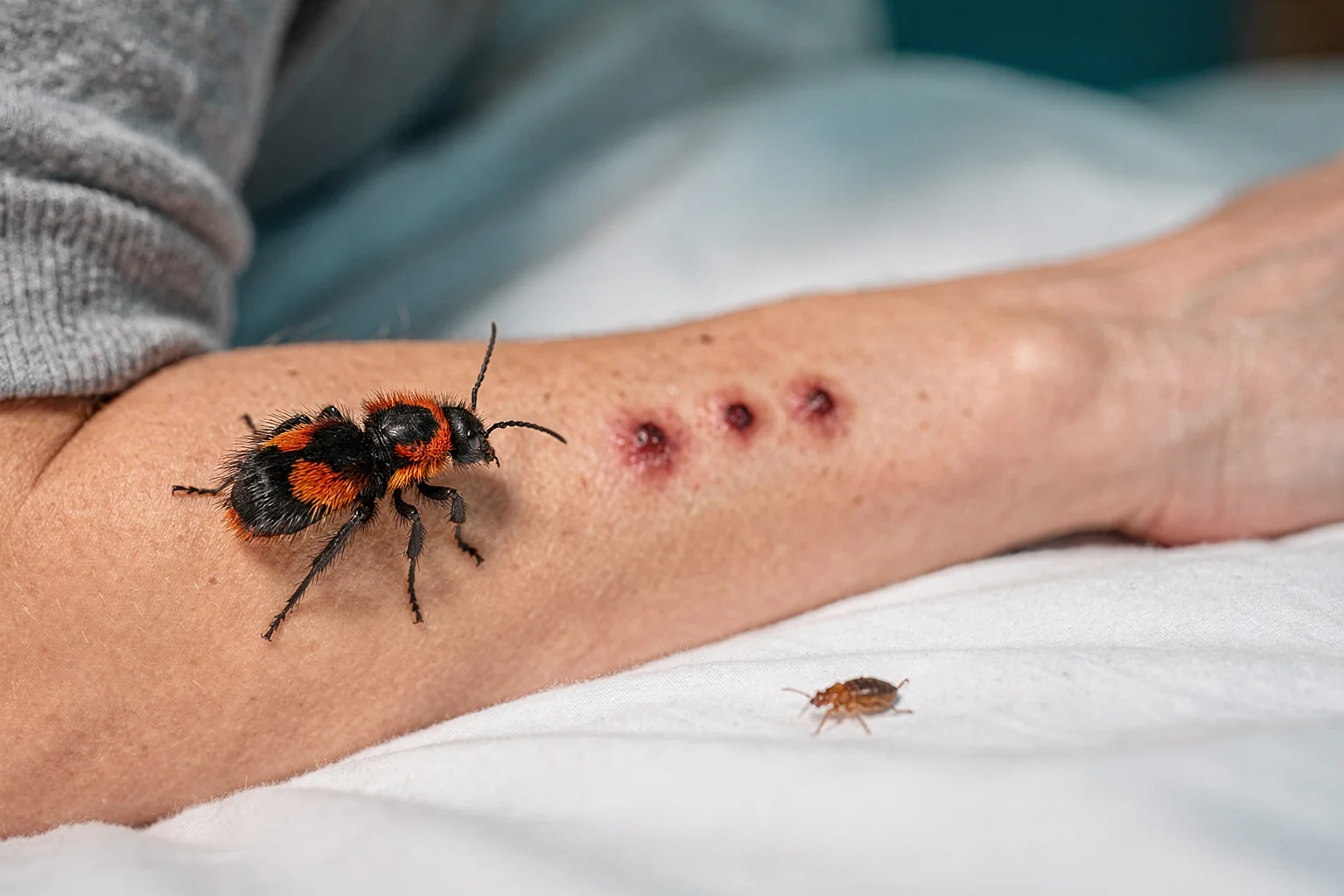
Last Tuesday, Lisa — a homeowner in Tower Hamlets — woke up with three angry red welts on her forearm. One was starting to blister. She’d been gardening the afternoon before, but she’d also just returned from a weekend trip to a hotel in Brighton. Was it bed bugs, or did something sting her in the garden? Lisa spent two hours Googling images that looked nothing like her arm, and by lunchtime she’d convinced herself both pests had invaded her flat.
Most people in London who go down a late-night internet rabbit hole looking at bite photos end up stuck between two very different possibilities: a bed bug infestation or a ground-nesting solitary wasp that delivers one of the most painful stings in the insect world. That wasp is commonly called a cow ant — though it isn’t an ant at all — and its sting can look remarkably like a bed bug reaction during the first day. Knowing which one left the mark changes whether you should be stripping your mattress or checking under the garden wall for solitary burrows.
This article walks you through the four details that separate the two, what to do about each, and when it’s smarter to call a pest professional rather than spend another evening scrolling.
What you’re actually dealing with when someone says “cow ant”
The cow ant is more properly a velvet ant — a hairy, wingless female wasp in the family Mutillidae. The nickname “cow killer” comes from folklore claiming the sting could drop a cow, though that’s never been documented. What is documented is that it produces an extremely painful sting, one that Schmidt’s Sting Pain Index ranks among the most intense delivered by any insect.
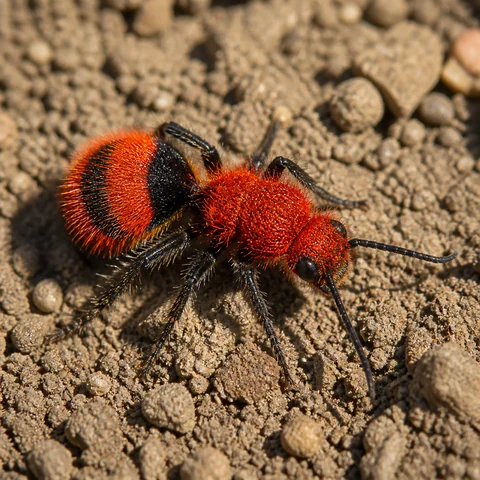
In the UK, true velvet ants are rare. There are a handful of European species, and isolated sightings do pop up in southern England during warm summers, but they’re far more common across the US South and the Mediterranean. When a Londoner says “I saw a big red cow ant,” they’ve often encountered a red banded ant or an unfamiliar queen ant with a similar colouring. Still, misidentification is easy, and the sting — whether from a true velvet ant or a confused red ant — produces a hard, hot welt that comes on fast.
Because velvet ants are solitary, you won’t find a nest of hundreds indoors. The females roam alone across dry, sandy soil, often near garden walls, patios, or cracks in paving. They don’t form trails like the black garden ants you’d see trailing to a kitchen spill. If you’ve been stung, the encounter almost always happened outside, on bare hands or arms, while you were pulling weeds or moving a plant pot.
For a fuller run-down of how cow ants compare to UK ant species, have a look at our common UK ant species guide. It’ll help you rule out the more familiar garden ants before panicking.
The indoor clues that point to bed bugs
Bed bug bites tell a completely different story, and it starts with where you were when it happened — asleep. Unlike a cow ant sting that registers as a sharp jab the moment it happens, bed bugs feed while you’re unconscious. They inject an anaesthetic and an anticoagulant, so the bite itself is painless. The reaction develops hours or even a day later, which is why so many people wake up puzzled rather than remembering a sting.
Bed bug bites usually show up on skin that was exposed while you slept: arms, shoulders, neck, face, and sometimes the lower legs if your duvet shifted. They tend to form in lines, zigzags, or tight clusters of three, reflecting the insect’s stop-and-feed pattern as it probes for a blood vessel.
Where the bite is on your body is only half the picture. The other half is what you find in the bedroom. Look for tiny rust-coloured dots on the mattress piping, the bed frame joints, or behind the headboard — these are digested blood spots. You might also spot shed skins, which are pale amber and paper-thin, or live bed bugs the size of an apple seed hiding in the seams.
The most useful bed bug warning signs to check while you’re waiting for a professional visit include those mattress stains and any musty, sweet odour. If you’re seeing those alongside new bites, the indoor source is far more likely than a garden encounter.
Comparing the bites: appearance, timing, location
Once you put cow ant stings and bed bug bites side by side, a few practical differences stand out that can save you from treating the wrong problem.
Pain and onset. A cow ant sting hurts instantly. The pain is often described as a deep, burning ache that peaks within minutes. The site reddens and swells quickly, sometimes within an hour, and a small blister may appear at the centre. Bed bug bites, by contrast, are silent; itching or redness usually starts 24 to 48 hours later, and many people don’t react at all.
Location on the body. Cow ant stings typically happen on hands, wrists, forearms, ankles, or feet — the parts that contact the ground or reach into foliage. Bed bug bites cluster on the upper body and areas pressed against the mattress: neck, shoulders, back, and inner arms.
Pattern. A solitary cow ant sting is usually a single mark. If you’ve accidentally knelt on one, you might get two or three stings very close together, but they won’t follow a straight line across your skin. Bed bug bites frequently appear as a row of two or three welts, sometimes called “breakfast, lunch, and dinner” by pest controllers.
Surrounding skin clues. With a sting, the surrounding skin may be hot and tender for the first day, then slowly fade over three to five days. Bed bug reactions often outstay that timeline. In some people, the marks linger for two weeks and become increasingly itchy.
Environmental tiebreakers. If you found the mark after gardening, walking barefoot on a dry lawn, or moving firewood, a ground-nesting wasp sting fits. If you’ve been waking up with new marks for several mornings in a row and haven’t been outdoors much, focus your inspection on the bedroom.
First-aid steps for each situation
The immediate care for a cow ant sting centres on the extreme pain. NHS guidance on insect stings recommends washing the area with soap and water, applying a cold compress for at least 10 minutes, and taking paracetamol or ibuprofen if the discomfort is interfering with sleep. Avoid scratching the blister — that can introduce bacteria and turn a sting into a skin infection that needs antibiotics.
Monitoring for signs of a severe allergic reaction matters more with a sting than with bed bug bites. If you develop swelling of the lips or tongue, difficulty breathing, or a widespread rash, call 999. Anaphylaxis from a velvet ant sting is rare, but it’s been recorded.
Bed bug bites are more of an irritation management problem. A pharmacy antihistamine cream or oral antihistamine can reduce itching. The real first aid is laundry — washing bedding and clothing at 60°C kills any bed bugs or eggs that may have transferred onto the fabric. Tumble drying on a hot cycle for at least 30 minutes adds a second line of defence.
Our bed bug bite relief guide covers the home treatments that actually calm the itch without damaging the skin, including which creams to use and which folk remedies to skip. And when a sting is still throbbing hours later, these sting first-aid steps explain how to tell a normal reaction from something that needs a doctor.
When to bring in a professional
There’s a straightforward decision point after you’ve checked the environment. If you spot faecal spotting, cast skins, or live bed bugs in the mattress seams, the answer is bed bugs, and the clock is ticking. A female bed bug can lay 200 to 250 eggs in her lifetime, turning a small introduction into a room-wide problem within a few weeks. At that stage, at-home sprays rarely reach the hiding spots deep inside the bed frame or behind skirting boards. Expert bed bug extermination that combines heat or targeted insecticides with follow-up monitoring stops that cycle cleanly.
If the evidence points to a solitary outdoor sting — one painful mark, a gardening memory, and clean bedroom checks — you probably don’t need an indoor treatment. But if you keep seeing the same vivid red wasps in the same sunny patch of the garden, a technician can inspect the ground for burrows and advise whether the nest is worth removing. In East London neighbourhoods with older gardens and sandstone paving, ground-nesting wasps do occasionally settle in and can become a surprise hazard for barefoot children or pets. Our Tower Hamlets ant control service covers ground-nesting wasps as well as true ants, and a professional visit can map the actual risk rather than leaving you to guess.
How other sources break down the bite mystery
Several expert guides have tackled this same confusion, and comparing their approaches can help you spot the details that matter most.
Connor’s Pest Pros

Connor’s Pest Pros published a side-by-side guide that emphasises the timing difference: bed bug bites appear in delayed clusters, while ant stings show up right after an outdoor encounter. Their article includes photographs comparing both types and offers prevention steps for both pests. Visit Connor’s Pest Pros for their full bite identification resource.
NHS inform

NHS inform keeps a practical, straightforward page on bites and stings. It notes that most UK ants don’t bite, but red ants can give a painful sting, and bed bug bites tend to appear as red lumps that itch. The information is brief and written for self-diagnosis before visiting a GP. Browse the NHS inform bites page for official first-aid advice.
Bug Out Service

Bug Out Service compares ant, bed bug, and mosquito bites in one article, breaking down appearance, symptoms, and typical location. They highlight that ant bites often show up on feet and legs after disturbing a nest, while bed bug bites target exposed sleeping skin. Bug Out Service provides a three-way identification guide.
Wasp World

Wasp World’s guide to the cow killer ant explains the insect’s biology, confirms that it’s a wingless wasp, and explores myths about its sting. It’s a helpful read if you want to understand why the velvet ant isn’t a true ant and why the sting pain is so intense. Visit Wasp World for the full velvet ant profile.
Hawx Pest Control
Hawx Pest Control describes cow ants as southern US insects with a striking red-orange body and a solitary nature. Their article walks through when diy management is enough and when the sting risk justifies a professional call-out. Hawx Pest Control explores the habits of cow ants across the South.

If you’re still uncertain after checking the bedroom and retracing your outdoor steps, a same-day inspection can confirm the source and put a treatment plan in motion before guesswork turns into a bigger problem.
Need professional help? BuzzKill offers fast, reliable pest control services across London and Essex.